 how-to
Safety Tips for Working Near Your Electrical Panel
Last Updated: October 22, 2026
Quick Summary
Safety tips for working near your electrical panel include maintaining 36 inches of clear space in front of the panel, keeping the work area dry and well-lit, never removing the panel cover, and understanding that service lines remain energized even when the main breaker is off. Always call a licensed electrician for any work involving opening the panel or modifying circuits.
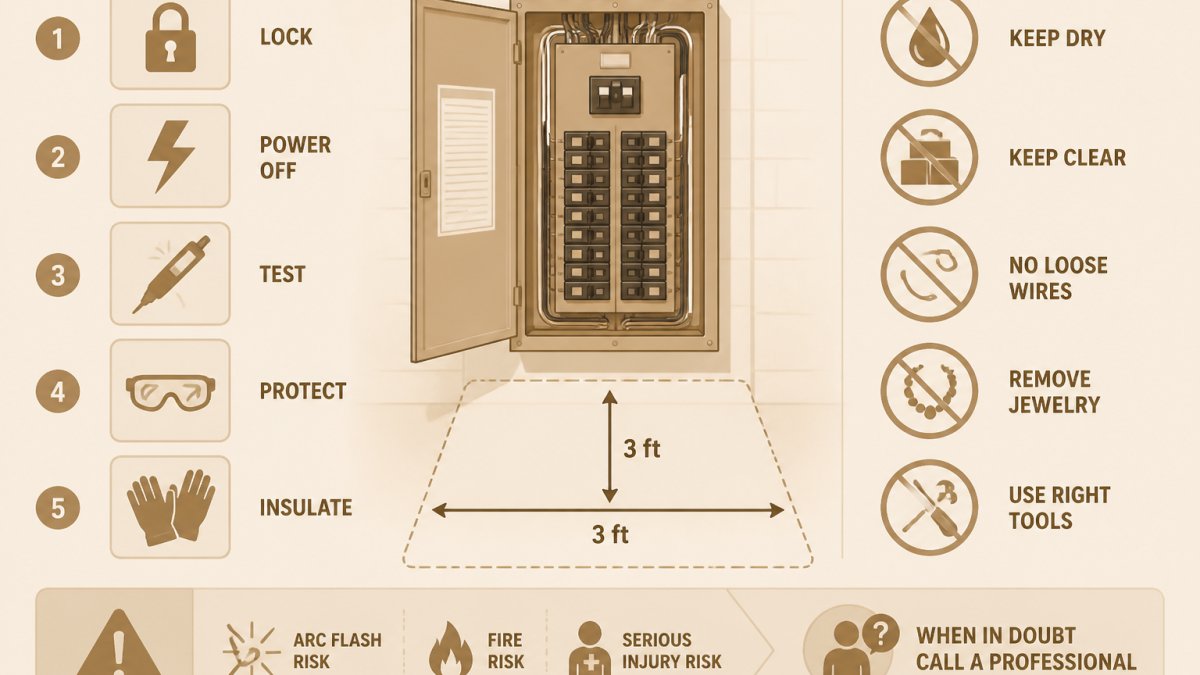
- Maintain minimum 36 inches of clear space in front of the panel, 30 inches width, and 78 inches height clearance.
- Never work near the panel with wet hands or standing in water, as moisture increases electrical hazard risk.
- Service lines entering the panel remain live even after switching off the main breaker.
- Call a licensed electrician for any work involving opening the panel, replacing breakers, or modifying circuits.
- Recognize warning signs like burning smells, buzzing sounds, and scorch marks that indicate immediate professional attention is needed.
Table of Contents
- Why Safety Around Your Electrical Panel Matters
- Electrical Panel Clearance Requirements You Must Follow
- Working Near Live Electrical Panels: Core Safety Practices
- Recognizing Electrical Panel Warning Signs
- When to Call an Electrician for an Electrical Panel
- Pre-Work Checklist and Hazard Assessment
- Emergency Response After Electrical Contact or Fire
- Frequently Asked Questions
Why Safety Around Your Electrical Panel Matters
Your electrical panel is the heart of your home's power system. It distributes electricity to every outlet, light, and appliance in your house. But it's also one of the most dangerous places in your home if you don't treat it with respect.
The panel contains live electrical equipment. Even when individual breakers are switched off, parts of the panel remain energized. This means a single mistake can result in serious injury or death. Every year, electrical contact injuries send thousands of people to emergency rooms.
That's why safety tips for working near your electrical panel aren't optional, they're essential. Whether you're checking a breaker, planning upgrades, or just clearing space around the panel, understanding these safety practices protects you and your family.
Electrical Panel Clearance Requirements You Must Follow
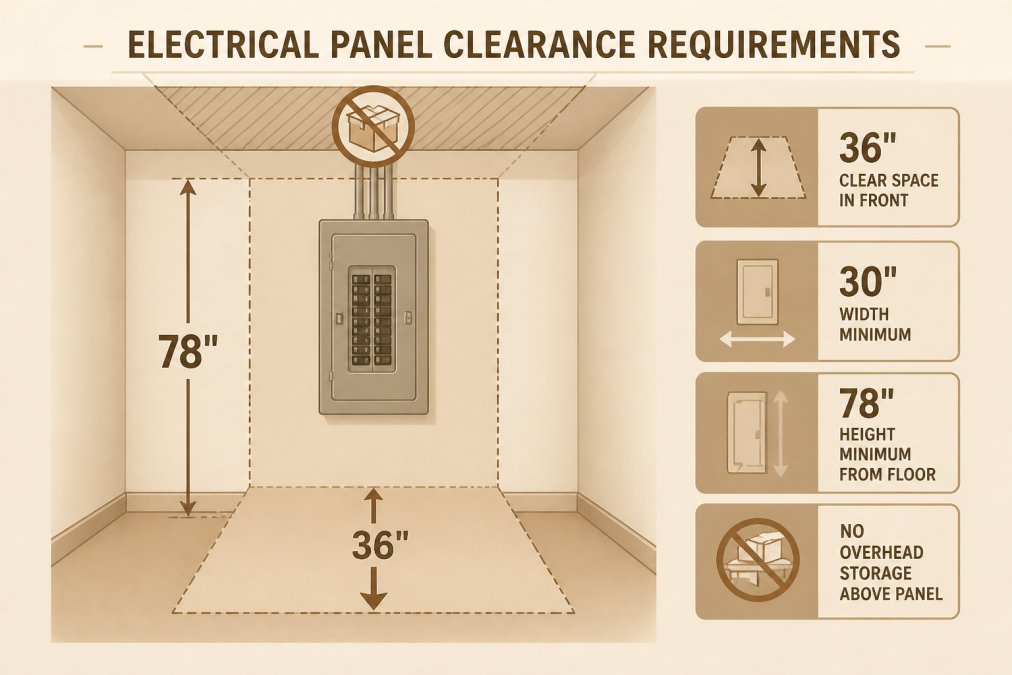
Your electrical panel needs breathing room. Building codes require a minimum of 36 inches of clear space in front of the panel, measured from the face of the panel door to any obstruction.
The width requirement is at least 30 inches, and the height clearance above the panel should be at least 78 inches from the floor.
Here's what this means in practice:
- Don't store boxes, tools, or cleaning supplies in front of the panel
- Don't place furniture or shelving near the panel
- Keep the area clear of clutter and debris
- Ensure adequate lighting so you can see what you're doing
- Never stack items on top of the panel itself
Many homeowners violate these clearance requirements without realizing it. A water heater pushed too close, a shelf installed for storage, or boxes stacked for "just a few days" all create hazards. If you need emergency access and the panel is blocked, precious seconds are lost.
Working Near Live Electrical Panels: Core Safety Practices
Keep the Work Area Clear and Accessible
Before you do anything near your electrical panel, make sure the area is clean and well-lit. Poor visibility causes mistakes. A single misstep near live equipment can be fatal.
Remove trip hazards. Clear away extension cords, tools, and debris from the floor around the panel. Wet floors are especially dangerous, if you slip and fall into the panel, water conducts electricity directly to your body.
Ensure you have adequate lighting. If the area around your panel is dark, install a bright light or use a flashlight. You need to see every breaker clearly and read the panel labels without squinting.
Protect Against Water and Moisture
Water and electricity are a deadly combination. Never work on or near your electrical panel if you're standing in water. Even a small amount of moisture on your hands or clothes increases electrical hazard risk.
Keep moisture away from the panel itself. If you notice water dripping near the panel, condensation on the cover, or signs of a leak, stop work immediately and call a licensed electrician. Moisture inside the panel can cause short circuits, arcing, and electrical fires.
In basements and crawl spaces, humidity is common. Use a dehumidifier if moisture is a persistent problem. Store the panel away from plumbing lines and HVAC condensate drains. If your panel is in a damp location, have it inspected annually by a professional.
Never Remove the Panel Cover
The panel cover protects you from the live parts inside. Removing it exposes dangerous energized equipment that can deliver a lethal shock.
Some homeowners think they can safely remove the cover to reset a breaker or check something. They can't. The moment you remove that cover, you're exposed to energized busbars, terminals, and connections that can kill you instantly.
Even if a breaker is switched off, parts of the panel remain live. The main service lines entering the panel from the utility company are always energized. There is no "safe time" to work inside an open panel without proper training, equipment, and lockout procedures.
If you need to access the inside of the panel, call a licensed electrician. That's what they're trained for.
Understand Energized Equipment Hazards
Not all parts of the panel are equally dangerous, but many are deadly. The main breaker at the top of the panel controls power to the entire house.
Even after you switch off the main breaker, the service lines remain live. This is the single most important fact about electrical panel safety: turning off the main breaker does not de-energize the service lines.
Arc flash is another serious hazard. When live electrical equipment fails or is contacted by a conductor, it releases an intense burst of heat and light. Arc flash can cause severe burns and temporary blindness in a fraction of a second.
Shock hazard exists whenever you contact live equipment. The severity depends on the current, the path through your body, and how long contact lasts. A 120-volt shock can be fatal. A 240-volt shock is more likely to be fatal.
Recognizing Electrical Panel Warning Signs
Your panel sends warning signals when something is wrong.
Burning smells near the panel indicate arcing or overheating. Shut off the main breaker immediately and call a licensed electrician.
Buzzing or humming sounds suggest loose connections or failing components inside the panel. These sounds often precede more serious problems.
Breakers that trip repeatedly mean something is drawing too much current on that circuit.
Get your free electrical estimate →
Scorch marks or discoloration on the panel cover or around breakers show heat damage.
Rust or corrosion on the panel, especially in humid or coastal areas, weakens the enclosure and can expose live parts.
Warm or hot panels to the touch indicate excessive current or internal arcing. This is dangerous and requires immediate professional attention.
When you notice any of these warning signs, don't try to diagnose the problem yourself. Call a licensed electrician right away.
When to Call an Electrician for an Electrical Panel
Knowing the boundary between safe homeowner actions and work requiring a licensed electrician is critical. Here's the rule: if it involves opening the panel, working on live equipment, or modifying circuits, call a professional.
You can safely:
- Check which breaker controls a specific outlet (by switching breakers on and off and testing outlets)
- Reset a tripped breaker by switching it fully off, then back on
- Read the panel labels to understand your circuit layout
- Keep the area around the panel clear and accessible
- Inspect the panel for warning signs like burning smells or discoloration
You must call a licensed electrician for:
- Upgrading the main service or adding new circuits
- Replacing breakers or the main disconnect
- Repairing or replacing the panel itself
- Any work that requires opening the panel cover
- Installing new outlets, switches, or fixtures
- Troubleshooting repeated breaker trips
- Addressing burning smells, buzzing sounds, or visible damage
Light Life Electric recommends calling a professional at the first sign of trouble. Panel work is not a DIY project. The risks of serious injury or property damage are too high. A licensed electrician has the training, tools, and insurance to work safely on your panel.
Pre-Work Checklist and Hazard Assessment
Before you do any work near your electrical panel, even simple tasks, run through this checklist.
Safety Checklist:
- Is the work area clear of clutter and trip hazards?
- Is the area well-lit so I can see clearly?
- Am I standing on dry ground, not in water or moisture?
- Are my hands and clothes dry?
- Do I understand which breaker controls the circuit I'm working on?
- Have I tested the circuit to confirm power is off?
- Is the panel cover securely in place?
- Are there any warning signs like burning smells or discoloration?
- Do I have a clear escape route if something goes wrong?
- Have I told someone else what I'm doing and where I am?
Hazard Assessment:
Ask yourself: Does this work involve opening the panel, touching live equipment, or modifying circuits? If yes, stop and call a licensed electrician. Does the panel show warning signs like burning smells, buzzing sounds, or visible damage? If yes, call immediately, don't work near it.
Is the area around the panel wet, damp, or exposed to moisture? If yes, address the moisture problem first, then assess whether the work is safe.
Taking five minutes to run through this checklist prevents most electrical accidents. It's the difference between a safe day and a trip to the emergency room.
Emergency Response After Electrical Contact or Fire
Electrical accidents happen fast. Knowing how to respond in the first seconds can save a life.
If someone is in contact with live electrical equipment:
Do not touch them. Touching them will electrify you as well. Instead, turn off the power at the main breaker if you can do so safely and immediately.
Once they're no longer in contact, call 911 immediately.
If there's an electrical fire:
Do not use water. Water conducts electricity and will spread the hazard. Use a Class C fire extinguisher designed for electrical fires, or call 911 and evacuate immediately.
If you experience electrical shock:
Seek emergency medical care even if you feel fine. Internal injuries from electrical current are not always visible.
Prevention is always better than emergency response. Follow the safety practices in this guide, maintain clear access to your panel, and call a licensed electrician when anything seems wrong.
Your electrical panel is essential, but it demands respect.
Frequently Asked Questions
How much clear space should you keep around an electrical panel?
The National Electrical Code requires a minimum of 36 inches of clear space directly in front of the electrical panel and at least 30 inches of width. The area must extend 78 inches from the floor. Do not store items on top of, in front of, or directly above the panel. This clearance ensures safe access for maintenance and reduces fire risk.
Can you work on an electrical panel while it is energized?
No. Most electrical work on an energized panel should only be performed by a qualified, licensed electrician. Even simple tasks can result in serious shock or arc-flash injury. If you must work near a live panel, use nonconductive tools, wear appropriate personal protective equipment, and verify de-energization before any contact with electrical components.
What are the main warning signs that an electrical panel may be unsafe?
Watch for burning smells, visible scorch marks, rust or corrosion, frequent breaker trips, buzzing or crackling sounds, warm panels, or exposed wires. Water pooling near the panel, damaged covers, or missing knockouts are also red flags. Any of these signs warrant immediate inspection by a licensed electrician to prevent electrical fire or shock hazards.
When should I call a licensed electrician about my electrical panel?
Call immediately if you notice warning signs, smell burning, hear unusual sounds, or see water damage. Schedule service before attempting any work inside the panel, if breakers trip repeatedly, or if you need to upgrade capacity. A licensed electrician can safely diagnose issues, perform lockout/tagout procedures, and verify de-energization before work begins.