 how-to
Why Grounding and Bonding Matter in Electrical Systems
Quick Summary
Grounding and bonding are the safety backbone of every electrical system. Grounding connects the system to the earth so stray current has a safe route, while bonding ties metal parts together so they stay at the same voltage. Together they protect people from shock and protect wiring and equipment from damage.
- Grounding connects the electrical system to the earth; bonding connects metal parts to each other.
- Fault current needs a low-impedance path back to the source, or the breaker may not trip.
- Loose bonding connections or corroded joints can leave metal enclosures energized without obvious signs.
- A breaker tripping is a reason to investigate, not proof that the grounding and bonding path is healthy.
- The National Electrical Code sets baseline rules, but local jurisdictions may adopt amendments, so check with your building department.
Table of Contents
- What Grounding and Bonding Do in an Electrical System
- Grounding vs. Bonding in Electrical Systems: Key Differences
- How Fault Current Finds a Path Home and Trips the Breaker
- Grounding and Bonding Examples in Homes, Commercial Buildings, and Industrial Sites
- NEC Grounding and Bonding Requirements You Should Know
- Inspecting the Grounding and Bonding Electrical Panel
- Common Misconceptions and DIY Mistakes to Avoid
- Booking a Grounding and Bonding Check With Light Life Electric
- Frequently Asked Questions
What Grounding and Bonding Do in an Electrical System
Grounding and bonding are the safety backbone of every electrical system. Grounding connects the system to the earth, giving stray electrical current a safe place to go. Bonding connects the metal parts of the system together so they share the same electrical potential. Together, they protect people from electric shock and protect wiring and equipment from damage.
Many homeowners never think about this system until something goes wrong. A metal appliance that becomes energized, or a breaker that trips for no clear reason, often points back to a grounding or bonding problem. Understanding the basics makes those problems easier to spot.
Here is what the system does in practice:
- Gives fault current a safe path: When a hot wire touches a metal enclosure, current needs a route back to the source.
- Helps breakers and fuses work: A solid path lets the overcurrent device trip fast.
- Limits shock risk: Metal parts stay at or near earth potential, so touching them is far less dangerous.
- Protects equipment: Surges and lightning energy have a path to dissipate instead of damaging appliances.
The National Fire Protection Association explains that proper grounding and bonding supports personnel safety, and NFPA guidance on the basics of grounding and bonding.
Grounding vs. Bonding in Electrical Systems: Key Differences
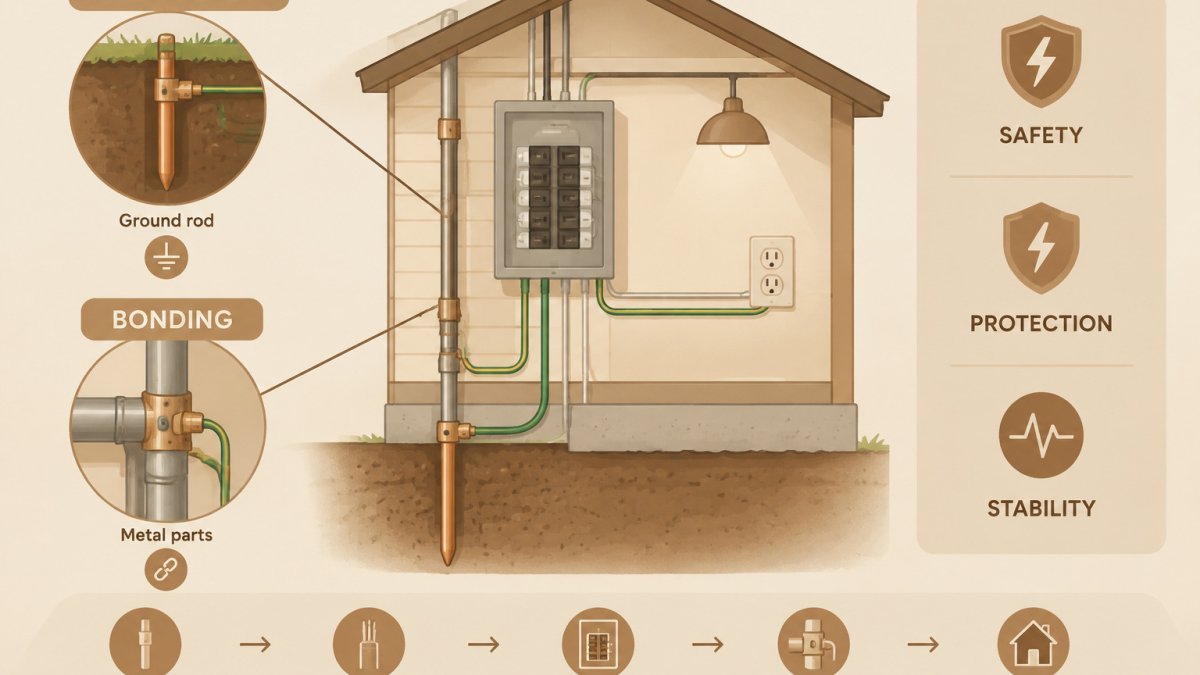
Grounding connects the electrical system to the earth. Bonding connects metal parts to each other. The two terms are often mixed up, but they do different jobs.
Grounding uses a grounding electrode, such as a ground rod, and a grounding electrode conductor to tie the system to the earth. The equipment grounding conductor, usually the bare or green wire in a cable, carries fault current back toward the source.
Bonding links metal enclosures, conduit, and raceways so they stay at the same voltage. Bonding conductors and bonding jumpers handle this job. If a metal water pipe or gas line becomes energized, bonding keeps the difference in voltage small.
Think of it this way: grounding ties the system to earth, and bonding ties the metal together.
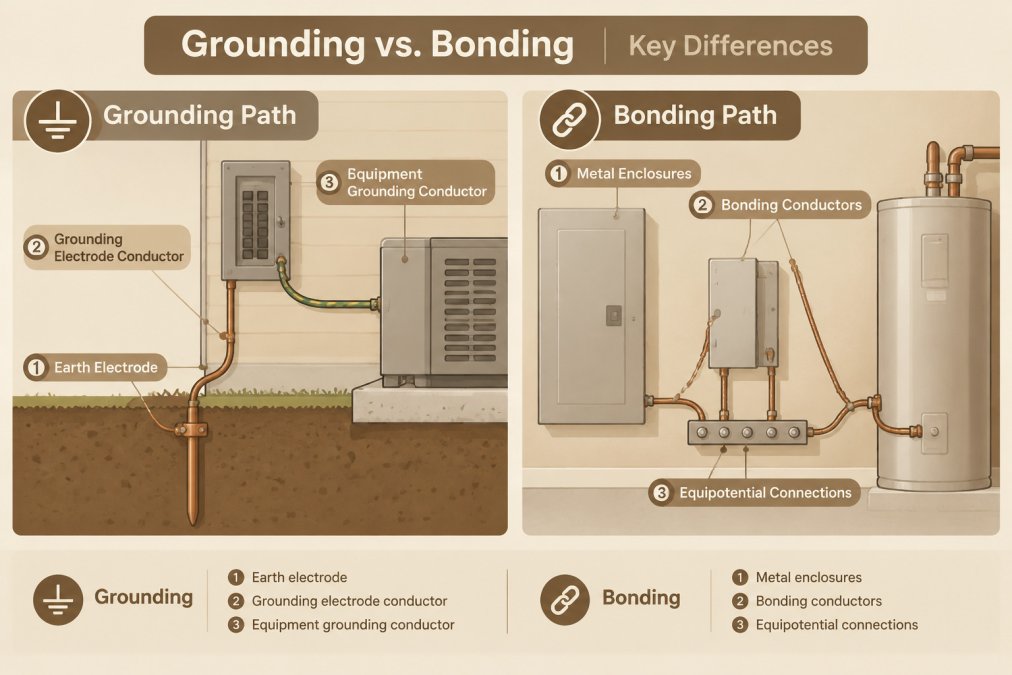
The two terms do different jobs, and the article summarises how each one connects the system.
| Term | Connects | Key components |
|---|---|---|
| Grounding | System to the earth | Ground rod, grounding electrode conductor |
| Bonding | Metal parts to each other | Bonding conductors, bonding jumpers |
| Grounding purpose | Gives stray current a safe place to go | Grounding electrode system |
| Bonding purpose | Keeps metal at the same voltage | Metal enclosures, conduit, raceways |
How Fault Current Finds a Path Home and Trips the Breaker
Fault current needs a low-impedance path back to the source, or the breaker may not trip. This is the central reason grounding and bonding exist, and it is easier to understand by tracing the loop current actually takes.
Under normal operation, current leaves the source (the utility transformer secondary or a separately derived system), travels through the ungrounded "hot" conductor to the load, and returns through the grounded neutral conductor. The equipment grounding conductor carries no current during normal operation (The Basics of Grounding and Bonding).
A ground fault changes that picture. When an ungrounded conductor contacts a metal enclosure, raceway, or equipment frame, the fault current must travel from that metal back to the source.
Two properties of that loop determine whether the breaker trips fast enough:
- Continuity: Every connection in the loop must be electrically continuous. A loose bonding jumper, a painted enclosure surface, or a corroded connection adds resistance and can break the path.
- Impedance: The total opposition to current flow around the loop, including conductor resistance and the reactance of raceways and long runs, sets how much fault current flows. Lower impedance means higher fault current, which means the overcurrent device sees the fault sooner.
This is why bonding is not optional. The equipment grounding conductor and bonding jumpers are the low-impedance return path.
A circuit with a long, undersized equipment grounding conductor or a loose bonding connection may carry too little fault current to trip a breaker quickly, which can leave a metal enclosure energized without an obvious sign.
Breakers and fuses respond to current and time. An inverse-time breaker trips faster as current rises, so a solid low-impedance fault produces a large current and a fast trip. A high-impedance fault produces a small current and a slow or nonexistent trip.
Watch out: Do not assume that a breaker tripping is proof the fault path is healthy.
Grounding and Bonding Examples in Homes, Commercial Buildings, and Industrial Sites
Grounding and bonding look different depending on the building type. The basic principles stay the same, but the scale and risks change.
- Homes: A ground rod at the service panel, bonded water and gas lines, and grounded outlets with equipment grounding conductors.
- Commercial buildings: Larger service equipment, more metal raceway, and bonded structural steel that supports many circuits.
- Industrial sites: Heavy equipment, motor frames, and process piping that all need bonding to control static and fault energy.
Each setting needs its own design and inspection. A bonding check that works in a house may miss issues in a plant with more metal and more equipment.
NEC Grounding and Bonding Requirements You Should Know
The National Electrical Code sets the baseline rules for grounding and bonding in the United States. Most states and local jurisdictions adopt the NEC, sometimes with amendments.
Get your free electrical estimate →
The NEC is updated on a regular cycle, so local rules can differ from the version you read online.
Check with your local building department before starting or changing any grounding system. Permits and inspections exist to catch problems early.
NFPA National Electrical Code overview lists the current edition and how it is adopted.
Inspecting the Grounding and Bonding Electrical Panel
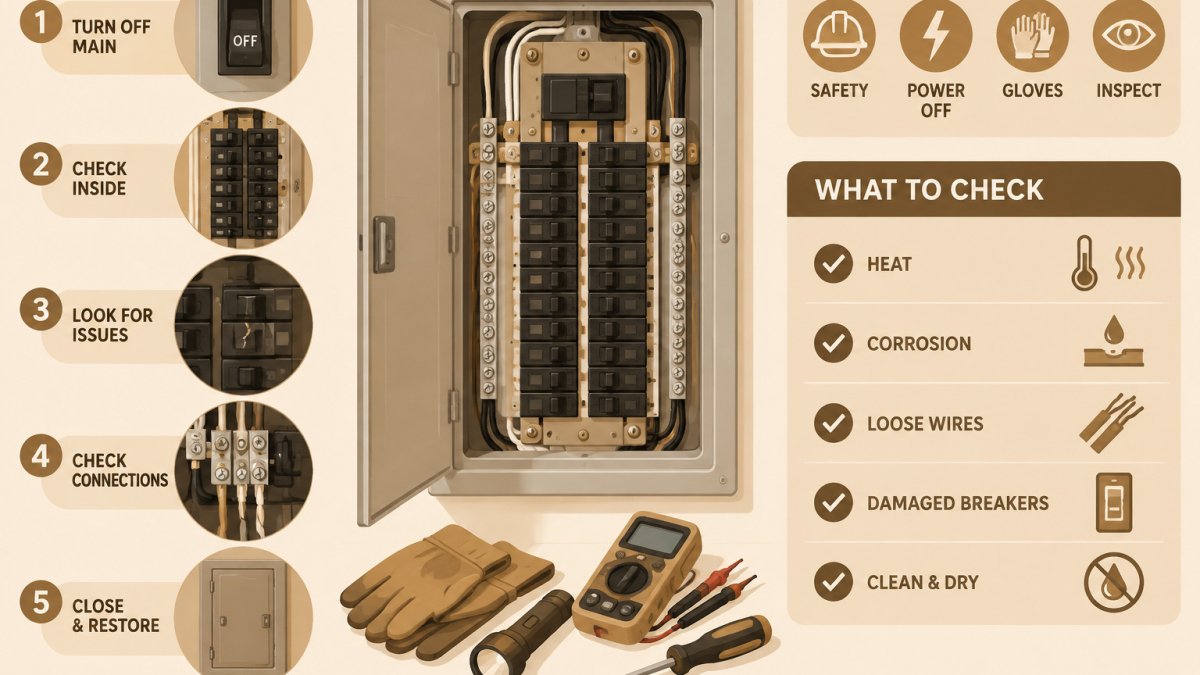
A visual check of the panel and its connections can reveal many grounding and bonding problems, but a visual check alone does not prove the system is safe. Always turn off power and follow safety procedures before opening a panel or working near it.
What a careful visual inspection looks for:
- Confirm the main breaker is off and the panel is de-energized before removing covers.
- Look for loose, missing, or improperly terminated grounding and bonding connections.
- Check that the grounding electrode conductor is secure, correctly sized for the service, and not corroded or spliced improperly.
- Verify that neutral and ground conductors are kept separate in subpanels, and that the main bonding jumper is present only where the code requires it.
- Look for signs of overheating, such as discolored wire, melted insulation, or scorch marks on busbars.
- Check that metal raceways, enclosures, and equipment are bonded and that bonding jumpers are intact around removable covers and fittings.
What a qualified electrician verifies beyond the visual check:
- Continuity of the equipment grounding conductor and bonding path. A meter test confirms the path is electrically continuous end to end, not just physically present.
- Low-impedance fault path. Practitioners use test methods that confirm the fault loop can carry enough current to operate the overcurrent device. The exact method and pass criteria depend on the system and the applicable requirements.
- Grounding electrode system condition. The connection to earth is checked for integrity, and the electrode conductor is confirmed to be continuous and properly bonded.
- Neutral-ground separation. The electrician confirms there is no unintended neutral-to-ground connection downstream of the service that would create a parallel return path.
- Bonding of metal water and gas piping and structural metal. These connections are checked for secure termination and continuity.
Measurable performance matters. A meter reading can reveal a high-resistance bonding connection that a visual check may miss.
Watch out: Stop and call a licensed electrician if you find loose connections, evidence of overheating, a missing or damaged grounding electrode conductor, or any sign that neutral and ground are connected in the wrong place. Do not re-energize the panel to "see if it works." Working near energized equipment without training is dangerous, and a mistake in the grounding and bonding system can create the exact shock hazard the system is supposed to prevent.
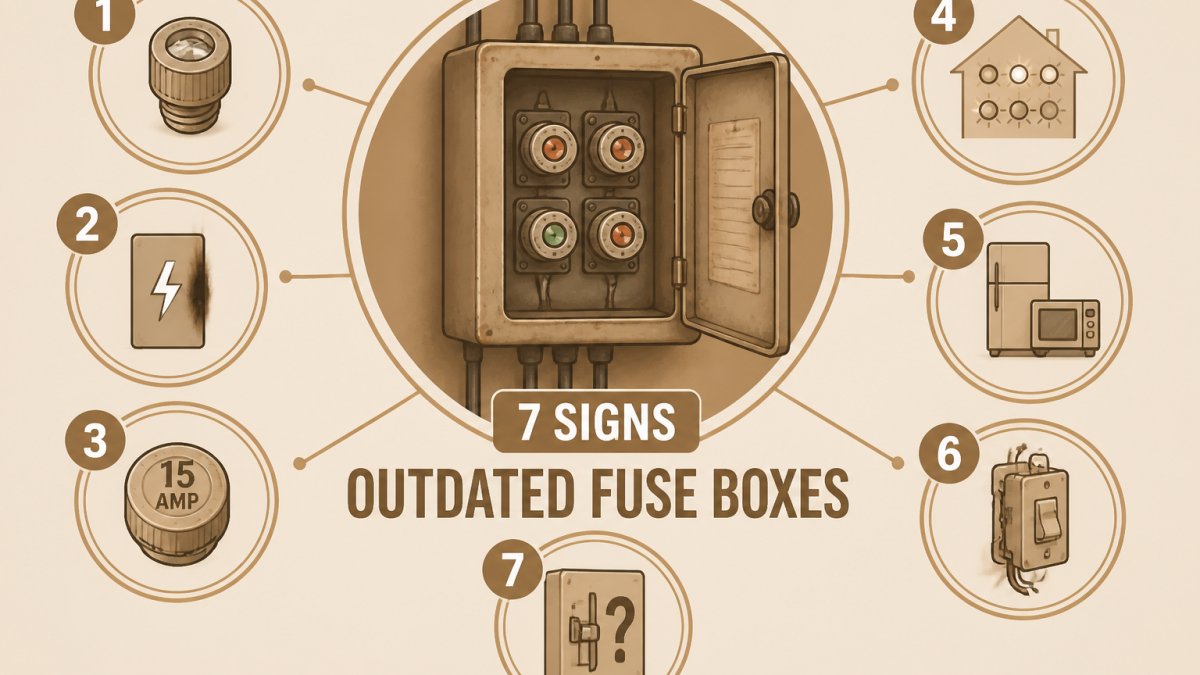
If problems keep returning after a professional visit, it may be worth reviewing whether the panel itself is due for replacement; see how to tell if your electrical panel needs replacing for the warning signs.
Common Misconceptions and DIY Mistakes to Avoid
Many grounding myths lead to unsafe fixes. A few misconceptions cause the most trouble.
- "Any metal rod in the ground is enough." Grounding electrodes must meet specific code requirements.
- "Tying the neutral and ground everywhere is fine." Improper neutral-ground connections create parallel return paths and nuisance issues.
- "Breakers make grounding unnecessary." Breakers do not replace a solid fault path.
- "Bonding a water pipe is a simple DIY job." Bonding requirements depend on the system, and mistakes can be hard to spot.
Many shock and fire risks come from assumptions rather than bad intent. When in doubt, have a licensed professional verify the work.
If you suspect a short, learn how to identify short circuits in outlets safely before you touch anything.
Booking a Grounding and Bonding Check With Light Life Electric
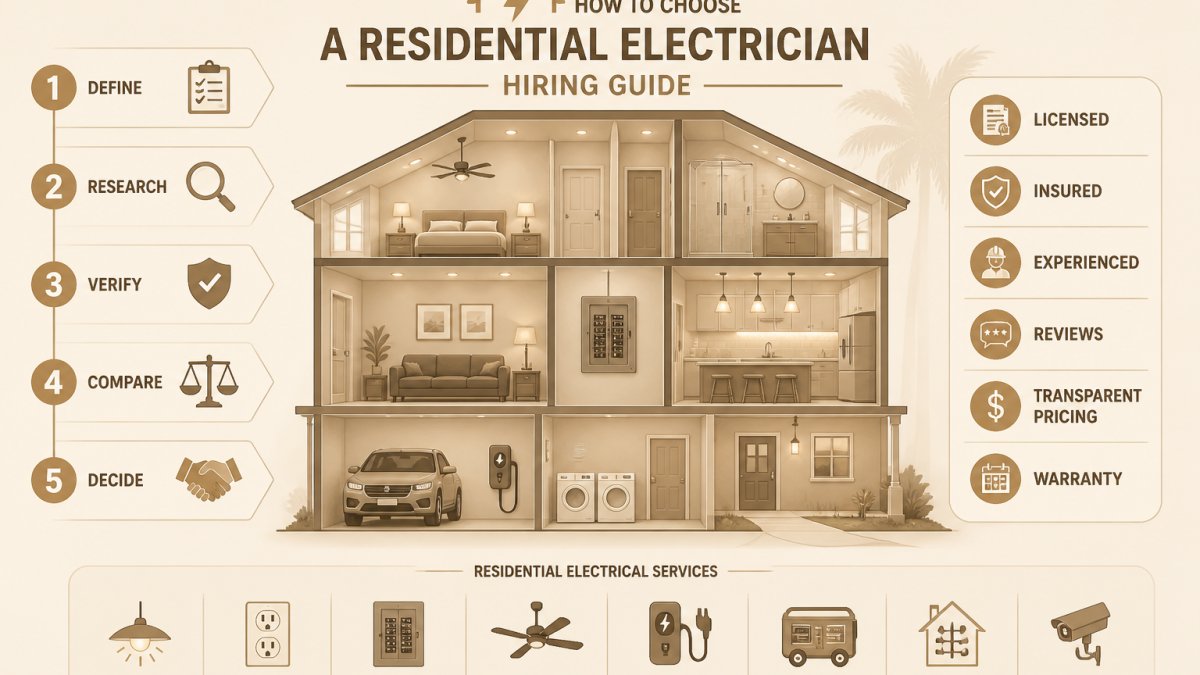
A professional inspection is the fastest way to confirm your system is safe. Light Life Electric is a family-owned electrical contractor serving Southwest Florida, and our Florida certified electricians handle residential and commercial work from permits to final inspection.
Light Life Electric is a Florida certified electrical contractor, fully licensed, bonded, and insured, and we offer 24/7 emergency response when power or safety is at risk.
Reach out to schedule a grounding and bonding inspection for your commercial property, or review our full range of electrical services for residential and commercial projects.
Get your free electrical estimate today and make sure your system protects the people and equipment that depend on it.
Frequently Asked Questions
Why is grounding and bonding important?
Grounding and bonding give fault current a low-impedance path back to the source so that the overcurrent protective device, such as a circuit breaker, trips quickly. Without them, metal enclosures and appliance frames can become energized and create a shock hazard. They also limit voltage differences between conductive parts, which protects people and wiring. Proper grounding and bonding is a core part of electrical safety in any building, from a single-family home to a commercial facility.
What is the difference between grounding and bonding?
Grounding connects the electrical system to the earth through a grounding electrode, which helps stabilize voltage and dissipate unwanted current. Bonding connects conductive parts such as metal pipes, enclosures, and equipment frames so they share the same electrical potential. Both work together to create a fault-current path, but grounding connects to earth while bonding links metal parts to each other. Confusing the two is a common reason inspections fail.
What is an NEC requirement for grounding and bonding?
The National Electrical Code, NFPA 70, covers grounding and bonding in Article 250, with related requirements in Article 100 definitions and installation rules elsewhere in the code. Article 250 addresses grounding electrode systems, equipment grounding conductors, and bonding of metal parts. Local jurisdictions adopt NEC editions with their own amendments, so the edition and local rules that apply to your project should be confirmed with the authority having jurisdiction before work begins.
When should an electrician inspect grounding and bonding?
An electrician should check grounding and bonding during new construction, after a panel upgrade, when adding a service or subpanel, after a lightning strike or power surge, and whenever breakers trip unexpectedly or shocks are reported. Periodic inspection is also wise in older homes where connections may have corroded or been disturbed. A licensed contractor can test continuity and verify that the grounding electrode system and bonding connections meet current code requirements.