 how-to
How to Safely Inspect an Electrical Panel at Home
Table of Contents
- Why a Safe Panel Inspection Starts Before You Open the Cover
- Electrical Panel Clearance Requirements You Need to Check First
- Gear Up: PPE and Tools for a Safe Visual Inspection
- Step-by-Step Electrical Panel Inspection Checklist
- Signs of a Faulty Electrical Panel That Need Immediate Attention
- Documenting Your Findings and Deciding Whether to Call a Professional
- Booking Your Next Panel Inspection With Light Life Electric
- Frequently Asked Questions
Last Updated: November 5, 2026
Why a Safe Panel Inspection Starts Before You Open the Cover
Knowing how to safely inspect an electrical panel can prevent fires and shocks, and it starts before you ever remove a cover. Most home electrical panels are checked only when something goes wrong.
According to Thumbtack's 2026 cost data for electrical inspections, a professional inspection of circuit breaker panels and fuse boxes typically runs between $217 and $663 nationally.
Light Life Electric serves homeowners and property managers across Southwest Florida, and we see the same pattern often: a small warning sign gets ignored until it becomes an emergency.
Safety first: A panel inspection is a visual and observational task. Do not open the cover, probe wires, or touch the panel if you see water, dampness, or standing water near it.
Electrical Panel Clearance Requirements You Need to Check First
Clearance is the open space around a panel that lets you work and exit safely. Check it before anything else.
The standard working space in front of a panel is 30 inches wide, 36 inches deep, and 78 inches high, according to InterNACHI's clearance standard for electrical service panels. Keep this zone clear of storage, shelving, and laundry items.
Use this quick clearance checklist:
- Measure the width of the open space in front of the panel (at least 30 inches)
- Measure the depth from the panel face outward (at least 36 inches)
- Check the height from floor to ceiling (at least 78 inches)
- Confirm nothing is stored in the workspace
- Make sure the door or cabinet opens fully
Commercial panels follow a similar rule. The Certified Commercial Property Inspectors Association's headroom guidance sets 78 inches as the minimum headroom for commercial electrical panels.
Watch out: A blocked panel is a hazard in itself. If you cannot reach the panel safely, do not try to clear a path by moving heavy items while the panel is energized.
Gear Up: PPE and Tools for a Safe Visual Inspection
A visual inspection needs very little equipment, but the right gear matters, and so does understanding what each item is actually protecting you from.
Start with these items:
- Insulated gloves. Look for gloves rated for electrical work and marked with a voltage class on the glove or its packaging. General-purpose leather work gloves are not the same thing, they protect against abrasion, not voltage. Inspect gloves for cuts, pinholes, or cracking before each use, and never use a glove that has been punctured or contaminated with oil.
- Safety glasses or a face shield. Arc flash and loose debris are the two most common eye hazards at a panel. Safety glasses with side shields are the minimum; a face shield adds protection if you will be close to the cabinet.
- A non-contact voltage tester. This is the single most useful tool for a homeowner. It lets you confirm whether a conductor or screw is energized without touching it. Test the tester on a known-live circuit before you trust a 'no voltage' reading, a dead battery or a failed tester can read dead when the circuit is live.
- A flashlight or headlamp. You need to see discoloration, melted insulation, and fine cracks that a phone light will miss. A headlamp keeps both hands free.
- A notebook or phone for photos. Photograph the label directory, the breaker positions, and anything unusual before you touch anything. Photos are also your record if a problem develops later.
- Rubber-soled shoes. Non-conductive soles reduce the chance of a path to ground through your feet, especially on concrete or damp floors.
Avoid metal jewelry, rings, watchbands, and necklaces are excellent conductors and can bridge a live terminal to your skin.
Thermal imaging can also help. FLIR's guidance on thermal imaging for electrical inspections recommends using a thermal camera to find hot spots before you handle any components.
Watch out: A non-contact voltage tester can give a false 'dead' reading on some wiring configurations, and a glove rated for the wrong voltage class offers little protection.
Step-by-Step Electrical Panel Inspection Checklist
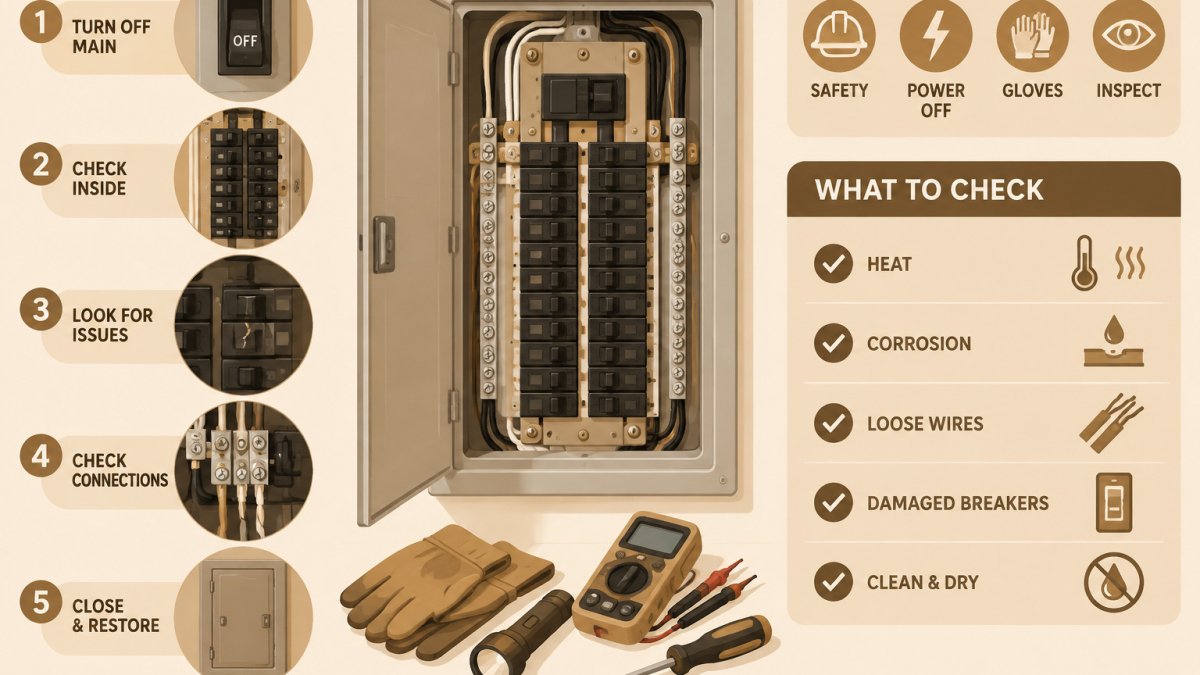
Follow these steps in order, and treat each one as a gate: if a step fails, stop and do not move to the next. The most important skill in a panel inspection is not spotting a problem, it is knowing when to walk away before you open anything.
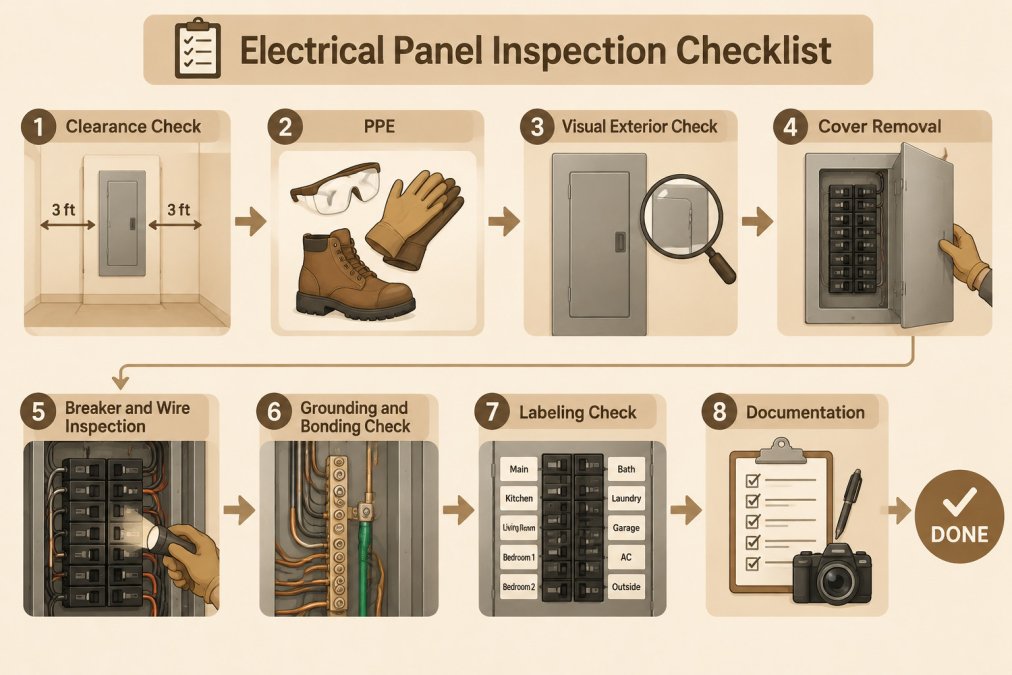
- Check the clearance. Confirm the workspace meets the dimensions above. If you cannot stand squarely in front of the panel with room to step back, do not proceed.
- Look at the outside first. Check for rust, cracks, scorch marks, a warm cabinet, or a buzzing or humming sound. Any of these means the panel may already be failing, do not open it.
- Check the cover. Make sure the cover is secure and undamaged. A loose or missing cover is a sign the panel has been tampered with or is not properly enclosed.
- Verify the label directory. Each breaker should match a clearly written room or circuit. A directory that is blank, illegible, or obviously wrong is a red flag for DIY work.
- Look for a main breaker. Confirm it is clearly marked and easy to reach. If you cannot identify the main disconnect, you cannot safely de-energize the panel.
- Check for water. Look at the floor and wall below the panel. Any water, dampness, or staining means you stop and call a professional, water and electricity are the combination that turns a small defect into a shock or fire.
- Note your findings. Photograph anything unusual before you leave the area.
Most homeowners should not open the dead-front cover. Removing it exposes live parts, and the bus bars and terminals behind it remain energized even when the main breaker is off in many panel designs. If the panel needs a deeper check, inspecting breakers, bus bars, or wire terminals, hire a licensed electrician.
Get your free electrical estimate →
When to walk away
Some conditions mean the panel is too dangerous to inspect at all, even visually. Walk away and call a licensed electrician if you see any of the following:
- Water, dampness, or corrosion on or around the panel. Moisture lowers resistance and turns a minor contact into a shock path.
- A burning smell, scorch marks, or melted insulation. These indicate a thermal event has already happened, and the panel may still be hot or arcing.
- Buzzing, crackling, or a cabinet that is warm to the touch. Arcing and loose connections produce sound and heat before they produce fire.
- A panel that has been modified, taped, or fitted with mismatched breakers. Improper breakers can fail to trip and are a common cause of panel fires.
- A panel you cannot identify or de-energize. If you cannot find the main disconnect or confirm what the panel feeds, you cannot establish a safe working condition.
A simple inspection frequency helps. Eco Services' maintenance guidance for residential electrical panels recommends a professional inspection every 3 to 5 years for most homes. If your panel is older, has been modified, or has ever shown any of the walk-away signs above, shorten that interval and have a licensed electrician look at it sooner.
The steps below are the core of a visual panel check, in the order the article recommends.
| Step | What to do | Note |
|---|---|---|
| Check the clearance | Confirm the workspace meets the dimensions above | Stop if you cannot stand squarely with room to step back |
| Look at the outside first | Check for rust, cracks, scorch marks, warmth, buzzing | Any of these means do not open it |
| Check the cover | Make sure it is secure and undamaged | Loose or missing cover suggests tampering |
| Verify the label directory | Each breaker should match a clear room or circuit | Blank or wrong labels are a DIY red flag |
| Look for a main breaker | Confirm it is marked and easy to reach | Needed to de-energize the panel |
| Check for water | Look at floor and wall below the panel | Any water or dampness means call a professional |
| Note your findings | Photograph anything unusual before leaving | Photos serve as your record |
Signs of a Faulty Electrical Panel That Need Immediate Attention
Some warning signs mean you should stop and call an electrician now:
- Burning smell or scorch marks on the panel or outlets
- Buzzing, humming, or crackling sounds
- Breakers that trip often or will not reset
- Warm or hot panel surface
- Discolored or melted wire insulation
- Water near or on the panel
- Flickering lights across the home
If you see any of these signs, shut off power at the main breaker only if you can do so safely, and call a licensed electrician right away. For emergencies, Light Life Electric offers 24/7 response. You can also review our 24/7 emergency electrical contractor services in Southwest Florida to see what is covered.
Older Panels vs. Modern Panels: What Changes
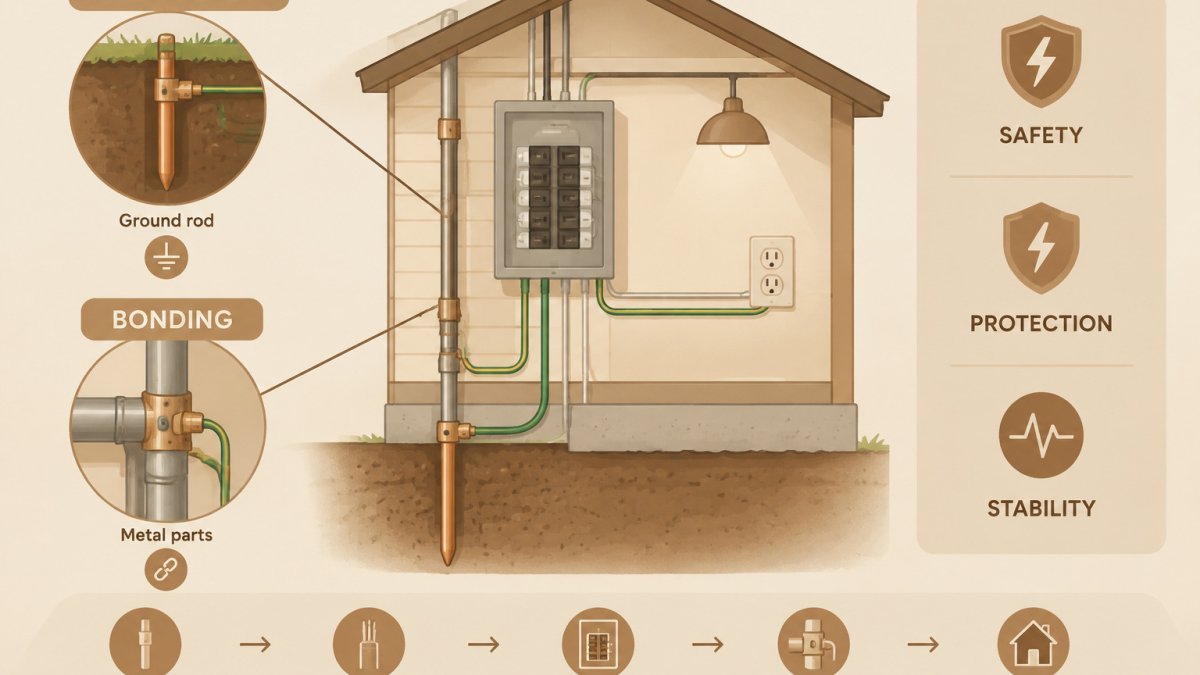
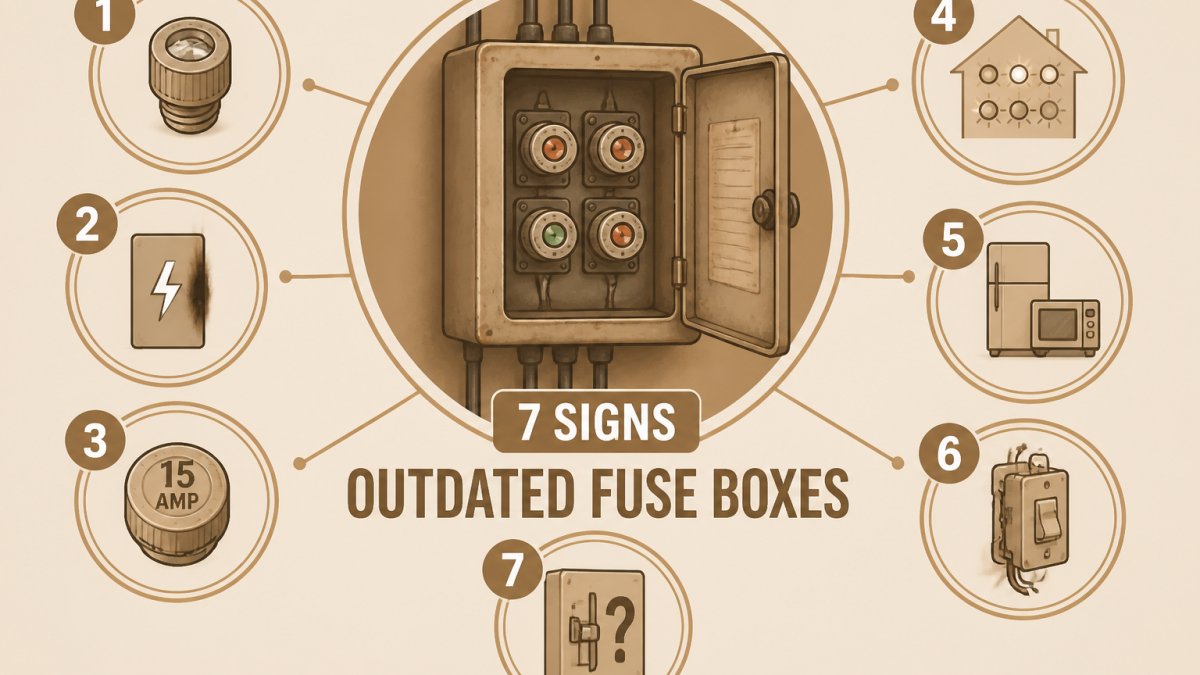
Older panels, such as fuse boxes and some early breaker panels, have different risks than modern ones. Fuse boxes may use improper fuses that allow too much current. Older breakers can wear out and fail to trip when they should.
Modern panels include better breakers and clearer labeling, but they still need clearance and periodic checks. Age alone is not the only factor. Look at the condition, the brand, and whether the panel has been modified.
Documenting Your Findings and Deciding Whether to Call a Professional
Keep a simple log of each inspection. Record the date, the panel location, photos of the label directory and cabinet, and any warning signs you noticed. A clear record helps an electrician understand what changed over time.
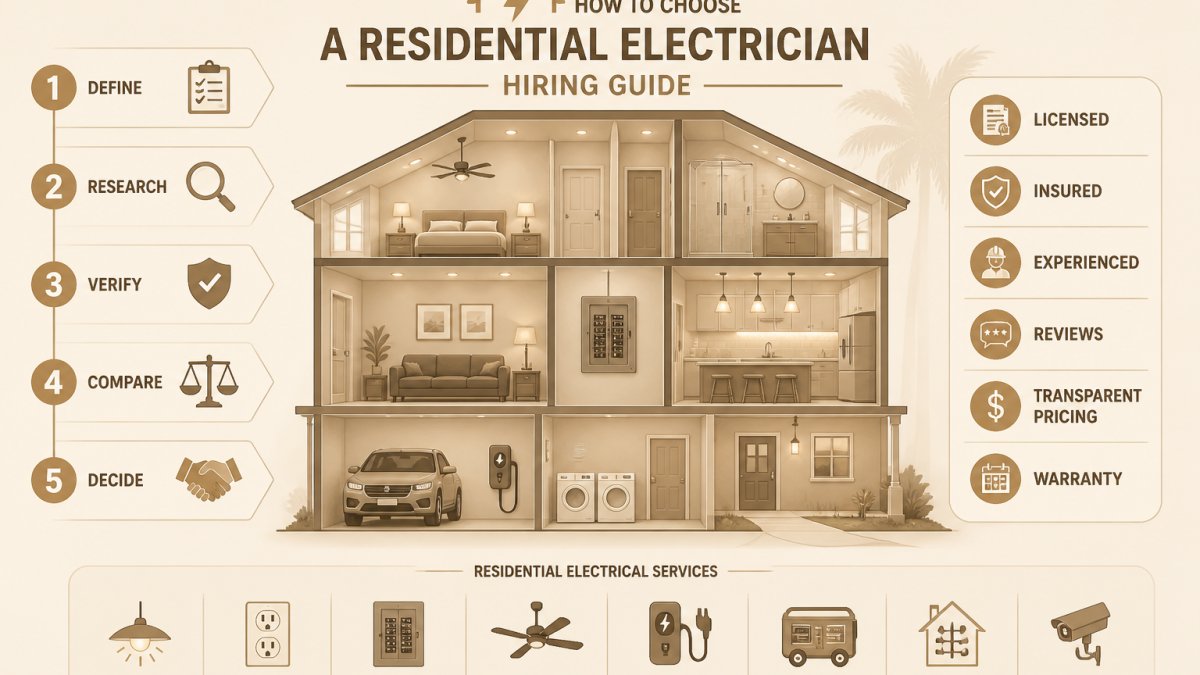
Call a licensed professional if you find any of the warning signs above, if the panel is more than a few decades old, or if you plan a major upgrade. Our guide on how to tell if your electrical panel needs replacing explains when replacement is the better option, and how to find a licensed electrician for a panel upgrade covers what to ask before you hire someone.
Booking Your Next Panel Inspection With Light Life Electric
A visual check can catch early problems, but a full inspection needs a licensed electrician. Light Life Electric is a family-owned electrical contractor serving Southwest Florida, with Florida-certified electricians who handle the process from permits through final inspection.
Review our full range of residential and commercial electrical services to see what we offer, or get in touch with our team to schedule an inspection or request an estimate. Get your free electrical estimate today.
Frequently Asked Questions
What is the proper procedure for inspecting an electrical panel?
Start by confirming the required working space: at least 30 inches wide, 36 inches deep, and 78 inches of headroom. Put on PPE, then check the exterior for damage, moisture, and discoloration before anything else. Only remove the dead front cover if you are trained to do so. Look at breakers, wiring, grounding, and labeling, and record what you find. If anything looks burned, wet, or unsafe, stop and call a licensed electrician. Light Life Electric can handle the full inspection and any repairs that follow.
How often should an electrical panel be inspected by a professional?
Most residential electrical panels should be inspected by a professional every three to five years. Homes with older panels, frequent breaker trips, or recent renovations may need more frequent checks. A homeowner can perform a basic visual inspection between professional visits to catch obvious warning signs early. Light Life Electric offers certified electrical inspections for homes in Manatee and Sarasota Counties, and pricing depends on the size and condition of the panel, so request a free estimate for a current quote.
Can a homeowner safely open an electrical panel cover?
A homeowner can safely look at the outside of a panel and check for visible damage, but removing the cover exposes live parts that can cause serious injury. The National Electrical Code requires specific clearances and protections around panels, and many panels carry hazards even when the main breaker is off. If water is dripping on the panel or pooled on the floor beneath it, do not touch or approach it. Call a licensed electrician to open the cover and inspect internal components.
What are the most common red flags during an electrical panel inspection?
Common red flags include scorch marks or discoloration around breakers, a burning smell, warm or buzzing panels, breakers that trip repeatedly, missing or damaged covers, and rust or moisture inside the enclosure. Missing circuit labels and unauthorized wiring changes also deserve attention. Any of these signs means the panel should be evaluated by a licensed professional. Light Life Electric provides prompt diagnostics and 24/7 emergency response for urgent electrical issues across Southwest Florida.