 how-to
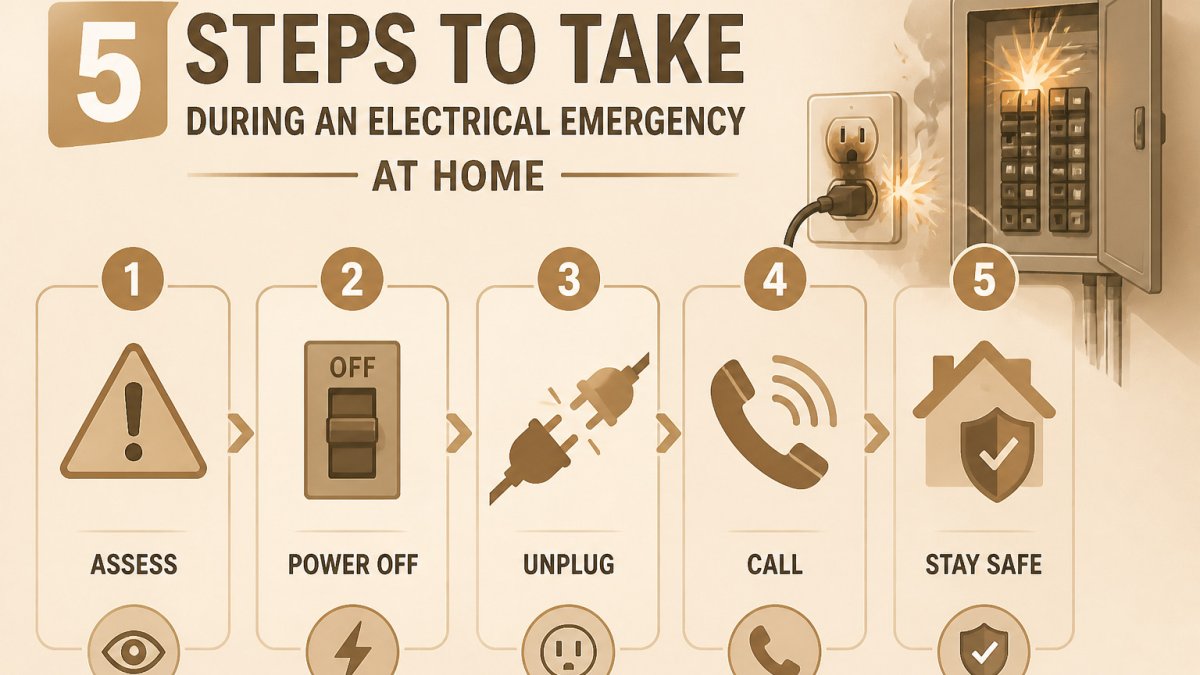
5 Steps to Take During an Electrical Emergency at Home
Last Updated: October 27, 2026
Quick Summary
During an electrical emergency at home, first keep everyone out of danger and avoid touching damaged wires, outlets, or water near them. If it is safe, shut off power at the main breaker, and call 911 whenever someone is hurt or a fire is spreading.
- Move children and pets to a safe room before doing anything else.
- Never use water on an electrical fire, since water conducts electricity.
- Use a Class C fire extinguisher, aiming low at the base of the flames.
- Do not touch a shock victim until the power is off.
- Call a licensed emergency electrician for sparks, a hot outlet, or a breaker that keeps tripping.
Table of Contents
- Step 1: Assess the Situation and Stay Safe
- Step 2: Shut Off Power at the Main Breaker
- What to Do During an Electrical Fire
- What to Do If Someone Gets an Electric Shock
- Electrical Burning Smell in House: What It Means
- When to Call an Emergency Electrician
- Scheduling Your Post-Emergency Safety Inspection With Light Life Electric
- Frequently Asked Questions
An electrical emergency at home can turn dangerous in seconds. A sparking outlet, a burning smell, or a family member who gets shocked all call for fast, calm action. This guide outlines steps to take before a licensed electrician arrives.
The steps below are simple. Work through them in order, and call 911 whenever someone is hurt or a fire is spreading.
Step 1: Assess the Situation and Stay Safe
Your first job in any electrical emergency is to keep yourself and everyone else out of danger. Do not rush in.
- Look for smoke, fire, sparks, or water near outlets and fixtures.
- Move children and pets to a safe room.
- Do not touch any appliance, wire, or outlet that looks damaged.
- Stand on dry floor, and avoid touching anything wet.
Watch out: Water and electricity do not mix. If you are standing in water, do not reach for a switch or plug. Get out of the water first if you can do so safely.
Before you act, check these hazards and the response for each one.
| Situation | What to do | Note |
|---|---|---|
| Water near outlets | Get out of the water first if safe | Do not touch switches or plugs |
| Children and pets | Move them to a safe room | Do this before anything else |
| Damaged appliance or wire | Do not touch it | Stay away from anything that looks damaged |
| Standing surface | Stand on dry floor | Avoid touching anything wet |
Step 2: Shut Off Power at the Main Breaker
If it is safe to reach your electrical panel, cut the power at the main breaker. This stops current from flowing through the whole home.
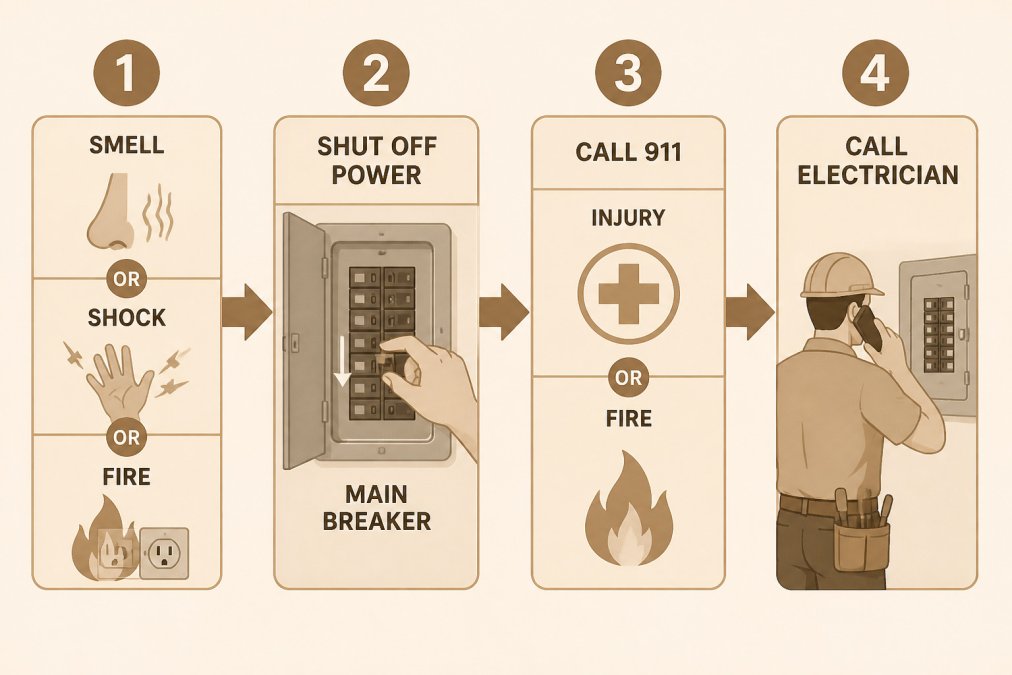
- Find the main breaker, usually the large switch at the top of the panel.
- Stand to one side of the panel, not directly in front of it.
- Flip the main breaker to the OFF position with a dry hand.
- Call a licensed electrician if the breaker will not stay off or the panel looks damaged.
If the panel is wet, smoking, or hot to the touch, leave it alone. Call the fire department from outside the home.
What to Do During an Electrical Fire
An electrical fire needs a different response than a grease or paper fire. Water can make it worse.
- Call 911 right away.
- Shut off the main breaker only if you can reach it without going near the fire.
- Use a Class C fire extinguisher, which is rated for electrical fires. Aim low at the base of the flames.
- Get everyone out and close the door behind you to slow the spread.
Never use water on an electrical fire. Water conducts electricity and can shock the person using it.
What to Do If Someone Gets an Electric Shock
A shock can stop breathing or heartbeat, so act fast.
- Do not touch the person until the power is off. You could get shocked too.
- Shut off the power at the main breaker or unplug the source if you can do so safely.
- Call 911 for any shock, even if the person seems fine.
- Check breathing. If they are not breathing, start CPR if you know how.
- Keep the person still and warm while you wait for help.
Some shock injuries look minor on the outside but cause serious damage inside the body. Always get medical care.
Get your free electrical estimate →
Electrical Burning Smell in House: What It Means
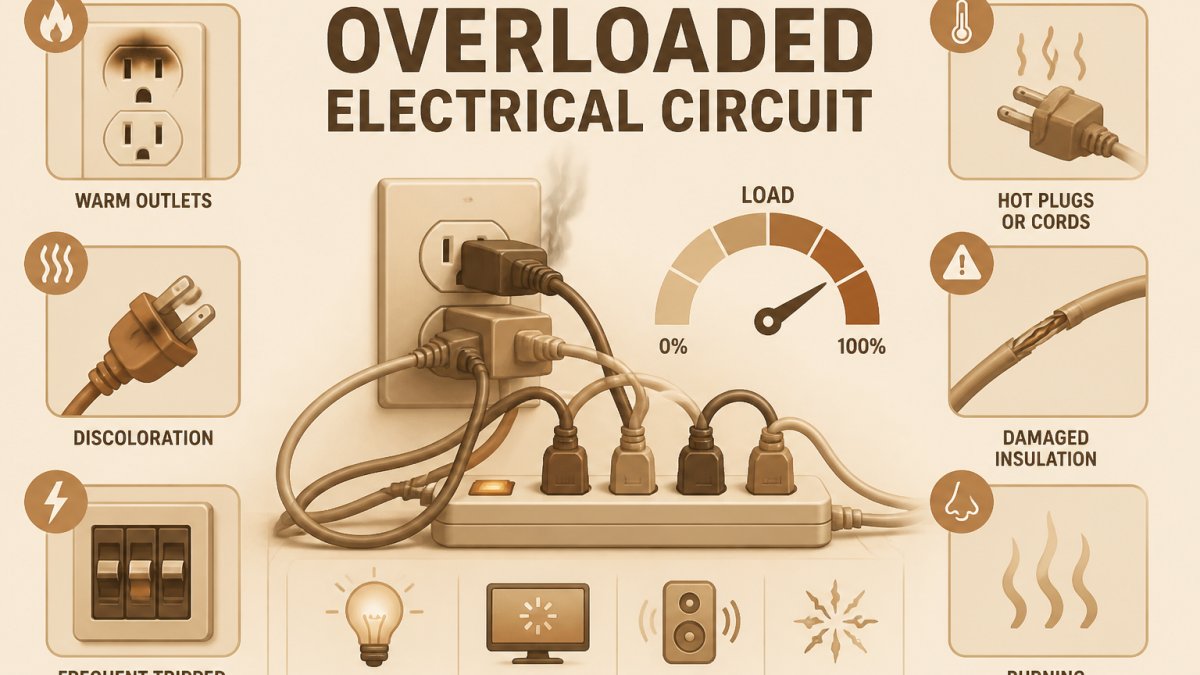
A burning smell is a warning sign. It often means wiring is overheating, insulation is melting, or a device is failing.
Common causes include:
- An overloaded outlet or power strip
- A loose connection at an outlet or switch
- A failing appliance motor or cord
- Damaged wiring inside a wall
If you smell burning and cannot find the source, shut off power to that area at the breaker. Do not wait for the smell to pass. Call an electrician the same day. Check the warning signs to confirm whether your situation needs an emergency electrician.
When to Call an Emergency Electrician
Call a licensed emergency electrician right away if you notice any of these:
- Sparks, buzzing, or flickering lights that will not stop
- A hot outlet, switch, or breaker panel
- A breaker that trips again and again after reset
- Power loss in part of the home or the whole house
- Any burning smell that does not go away after shutting off power
Ask for a clear explanation of what failed and what the repair will cost before work begins.
Light Life Electric offers 24/7 emergency response across Southwest Florida. For a quote, contact us.
Scheduling Your Post-Emergency Safety Inspection With Light Life Electric
Once the emergency is over, get a full safety inspection. It can catch problems that caused the event and others that have not shown up yet.
A post-emergency inspection usually covers the panel, the wiring in the affected area, outlets and switches, and any appliances involved. Before the visit, gather any notes about what happened, when, and what you did in response. See how to get ready for a residential electrical safety inspection.
Ready to schedule? Contact Light Life Electric to book your inspection and get your home checked by a licensed professional.
Frequently Asked Questions
What should I do first during an electrical emergency at home?
Stay calm and keep yourself safe first. Do not touch exposed wires, water near outlets, or anyone who is still in contact with electricity. If it is safe to reach your electrical panel, shut off the main breaker to cut power to the home. If there is smoke, sparking, fire, or an injured person, call 911 immediately. Once the situation is stable, call a licensed electrician to inspect the problem before power is restored.
Can I turn the power back on after a breaker trips?
A tripped breaker is a protective response to an overload or short circuit, so it should not be reset repeatedly. Unplug the devices on that circuit, reset the breaker once, and see whether it holds. If it trips again, or if it trips immediately, leave it off and have a licensed electrician diagnose the cause. Repeated resetting can cause overheating inside walls, which turns a small fault into a serious fire risk.
When should I shut off the main breaker during an electrical emergency?
Shut off the main breaker when you smell burning, see sparks or scorch marks, notice a fire in an outlet or appliance, or suspect water has reached live electrical components. Only do this if you can reach the panel without standing in water or touching anything damaged. If the panel itself is damaged, smoking, or wet, do not open it; call 911 and wait for firefighters to advise. Once power is off, do not restore it until a licensed electrician has inspected the system.
When should I call 911 for an electrical problem?
Call 911 right away if there is an active fire, if someone has been shocked and is unconscious, not breathing, or has burns, or if smoke is coming from an outlet, panel, or appliance that you cannot safely reach. Do not wait to see if the problem resolves itself. Emergency responders can address immediate danger, and a licensed electrician can handle the repair once the scene is safe.