 listicle
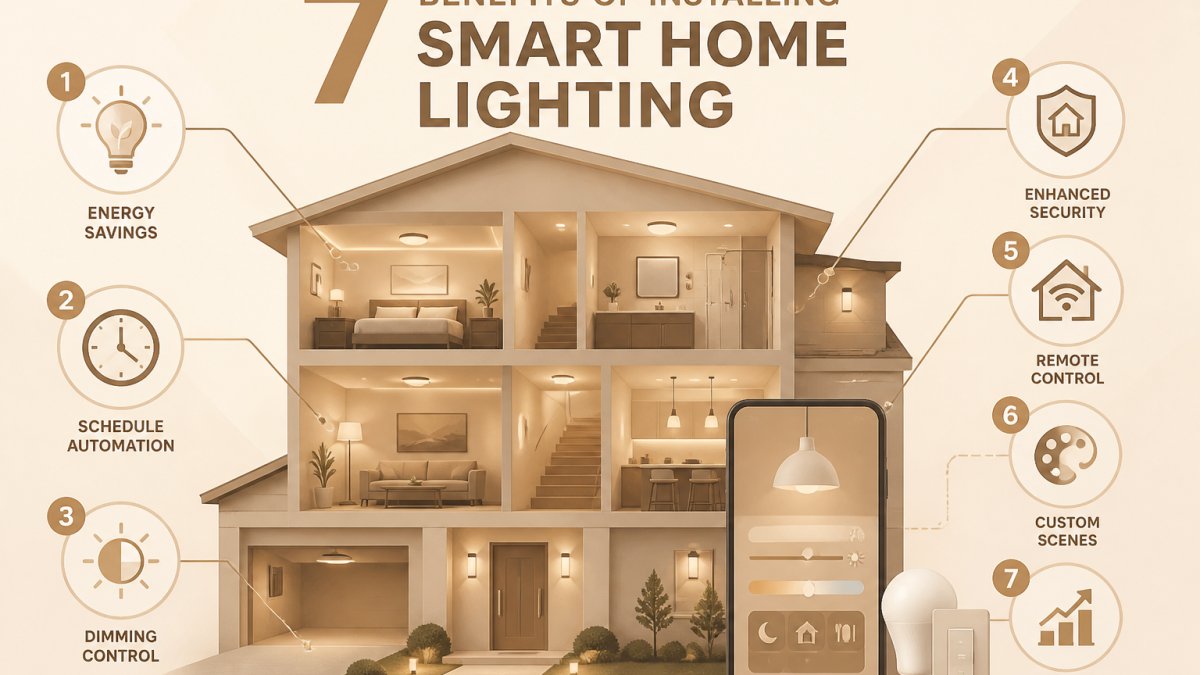
7 Benefits of Installing Smart Home Lighting
Last Updated: October 26, 2026
Quick Summary
Smart home lighting delivers 70-90% energy savings compared to traditional incandescent bulbs while enabling convenient mobile app and voice control of brightness, color temperature, and scheduling. A typical full-home setup costs between $1,000 and $5,000 and pays back through reduced electricity costs and fewer bulb replacements over time.
- Smart home lighting systems save 70-90% energy versus incandescent bulbs according to Highland Electric's 2026 analysis
- Full-home smart lighting installation typically costs $1,000-$5,000 with payback through hundreds of dollars in electricity savings over a decade
- Motion-activated outdoor lighting deters intruders by eliminating dark corners and can simulate occupancy when you're away
- Automation routines gradually brighten bedroom lights at sunrise and shift to warmer tones at night to support natural sleep cycles
- Outdoor fixtures require IP65 or higher water ratings and wet-location listings to withstand heat, humidity, and storm exposure in Parrish
Table of Contents
- Energy Efficiency and Lower Utility Bills
- Convenience Through Mobile App Control and Voice Commands
- Enhanced Home Security and Occupancy Simulation
- Automated Routines and Scheduling for Daily Life
- Benefits of Automated Landscape Lighting
- Understanding Smart Home Lighting Installation Cost
- Why You Need a Licensed Electrician Near Me for Installation
- Start Your Smart Lighting Upgrade Today
- Frequently Asked Questions
Energy Efficiency and Lower Utility Bills
Smart home lighting cuts electricity consumption dramatically. According to Highland Electric's 2026 analysis, smart lighting systems deliver 70-90% energy savings compared to traditional incandescent bulbs.
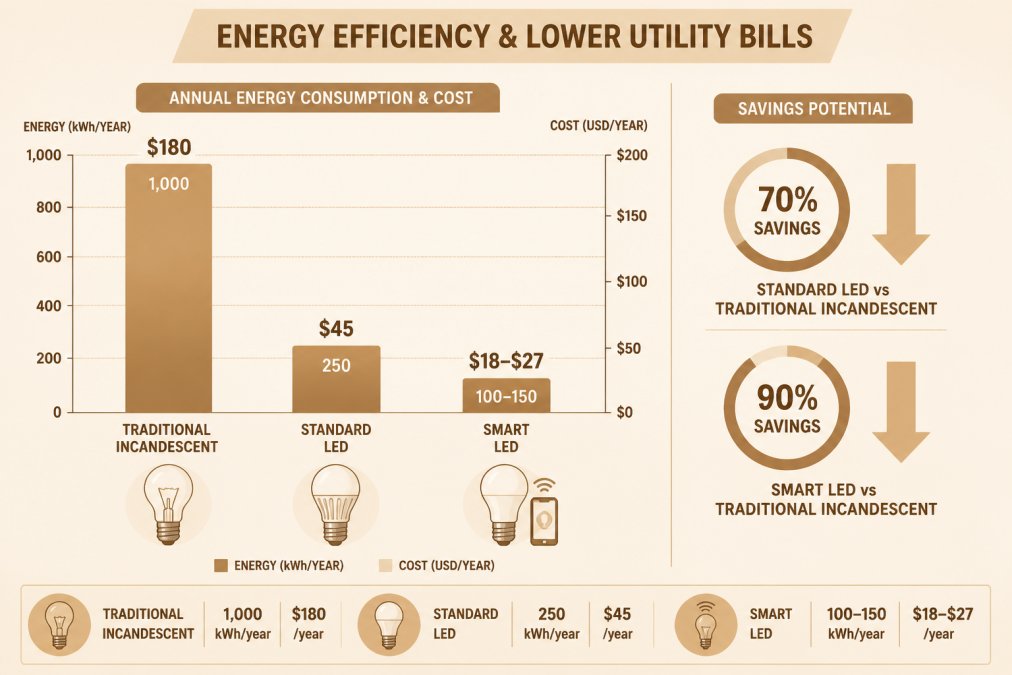
The math is straightforward. A full-home smart lighting setup typically costs between $1,000 and $5,000 according to GearBrain's 2026 residential lighting guide, but the energy savings compound monthly.
LED technology, the backbone of modern smart lighting, operates at a fraction of the wattage, so most homeowners see measurable reductions within the first billing cycle. Learn more about the specific benefits of LED technology in smart lighting systems.
Over a decade, the difference adds up to hundreds of dollars in electricity costs alone, before factoring in reduced replacement frequency and lower maintenance.
Smart lighting systems deliver substantial energy and cost advantages compared to traditional bulbs.
| Metric | Value | Note |
|---|---|---|
| Energy savings vs incandescent | 70-90% | Compared to traditional incandescent bulbs |
| Full-home setup cost | $1,000-$5,000 | Typical installation price range |
| Smart bulb lifespan | 15-25 incandescent bulbs | Duration equivalence |
| Payback period | Hundreds of dollars | Over a decade in electricity costs alone |
Convenience Through Mobile App Control and Voice Commands
Voice commands add another layer: say "lights on" or "dim to 50 percent" and your system responds instantly. Integration with popular voice assistants makes your lighting part of a unified smart home ecosystem managed through one interface.
App-based control extends to scheduling and automation.
Remote access catches most people off guard. Forgot to turn off the porch light before vacation? Open your app and handle it instantly. Coming home late? Turn on interior lights before you arrive.
Enhanced Home Security and Occupancy Simulation
Smart lighting is a powerful security tool.
Motion sensors activate lights when movement is detected, exposing an approaching intruder to neighbors and street cameras. Motion-activated outdoor lighting eliminates dark corners where someone could hide.
Outdoor lighting deserves special attention. Pathway, entryway, and landscape lighting create a well-lit perimeter that discourages criminal activity, and smart systems let you control these zones remotely.
Automated Routines and Scheduling for Daily Life
Automation removes friction from your daily routines. A morning routine can gradually brighten bedroom lights to 100% over 15 minutes, simulating sunrise; paired with your coffee maker and smart thermostat, you wake to a home that's already warm and well-lit.
Evening routines work the same way. Sunset triggers a gradual dimming sequence that reduces blue light exposure, and bedroom lights shift to warmer color temperatures as the night progresses, supporting natural melatonin production.
Work-from-home schedules benefit too.
Scheduling handles the details you'd forget: bathroom lights on for exactly five minutes during morning routines, kitchen lights brightening at 6 AM, living room lights dimming at 10 PM unless you override them. These small automations add up to real time savings.
Benefits of Automated Landscape Lighting
Outdoor smart lighting is where local conditions separate a system that lasts a decade from one that fails in two summers. The benefits, curb appeal, pathway safety, zone control, and energy savings, only hold up if the hardware is specified for the environment it lives in.
What the local climate does to outdoor fixtures
Three forces drive premature failure in outdoor smart lighting here: sustained heat, high humidity, and storm-driven wind and rain.
- Heat. Attic-adjacent soffit fixtures and direct-sun wall lights routinely see housing temperatures well above ambient. LED drivers and smart radios degrade first, and a fixture rated only for mild climates will lose Wi-Fi or Zigbee connectivity before the LEDs dim. Look for an operating temperature rating that comfortably exceeds local summer highs.
- Humidity and moisture. Condensation inside a poorly sealed housing corrodes circuit boards and fogs lenses. In-ground well lights and fixtures near irrigation heads are highest-risk. Gasketed housings, potted electronics, and drainage-friendly mounting matter more here than in dry markets.
- Storms. Wind-driven rain finds every gap. Fixtures on exposed posts, dock lights, and unshielded path lights take the brunt. "Weather-resistant" is not the same as rated for direct exposure to driving rain.
Ratings to insist on
When you compare outdoor smart fixtures, the spec sheet is the buying decision:
- IP rating. The Ingress Protection code's second digit rates water resistance. For exposed path, post, and entry fixtures, IP65 or higher is the practical floor; IP66 and IP67 are worth the premium for coastal-exposed or storm-facing locations. In-ground and fountain-adjacent fixtures should be rated for temporary immersion.
- Wet-location listing. Fixtures and their junction boxes should carry a wet-location listing from a nationally recognized testing laboratory (the UL mark is the common one). "Damp location" is not enough for exposed outdoor use.
- Corrosion-resistant housing. Powder-coated aluminum or high-grade composite housings outlast painted steel in humid, salt-influenced air. Stainless hardware beats zinc-plated screws at every connection point.
Where automation earns its keep outdoors
Once the hardware is right, the automation layer is what turns landscape lighting from a set of switches into a system:
- Astronomical scheduling. Rather than a fixed clock time, schedule on/off against sunset and sunrise so the system tracks the seasonal shift automatically. Most smart lighting apps and hubs support this natively.
- Zoned scenes. Separate the entry, the path, the patio, and the landscape beds into independent zones. A late-arrival scene can light the driveway and entry without blazing the entire yard.
- Motion-triggered boost. Path and perimeter fixtures can sit at a low ambient level and jump to full brightness on motion, preserving the security benefit without running every fixture at full output all night.
Practical layout notes for common outdoor zones
- Entry and porch. Layer a downward-facing fixture over the door with lower-level path lighting so arriving guests are lit from above and guided from below. Keep the entry fixture on a motion-plus-schedule combination so it is bright on arrival and dim otherwise.
- Walkways and steps. Low-glare path lights spaced to overlap their pools of light, with step lights on stairs. Motion activation here is a safety feature, not a luxury.
- Patio and deck. Warm, dimmable overhead or string lighting on a dedicated scene for entertaining, plus a separate task-level zone for grilling or dining.
You can explore top 10 outdoor landscape lighting ideas for your yard to see how automated outdoor lighting enhances both aesthetics and functionality for residential properties.
Get your free electrical estimate →
Understanding Smart Home Lighting Installation Cost
A useful cost conversation starts with what actually drives the number, not a single wide range. Installation cost is the sum of hardware, labor, and the electrical work required to make the hardware function, and the third item is where quotes diverge most.
The three cost buckets
1. Hardware. Smart bulbs, smart switches, dimmers, hubs or bridges, and outdoor fixtures.
2. Labor. Labor scales with fixture count, ceiling height, and access. A single-story room with an accessible attic is a different job from a vaulted two-story foyer.
3. Electrical work and compliance. New circuits, added outlets, panel capacity, and permits. This is the bucket homeowners underestimate, and the one that most affects whether a project stays on budget.
What moves a quote up or down
- Retrofit versus new construction. Retrofitting into finished walls and ceilings costs more in labor than wiring an open frame.
- Switch versus bulb strategy. A whole-home smart-switch approach typically costs more in hardware but less in per-room complexity than outfitting every socket with a smart bulb.
- Neutral wire availability. Many smart switches require a neutral wire in the box. Older wiring may not have one, which can force a bulb-based approach or additional wiring work.
A transparent way to think about payback
Broad savings claims are easy to make and hard to verify. A more honest approach is to build a simple model with your own numbers:
- Count the bulbs you would replace and note their current wattage.
- Estimate hours of use per day for each group (living areas, outdoor, accent).
- Compare wattage between the existing bulbs and the smart LED replacements.
- Multiply the wattage difference by hours and by your electricity rate to get annual savings per bulb.
- Add avoided replacement cost, smart LEDs typically outlast incandescent bulbs many times over, so fewer purchases over the system's life.
The result will not match a marketing headline, but it will be yours, and it will tell you whether the project pays back in a few years or over a decade. For most homes, the largest savings come from the fixtures that run the longest, outdoor and living-area lighting, not from rooms used briefly.
Why professional installation is part of the cost, not an add-on
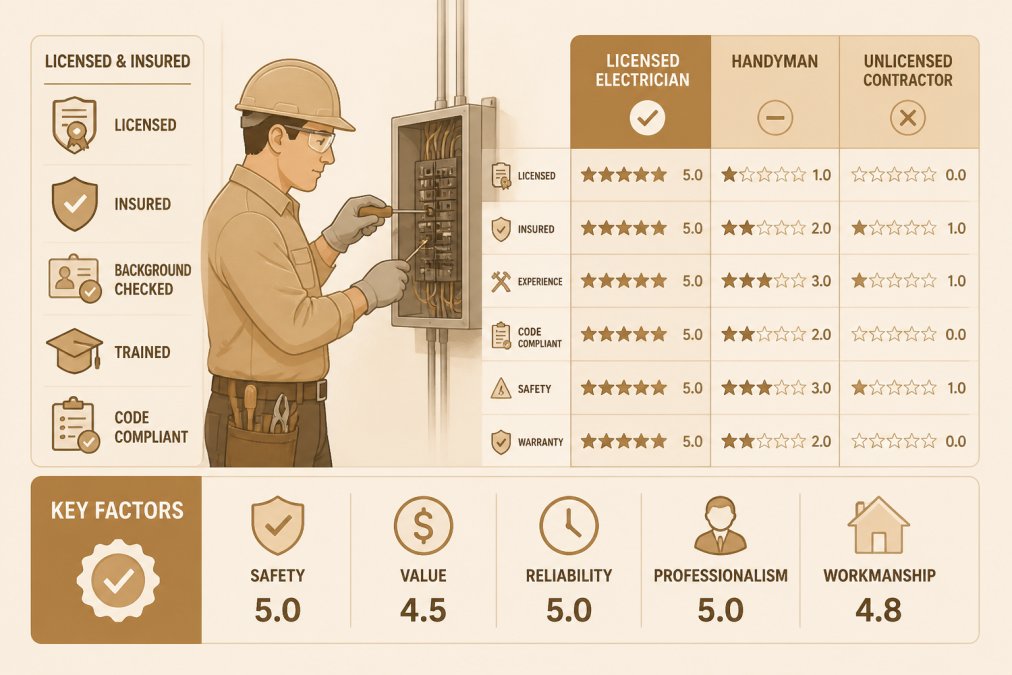
Improper wiring is a fire and shock hazard, and unpermitted work can complicate insurance claims and a future sale. A licensed electrician handles permits, inspection, and code compliance, and designs the integration between the lighting system, the home's wiring, and the network so devices do not conflict.
Pricing depends on quantity, dates, and your specific project scope. Light Life Electric provides free estimates that account for your home's unique layout and requirements, so you understand exactly what your project involves and what the investment will be.
Why You Need a Licensed Electrician Near Me for Installation
Smart home lighting installation requires electrical expertise. Improper wiring creates safety hazards, code violations, and system failures; a licensed electrician ensures every connection meets current codes and functions safely.
Professional installers also handle integration.
You can learn more about how to hire a professional electrician and understand what makes a qualified contractor. For residents in this area, local electrician services in Parrish provide expertise specific to regional building codes and climate considerations.
Permits and inspections are non-negotiable.
Light Life Electric handles the entire process from permits to final inspection. Our Florida certified electricians ensure your smart lighting system is installed safely, passes all inspections, and functions exactly as designed.
Start Your Smart Lighting Upgrade Today
Smart home lighting delivers measurable benefits: lower electricity bills, enhanced security, convenient control, and improved comfort, proven, affordable technology accessible to any homeowner willing to invest in professional installation.
The first step is understanding your specific needs and getting an accurate cost estimate. Contact Light Life Electric for a free electrical estimate and discuss your smart lighting goals with our team.
Our Florida certified electricians bring expertise in residential lighting design, smart home integration, and code-compliant installation. We handle permits, inspections, and final sign-off so you can focus on enjoying your upgraded home.
Frequently Asked Questions
How much does smart home lighting installation cost?
Full-home smart lighting setups typically range from $1,000 to $5,000, depending on system size, the number of fixtures, and whether you choose professional installation. Costs vary based on your home layout, existing wiring, and the specific smart bulbs and controls you select. A licensed electrician can provide an accurate estimate after assessing your property. Pricing depends on quantity, complexity, and your specific needs, contact Light Life Electric for a free estimate tailored to your home.
Can I install smart home lighting myself, or do I need a licensed electrician?
While some smart bulbs can be installed as simple replacements, a licensed electrician should handle smart switches, hubs, and integrated systems to ensure code compliance and proper wiring. Professional installation guarantees safety, correct connectivity, and that your system works reliably with your home's electrical panel. Light Life Electric handles the entire installation process from permits to final inspection, ensuring your smart lighting system meets all electrical codes.
How much energy and money can I save with smart lighting?
Smart lighting systems can deliver 70-90% energy savings compared to traditional incandescent bulbs. One smart bulb lasts as long as 15-25 incandescent bulbs, reducing replacement frequency and maintenance costs. Lower electricity consumption directly reduces your utility bills each month. Actual savings depend on your current lighting setup, daily usage patterns, and local energy rates, but most homeowners see measurable reductions within the first billing cycle.
What is the difference between smart bulbs and smart switches?
Smart bulbs are individual LED bulbs with built-in wireless connectivity that you can control via app or voice. Smart switches replace your existing wall switches and control all connected lights in that fixture or room. Smart switches work with standard bulbs and are ideal for whole-room or whole-home control. Many homeowners combine both for maximum flexibility, smart bulbs for specific fixtures and smart switches for convenience in high-traffic areas.
The smart home lighting market is growing at a 24.43% annual rate, according to Mordor Intelligence, as more homeowners recognize the value of automated, efficient lighting. Your home deserves the same technology and expertise. Get started today with Light Life Electric and experience the benefits of smart home lighting in your daily life.