 ultimate-guide
Signs You Need Electrical Panel Replacement in 2026
Table of Contents
- The 8 Warning Signs Your Electrical Panel Is Failing
- Signs of an Overloaded Electrical Circuit vs. Panel Failure
- How Long Do Electrical Panels Last?
- When to Upgrade to 200 Amp Service for Modern Homes
- What Drives Electrical Panel Upgrade Cost
- Insurance, Safety, and the Risks of DIY Panel Replacement
- Your Next Step: Get a Professional Electrical Inspection
- Frequently Asked Questions
Last Updated: September 7, 2026
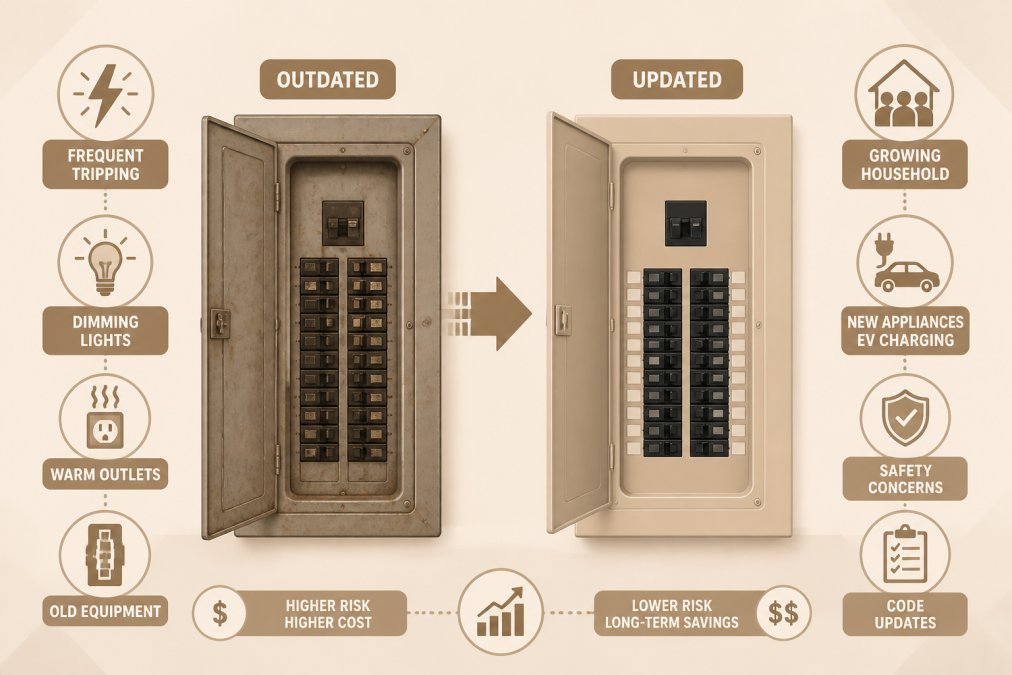
Your circuit breaker trips when you run the microwave and toaster at the same time. The lights in the living room flicker for no apparent reason. You notice a faint burning smell near the garage. These are not random annoyances; they are the classic signs you need electrical panel replacement, and ignoring them puts your home at risk of an electrical fire.
Electrical panel replacement is the process of removing your outdated or failing service panel and installing a new one that meets current National Electrical Code (NEC) standards. Our Florida certified electricians have seen what happens when homeowners delay this critical safety upgrade. The electrical panel is the heart of your home's wiring system, distributing power to every circuit, outlet, and appliance. When it fails, the consequences range from inconvenient power loss to dangerous electrical fires.
Below, we'll walk through the eight warning signs that indicate your panel is failing, explain the difference between an overloaded circuit and panel failure, and show you exactly what to expect from the replacement process. We'll also cover the cost factors, insurance implications, and why this is not a DIY project.
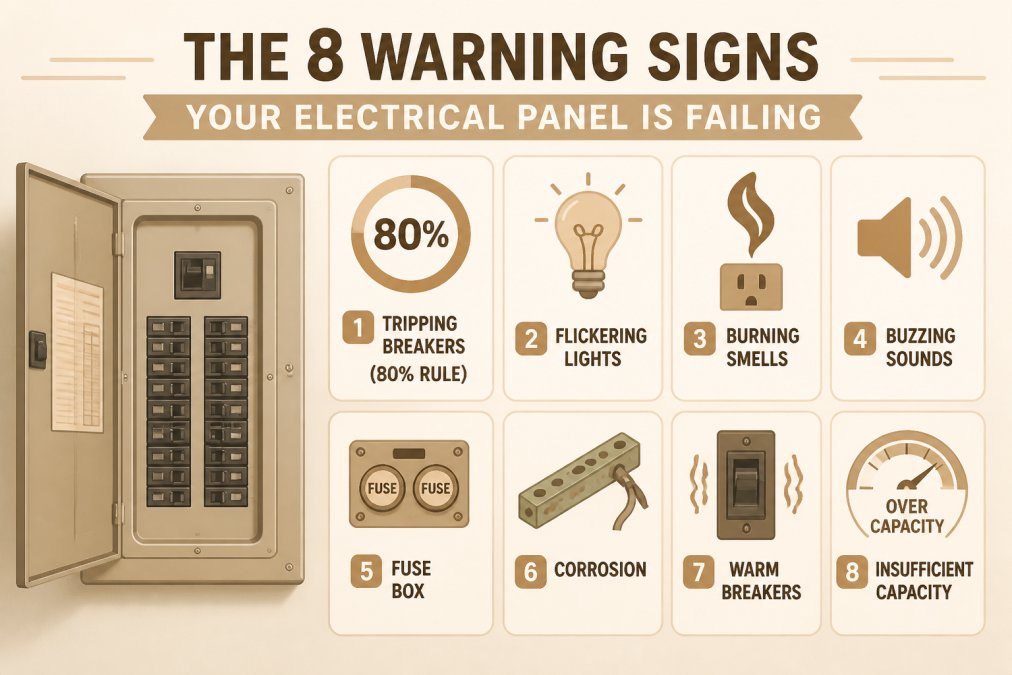
The 8 Warning Signs Your Electrical Panel Is Failing
Your electrical service panel works silently in the background, so it's easy to forget it exists until something goes wrong. Recognizing the warning signs early can prevent costly damage and protect your family. The eight most common indicators that your panel needs attention are frequent tripping, flickering lights, burning smells, buzzing sounds, an outdated fuse box, visible corrosion, warm breakers, and insufficient capacity for modern appliances.
Frequent Tripping and the 80% Rule
A circuit breaker that trips occasionally is doing its job by preventing overloaded circuits. However, when breakers trip regularly, it signals a deeper problem. According to the National Electrical Code guidelines, a breaker should not be continuously loaded beyond 80% of its rated capacity. This means a 15-amp breaker should handle no more than 12 amps of continuous load.
If your breakers trip more than once a month, calculate the load on that circuit. Add up the wattage of everything connected to it. When the total exceeds the 80% threshold, you either need to redistribute the load or upgrade your panel to handle the demand. Frequent tripping is one of the most common signs you need electrical panel replacement, especially in older homes where the original panel was sized for far fewer appliances.
Visual Clues: Scorch Marks, Rust, and Warmth
Your panel communicates through visual and physical cues. Open the metal door and inspect the breakers and wiring. Scorch marks or a brownish discoloration around breakers indicate arcing, which generates intense heat and is a leading cause of electrical fires. Rust or corrosion on the panel box or breakers suggests moisture intrusion, which compromises the integrity of the electrical connections.
Touch the face of individual breakers. They should feel cool to the touch. A warm or hot breaker indicates an overloaded circuit or a failing component. Similarly, if the panel cover itself feels warm, the internal connections are generating excess heat. A burning smell, even faint, near the panel demands immediate attention. These are not subtle hints; they are urgent signs you need electrical panel replacement before a failure occurs.
Signs of an Overloaded Electrical Circuit vs. Panel Failure
Many homeowners confuse an overloaded circuit with a failing panel, but they are distinct problems requiring different solutions. An overloaded circuit happens when you draw more power through a single circuit than its wiring and breaker can safely handle. The breaker trips to prevent the wires from overheating. The fix is often simple: move appliances to different circuits or add a new dedicated circuit.
Panel failure, however, is systemic. The panel itself can no longer safely distribute power throughout your home. Signs of an overloaded electrical circuit include a single breaker that trips when you use specific appliances, dimming lights when the HVAC kicks on, and outlets that feel warm. These symptoms point to individual circuit issues.
Panel failure presents broader symptoms. Multiple breakers trip randomly, the main breaker fails to reset, or you see physical damage like scorching inside the panel. When the problem is the panel itself, no amount of circuit redistribution will help. This distinction matters because it determines whether you need a simple circuit addition or a full electrical panel replacement. A licensed electrician can perform a load calculation to determine which situation you're facing.
How Long Do Electrical Panels Last?
The lifespan of an electrical panel depends on its type, quality of installation, and environmental conditions. Most modern panels with circuit breakers are designed to last 25 to 40 years. However, panels containing fuses are significantly older and should have been replaced decades ago. If your home still has a fuse box, you likely need an upgrade regardless of how well it appears to function.
Several factors can shorten a panel's lifespan. Exposure to humidity and salt air, common in coastal Florida, accelerates corrosion on bus bars and breaker contacts. Frequent tripping from overloaded circuits wears out breaker mechanisms. Poor installation with loose connections creates heat that degrades components over time.
According to the U.S. Consumer Product Safety Commission guidance, older panels with aluminum wiring or specific recalled breaker models present known fire hazards and should be replaced immediately. If your panel is more than 25 years old, schedule an inspection to assess its condition. Age alone is not a definitive reason for replacement, but it significantly increases the likelihood that other warning signs will appear. Knowing how long do electrical panels last helps you plan for this inevitable home maintenance expense.
When to Upgrade to 200 Amp Service for Modern Homes
The standard for new homes today is 200-amp service, but many older homes were built with 60-amp or 100-amp panels. A 60-amp panel was sufficient when homes had few outlets and no central air conditioning. Modern homes are完全不同. The average home now operates multiple high-draw appliances simultaneously: electric ovens, dryers, HVAC systems, and increasingly, electric vehicle chargers.
You should consider upgrading to 200 amp service if you experience any of the following situations. You're adding a home office with dedicated circuits for computers and equipment. You're installing an EV charger, which alone can draw 40 to 50 amps. You're finishing a basement or adding a room, increasing your square footage and outlet count. You rely on portable heaters or space heaters because your current system can't keep up.
The electrical load of a smart home also grows quickly. Smart appliances, security systems, and multiple always-on devices add a continuous baseline load that older panels struggle to support. When you upgrade to 200 amp service, you gain the capacity to run everything comfortably without tripping breakers. This upgrade also increases your home's resale value, as buyers expect modern electrical infrastructure. An electrician can perform a detailed load calculation to confirm whether 200 amps meets your current and future needs.
Get your free electrical estimate →
What Drives Electrical Panel Upgrade Cost
The cost of electrical panel replacement varies widely based on several factors, and understanding them helps you budget realistically. The primary cost driver is the amperage of the new panel. Upgrading from 100-amp to 200-amp service costs more than a like-for-like panel replacement because it may require a new service entrance cable and a larger meter base.
Labor is the second major factor. Panel replacement is not a quick job. It typically takes a full day for a licensed electrician to disconnect the old panel, install the new one, and reconnect all circuits. The complexity of your existing wiring affects the time required. Homes with messy, unlabeled wiring take longer to sort out.
Permit fees and inspection costs are part of the total. Your local jurisdiction requires a permit for panel replacement, and the work must pass inspection to ensure it meets the NEC. These fees vary by municipality. Finally, the brand and type of panel you choose affect the price. Standard breaker panels are more affordable than panels with arc fault circuit interrupter (AFCI) protection on every circuit, though AFCI protection is now required by code in most living areas.
Pricing depends on your specific home, the amperage you choose, and local permit requirements. For an accurate quote tailored to your situation, contact Light Life Electric for a free estimate. Our team handles everything from permits to final inspection, so you receive one transparent price with no surprise charges.
Insurance, Safety, and the Risks of DIY Panel Replacement
Attempting to replace your own electrical panel is dangerous and likely illegal. Most municipalities require a licensed electrician to pull the permit and perform the work. DIY panel replacement also voids your homeowner's insurance. If a fire occurs and investigators trace the cause to unpermitted, unlicensed electrical work, your claim will be denied.
Insurance companies view electrical panels as a significant risk factor. An outdated panel, particularly one with known defect issues, can make it difficult to obtain or renew a homeowner's policy. Some insurers require an electrical inspection and proof of an upgraded panel before they will write coverage. According to the Insurance Information Institute's home safety guidance, maintaining your home's electrical system is essential for both safety and insurability.
The risks of DIY go beyond legal issues. Working inside a live electrical panel exposes you to lethal voltage. The main service lugs remain energized even when the main breaker is off unless the utility disconnects service. One mistake can cause a fatal shock or an arc flash that causes severe burns. Professional electricians have the training, tools, and experience to work safely. They also know the local code requirements, ensuring the installation passes inspection the first time.
Your Next Step: Get a Professional Electrical Inspection
If any of the warning signs we've discussed sound familiar, the next step is a professional electrical inspection. A licensed electrician will open your panel, check for loose connections, measure voltage and amperage, and assess the condition of the breakers and bus bars. They will also verify that your panel is properly grounded and bonded.
An inspection provides clarity. You'll learn whether your panel has years of life remaining or whether it poses an immediate safety risk. The electrician will give you a clear recommendation, and if replacement is necessary, they can provide a detailed quote. This inspection is the only way to know for sure whether you're facing a minor repair or a full electrical panel replacement.
Electrical panel replacement is a significant investment, but it is one of the most important upgrades you can make for your home's safety and functionality. The cost of a new panel is far less than the cost of repairing fire damage or replacing damaged appliances. When you choose a licensed, insured contractor, you protect your family and your property.
Your home's electrical system works hardest when you're not thinking about it, and a failing panel compromises the safety of everything connected to it. Recognizing the signs and acting promptly protects your property and your peace of mind. At Light Life Electric, our Florida certified electricians handle the entire process from permits to final inspection, ensuring your new panel is code-compliant and installed with minimal disruption. We're available 24/7 for emergencies, so you never have to wait when safety is at stake. Get your free electrical estimate and take the first step toward a safer, more reliable home.
Frequently Asked Questions
How do I know if my electrical panel needs to be replaced?
Look for frequent breaker trips, flickering or dimming lights, burning smells, buzzing sounds, rust, or a panel that feels warm. If your home still uses a fuse box or a 60-amp panel, replacement is likely necessary. A licensed electrician should perform an inspection to confirm the panel is unsafe and recommend the right amperage upgrade for your home.
What is the average lifespan of a home electrical panel?
Most modern electrical panels last 25 to 40 years. However, the breakers and wiring inside can degrade faster, especially in hot, humid climates. Panels from the 1960s and 1970s may contain outdated technology or recalled breakers that pose a fire hazard. If your panel is older than 25 years, have it inspected to determine its condition.
What's the average cost to replace an electric panel?
The electrical panel upgrade cost varies significantly based on amperage, the condition of your wiring, and local permit fees. Replacing a 100-amp panel with a new 200-amp service is a more involved project than a simple swap. Contact Light Life Electric for a free estimate; we provide transparent pricing after assessing your home's specific needs.
Can an old electrical panel cause a fire?
Yes. Outdated panels, such as those with aluminum wiring or certain recalled breaker models, are a known electrical fire hazard. Corrosion, loose connections, and scorched wiring create resistance that generates heat. If you notice a burning smell or see scorch marks, turn off power to the panel and call a licensed electrician immediately.
What is the 80% rule for electrical panels?
The 80% rule means a circuit breaker should only handle 80% of its rated amperage for continuous loads. For example, a 20-amp breaker is designed for a continuous load of 16 amps. If your panel frequently trips, you may be exceeding this limit, which signals that your electrical load is too high for your current service capacity.
Is it worth upgrading to 200 amp service?
If you own modern appliances, an EV charger, or a smart home system, upgrading to 200 amp service is a smart investment. It provides the electrical capacity you need to run multiple high-draw devices without tripping breakers. It also increases your home's value and is often required before installing large appliances or solar panels.