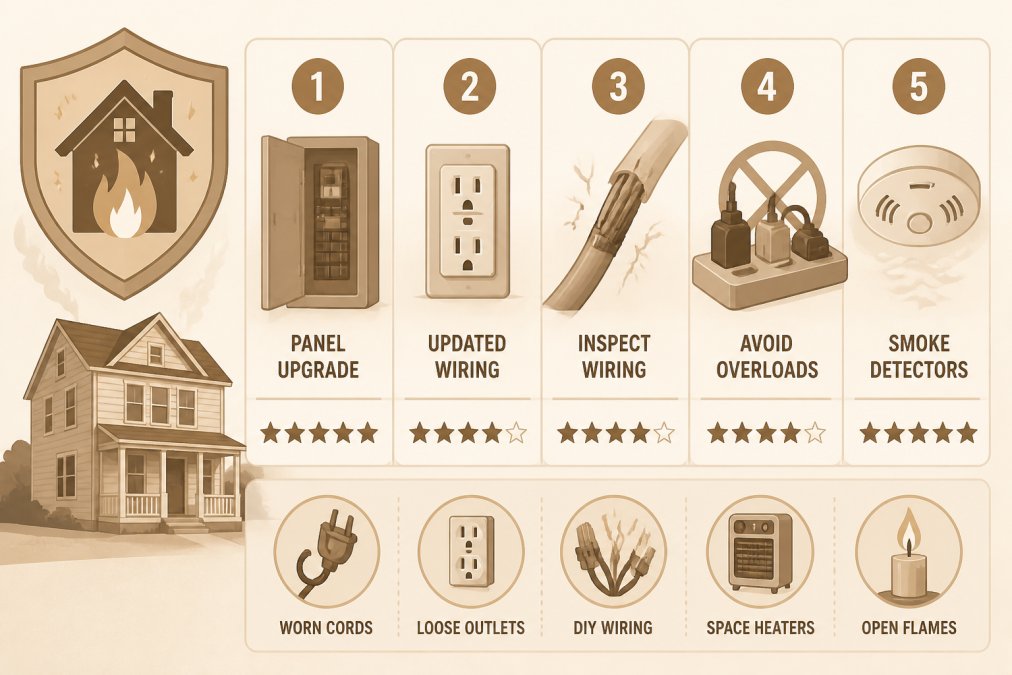
 listicle
5 Best Ways to Prevent Electrical Fires in Older Homes
Table of Contents
- Why Older Homes Face Higher Electrical Fire Risks
- Warning Signs of Outdated Electrical Wiring
- 1. Upgrade Outlets and Install AFCI Breakers
- 2. How to Fix a Tripping Circuit Breaker Safely
- 3. Stop Overloading Outlets and Extension Cords
- 4. Replace Frayed Wiring and Damaged Outlets Promptly
- 5. Maintain Smoke Alarms and Add Smart Monitoring
- Your Electrical Safety Inspection Checklist
- Frequently Asked Questions
Last Updated: September 8, 2026
Why Older Homes Face Higher Electrical Fire Risks
Older homes are significantly more susceptible to electrical fires due to wiring systems designed for a time before modern appliances and electronics existed. Homes built before the 1980s often lack the capacity and safety mechanisms we now consider standard, including outdated wiring materials, a lack of ground fault protection, and electrical panels that cannot handle today's amperage demands.
The most common culprits in older properties are two-prong outlets, undersized service panels, and deteriorating wire insulation. When you plug modern high-draw appliances into a system designed for a fraction of the load, heat buildup can melt insulation and ignite nearby materials. This guide outlines the five most effective ways to prevent electrical fires in older homes.
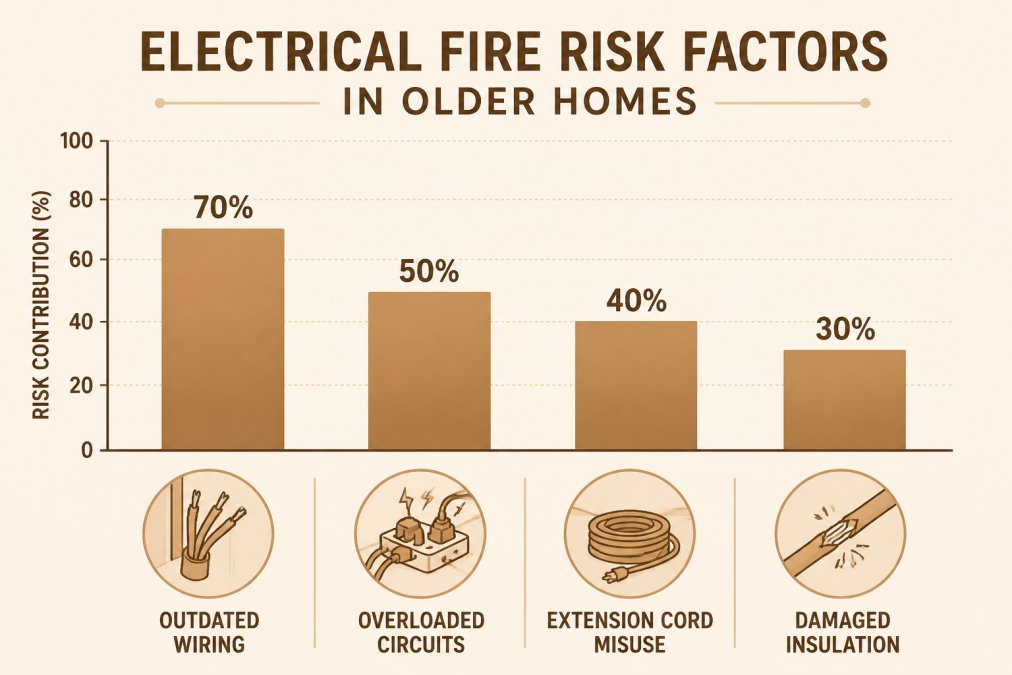
The National Fire Protection Association consistently identifies electrical distribution and lighting equipment as leading causes of home fires, with most incidents traced back to aging infrastructure.
Warning Signs of Outdated Electrical Wiring
Recognizing the warning signs of outdated electrical wiring is critical because many hazards develop silently behind your walls. Common indicators include flickering or dimming lights, a burning smell near outlets, discolored wall plates, and outlets that feel warm to the touch. If your home still has a fuse box instead of a breaker panel, you are working with technology that is several generations behind current safety standards.
How to Identify Knob-and-Tube Wiring
Knob-and-tube wiring is a legacy system common in homes built before 1950, and it poses unique risks that many homeowners overlook. This wiring lacks a ground wire entirely, making it incompatible with modern three-prong plugs and unsafe for use with major appliances. The insulation on knob-and-tube wiring is often brittle, cracked, or frayed, exposing live conductors. Many insurance providers now require this system to be replaced before they will issue a policy due to the elevated risk of electrical fires.
1. Upgrade Outlets and Install AFCI Breakers
The single most impactful upgrade for an older home is replacing outdated outlets and installing arc-fault circuit interrupter (AFCI) breakers. Standard circuit breakers do not detect the dangerous, high-frequency arcing that occurs when electricity jumps between damaged conductors, a leading cause of electrical fires in aging wiring systems. AFCI breakers distinguish between normal and hazardous arcing, shutting off power in milliseconds before heat can ignite surrounding materials.
Why AFCI Breakers Are Critical in Older Homes
Older homes are prime candidates for arc faults because wiring insulation is often brittle, cracked, or chewed by rodents, and connections loosen over decades of thermal cycling. The National Electrical Code (NEC) has required AFCI protection for new construction since 2008, but this mandate does not apply retroactively to existing homes. When you have a panel upgrade or major circuit work done, a licensed electrician should bring affected circuits up to code by installing AFCI breakers or combination AFCI/GFCI breakers in wet areas.
The Retrofit Reality: What to Expect
Retrofitting AFCI breakers is not always a simple swap. The breaker must be compatible with your panel's brand and model, for example, a Square D QO panel requires Square D QO120PDF breakers, while an Eaton panel uses the BR series. A qualified electrician will also verify the circuit's neutral wiring, as AFCI breakers require a dedicated neutral connection that older panels may lack. With knob-and-tube wiring, an AFCI breaker may not function reliably, and full wiring replacement is the only safe solution. The cost per unit, plus labor, is modest compared to the potential loss from an electrical fire.
Outlet Upgrades: Grounding and GFCI Protection
For outlets, upgrading from ungrounded two-prong receptacles to grounded three-prong outlets is essential, but the correct approach depends on your wiring. If your home has a grounded metal conduit system, an electrician can install a standard grounded outlet. If the wiring is ungrounded, the code-compliant solution is to install a GFCI outlet and label it "No Equipment Ground." This provides shock protection but does not ground your electronics. In kitchens, bathrooms, and other areas near water, GFCI outlets are required by code and provide protection against both shock and fire. The United States Consumer Product Safety Commission guidelines on electrical safety recommends these upgrades as a primary defense against residential fires. Several manufacturers offer reliable options, including Leviton GFCI outlets with self-test functionality and Eaton AFCI circuit breakers that integrate with standard load centers.
2. How to Fix a Tripping Circuit Breaker Safely
A circuit breaker that trips frequently signals an overloaded system or a fault, and attempting to fix it incorrectly can be dangerous. The safe first step is to unplug several devices from the affected circuit and reset the breaker by flipping it firmly off and then back on. If it trips again immediately, do not reset it a second time, this indicates a short circuit or a more serious issue requiring professional diagnosis.
The most common cause of a tripping breaker is too many high-wattage devices on a single circuit. Major appliances like refrigerators, microwaves, and space heaters each need their own dedicated circuit. If the breaker continues to trip after reducing the load, the problem likely lies in the wiring, the breaker, or a faulty appliance. Call a licensed electrician to identify the root cause rather than repeatedly resetting the breaker, which can lead to heat buildup and ultimately an electrical fire.
3. Stop Overloading Outlets and Extension Cords
Overloaded outlets and improper extension cord use are among the most preventable causes of electrical fires. A common mistake is using power strips as a permanent solution, especially for high-draw appliances like space heaters or air conditioners, which should always be plugged directly into a wall outlet. Daisy-chaining multiple power strips or extension cords dramatically increases the risk of overheating and short circuits.
Extension cords are for temporary use only, not permanent wiring. If you rely on them for fixed lighting or appliances, you need additional outlets installed by an electrician. When you do use one, choose a cord rated for the device's amperage and never run it under rugs or furniture where heat can build up. If it feels hot, is frayed, or shows damage, discard it immediately and address the underlying lack of accessible outlets.
4. Replace Frayed Wiring and Damaged Outlets Promptly
Frayed wires and damaged outlets are immediate fire hazards. Look for cracked plates, loose outlets, or visible scorching or melting. These issues can expose live wires, creating a serious risk of electrical fires. If you notice any of these signs, stop using the outlet and have it replaced by a professional, the cost is minimal compared to the potential damage from a house fire.
Get your free electrical estimate →
Damaged wiring insulation is another critical issue, often found where rodents have chewed through cables or where insulation has degraded over time, a particular concern with knob-and-tube and older cloth-insulated wiring. A thorough inspection by a qualified electrician can identify these hidden hazards. When upgrading, consider a whole-home surge protector at the panel to protect electronics and reduce system stress.
5. Maintain Smoke Alarms and Add Smart Monitoring
Working smoke alarms are your last line of defense, providing the early warning needed to escape a fire. Install them on every level of your home, inside each bedroom, and outside sleeping areas. Test them monthly and replace batteries at least once a year. Consider dual-sensor alarms like the Kidde Smoke and Carbon Monoxide Alarm, which detect both smoldering and flaming fires, and models with 10-year sealed batteries. The National Fire Protection Association recommends replacing all smoke alarms every 10 years, as sensors degrade over time.
How Smart Monitoring Detects Hidden Electrical Faults
For a more advanced layer of protection, smart monitoring systems can detect electrical issues before they become visible, a critical advantage in older homes where faults often develop behind walls. These systems work by analyzing the electrical waveform on your home's circuits. The Ting Fire Safety Sensor plugs into an outlet and continuously monitors for micro-arcing, which is the precursor to a full arc fault. When it detects a pattern consistent with dangerous arcing, it sends an alert to your phone, allowing you to address the issue before a fire starts. Similarly, smart plugs like the Eve Energy or Kasa Smart Plug can monitor the energy draw of individual appliances and alert you to abnormal heat or power spikes that indicate a failing motor or damaged cord.
Choosing the Right Monitoring System for an Older Home
When selecting a smart monitoring system, look for UL-listed devices designed for electrical fault detection. The Ting sensor is backed by a partnership with major insurance carriers, and some insurers offer premium discounts for homes with active monitoring. A whole-home energy monitor like the Sense Energy Monitor attaches to your main panel and uses machine learning to identify arcing or failing components. These systems are not a substitute for professional inspections or AFCI breakers, but they provide an early warning layer especially valuable for homes with aging wiring.
The Role of Monitoring in a Comprehensive Safety Plan
Smart monitoring should complement, not replace, physical upgrades. A home with knob-and-tube wiring or a 60-amp service panel needs a professional upgrade regardless of what a monitoring system reports. For homeowners not ready for a full rewiring, a monitoring system can provide peace of mind and actionable data. Pair this with a UL-rated fire extinguisher for electrical fires and keep it accessible in your kitchen or utility room.
Your Electrical Safety Inspection Checklist
A systematic inspection of your home's electrical system helps identify potential fire hazards before they escalate. This checklist covers the critical areas discussed above and serves as a practical guide for homeowners.
| Checklist Item | What to Look For | Recommended Action |
|---|---|---|
| Electrical Panel | Warmth, rust, or buzzing sounds | Schedule professional panel inspection |
| Outlets & Switches | Discoloration, loose plugs, warm faces | Replace damaged units, add GFCI near water |
| Extension Cords | Fraying, cracks, or hot surfaces | Discard damaged cords, install new outlets |
| Circuit Breakers | Frequent tripping without clear cause | Have circuits professionally load-tested |
| Smoke Alarms | Age (over 10 years) and battery function | Test monthly, replace units as needed |
| Wiring Insulation | Brittle, cracked, or exposed conductors | Arrange for professional wiring assessment |
When you complete this checklist, contact a licensed electrician for a comprehensive home electrical safety inspection, especially if your home is older or you have identified any warning signs. A professional can assess your panel's capacity, verify your grounding system, and recommend specific upgrades like AFCI breakers or a full service upgrade. The Electrical Safety Foundation International home safety resources offers additional guidance on recognizing hazards and maintaining a safe electrical system.
Preventing electrical fires in older homes requires modern safety devices, responsible usage habits, and professional maintenance. The strategies outlined here, from upgrading outlets and breakers to installing smart monitoring, address the unique risks of aging infrastructure. For expert assistance with panel upgrades, outlet replacement, or a full safety inspection, Light Life Electric provides code-compliant, certified services, including 24/7 emergency response. Get your free electrical estimate and take the first step toward protecting your home and family from the risk of electrical fires.
Frequently Asked Questions
What is the number one cause of electrical fires in homes?
The most common cause is faulty or outdated wiring, especially in homes over 40 years old. This includes frayed wires, deteriorating insulation, and connections that loosen over time. When wiring cannot handle the electrical load of modern appliances, heat builds up and can ignite surrounding materials. Regular inspections by a licensed electrician help identify these hazards before they cause a fire.
How can I tell if my home's wiring is a fire hazard?
Look for signs of outdated electrical wiring: frequent tripping circuit breakers, flickering lights, discolored outlets, a burning smell, or buzzing sounds from walls. If your home has two-prong outlets or knob-and-tube wiring, it likely lacks proper grounding. These are strong indicators that your system cannot safely support your current electrical load. Schedule a professional electrical safety inspection to confirm.
What should you never use to put out an electrical fire?
Never use water on an electrical fire. Water conducts electricity and can cause severe shock or spread the fire. Instead, use a Class C-rated fire extinguisher, which is designed for electrical fires. If the fire is growing or you are unsure, evacuate the home and call 911 immediately. Your priority is safety, not saving property.
How often should I have my older home's electrical system inspected?
The National Electrical Code recommends a home electrical inspection at least every 10 years, but older homes often benefit from checks every 3 to 5 years. You should also schedule an inspection after major renovations, if you notice warning signs, or before purchasing an older home. A certified electrician will assess your panel, wiring, and outlets for hidden hazards.
Are AFCI breakers worth the cost for older homes?
Yes. AFCI (Arc-Fault Circuit Interrupter) breakers detect dangerous arcing in damaged wires that standard breakers miss. Arcing is a leading cause of electrical fires behind walls. While they require an investment for installation, they provide targeted protection for aging wiring. Many insurance companies recognize this upgrade and may offer lower premiums, making them a worthwhile investment for older homes.