 how-to
How to Troubleshoot Common Residential Electrical Issues
Table of Contents
- When to Call a Licensed Electrician
- How to Reset a Circuit Breaker
- Troubleshooting Flickering or Dimming Lights
- Identifying Signs of Faulty Electrical Wiring
- Addressing Dead Outlets and Receptacles
- Smart Home Integration Troubleshooting
- DIY vs. Professional Scope: What You Can Handle
- Frequently Asked Questions
Last Updated: September 19, 2026
When to Call a Licensed Electrician
Learning how to troubleshoot common residential electrical issues and knowing when to handle a problem yourself versus calling a professional is crucial for your safety. Some electrical issues are straightforward and safe to tackle. Others require a licensed electrician and should never be attempted as DIY projects.
Call a licensed electrician immediately if you notice burning smells near outlets, the electrical panel, or light switches. Burning odors signal dangerous heat buildup and potential fire hazards. Similarly, if you see scorch marks, discoloration, or charring around outlets or junction boxes, stop using those areas and contact a professional right away.
You should also call a professional if circuit breakers trip repeatedly even after resetting them, if multiple outlets stop working at once, or if you notice flickering or dimming lights throughout your home. These symptoms often point to deeper wiring problems or overloaded circuits that need professional diagnosis.
At Light Life Electric, we recommend calling a licensed electrician for any work involving the main service panel, new circuit installation, or upgrades to your electrical system. These tasks require permits, inspections, and specialized knowledge of electrical code. Attempting them without proper credentials puts your home and family at serious risk.
How to Reset a Circuit Breaker
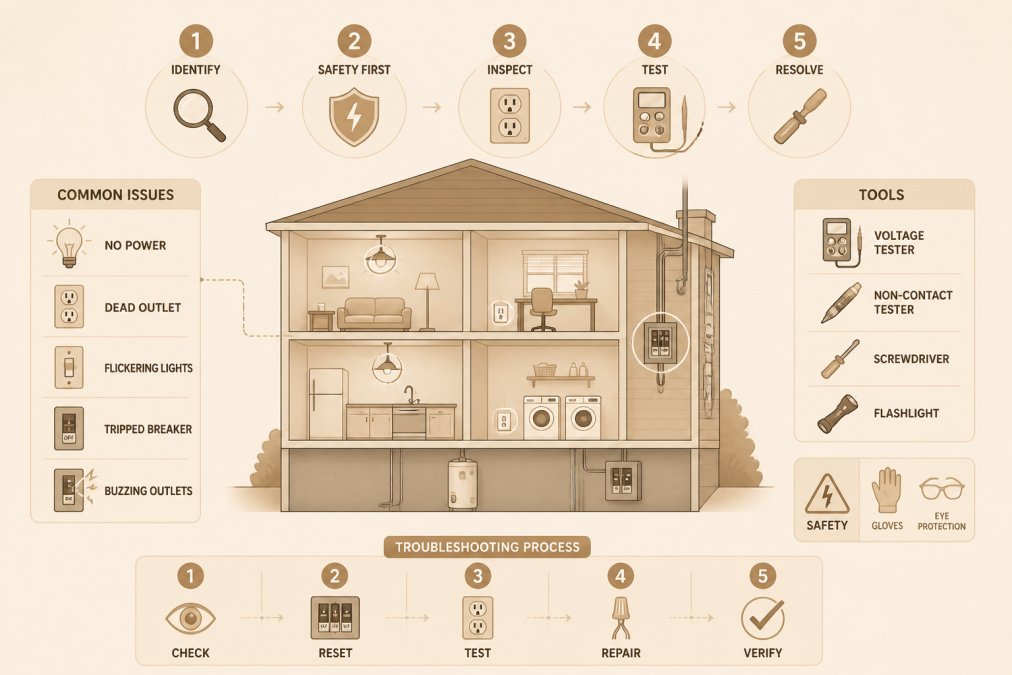
A tripped circuit breaker is one of the most common residential electrical issues you can safely handle yourself. The breaker acts as a safety device, cutting power when it detects an overload or short circuit.
To reset a circuit breaker, first locate your electrical panel. It's usually in a basement, garage, or utility closet. Open the panel door and look for the breaker that has switched to the OFF position or the middle position between ON and OFF. Once you identify the tripped breaker, switch it firmly to the OFF position, then switch it back to ON. The power should restore immediately.
If the breaker trips again right away, stop. This means the underlying problem persists. Common causes include:
- A faulty appliance plugged into that circuit
- Too many devices drawing power simultaneously
- A short circuit in the wiring
- A ground fault in the system
Unplug devices on that circuit one at a time and reset the breaker after each removal. When the breaker stays on, you've found the problem device. Replace or repair it before using that circuit again.
If resetting the breaker doesn't solve the problem or if multiple breakers trip frequently, contact a licensed electrician. Repeated tripping indicates a serious fault that requires professional diagnosis.
Troubleshooting Flickering or Dimming Lights
Flickering or dimming lights are annoying and often signal an underlying electrical problem. The cause determines whether you can fix it yourself or need professional help.
Start by checking if the problem affects one light or multiple lights throughout your home. If only one fixture flickers, the issue is usually simple. Tighten the light bulb in its socket. A loose bulb creates intermittent contact and causes flickering. If the bulb is secure, try replacing it with a new one. Sometimes a failing bulb causes this issue.
If multiple lights flicker or dim throughout your home, the problem likely involves your main electrical service. This could indicate:
- Loose connections at the meter or service head
- Voltage fluctuations from the utility company
- An overloaded main circuit
- Failing electrical panel components
Check if the dimming happens when you use high-power appliances like your air conditioner, electric dryer, or water heater. If lights dim when these devices start, your home may have insufficient capacity for peak loads. This is common in older homes with 100-amp service trying to power modern appliances.
Flickering that correlates with appliance use is a sign your electrical system needs an upgrade. A licensed electrician can evaluate your amperage and recommend a panel upgrade if necessary. This is not a DIY project.
Identifying Signs of Faulty Electrical Wiring
Faulty wiring is a serious safety hazard that can cause fires, electrocution, and property damage. Learning to spot warning signs helps you catch problems early before they become dangerous.
Get your free electrical estimate →
Visual inspection is your first line of defense. Look for discoloration, scorch marks, or dark stains around outlets, switches, and along visible wiring. These marks indicate excessive heat from poor connections or damaged insulation. Check behind furniture and appliances where wiring may be hidden. Scorch marks in these areas are especially concerning because they often go unnoticed until damage is severe.
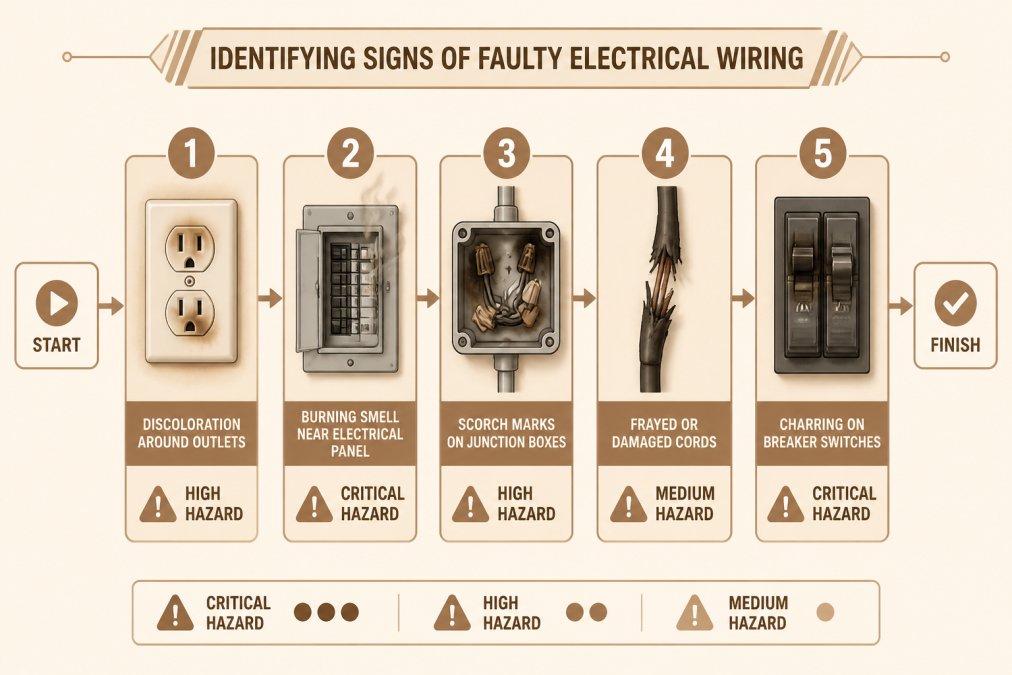
Examine electrical cords throughout your home. Frayed insulation, cracked outer jackets, or exposed wires indicate damaged cords. Never tape over damaged cords or ignore them. Replace damaged cords immediately. If damage is severe or the cord cannot be replaced, stop using that appliance.
Burning smells near outlets, switches, or your electrical panel are red flags. The smell of burning plastic or rubber indicates overheating insulation. This is an immediate fire hazard. Turn off power to that circuit at the breaker and call a licensed electrician before using it again.
Test outlets and switches for warmth. Outlets or switch plates that feel hot to the touch signal dangerous resistance in the circuit. This heat buildup can ignite nearby materials. Disconnect anything plugged into a warm outlet and have it inspected professionally.
If your home has aluminum wiring, this requires special attention (CPSC Safety Recommendations For Aluminum Wiring In Homes). Aluminum expands and contracts more than copper as temperature changes, loosening connections over time. Aluminum wiring is more prone to corrosion and overheating. If your home was built in the 1960s-1970s, it may have aluminum wiring. A licensed electrician can assess whether your aluminum wiring needs upgrades or special maintenance.
Addressing Dead Outlets and Receptacles
A dead outlet stops working entirely, leaving no power to devices plugged into it. This is frustrating but usually fixable without professional help if you approach it systematically.
Start with the simplest explanation. Check if something is plugged into a nearby outlet that controls the dead one.
Smart Home Integration Troubleshooting
Smart home devices are becoming common in residential electrical systems, but they introduce new troubleshooting challenges. Many smart devices require stable power and proper grounding to function correctly.
DIY vs. Professional Scope: What You Can Handle
Understanding the boundary between DIY-safe tasks and professional work keeps you safe and prevents costly mistakes. Some electrical work is straightforward enough for homeowners. Other work requires licensing, permits, and inspections.
Safe DIY tasks include:
- Resetting tripped circuit breakers
- Replacing light bulbs and fixtures (with power off)
- Tightening loose outlets or switch plates
- Testing outlets with a basic outlet tester
- Unplugging faulty appliances
- Replacing damaged power cords on appliances
- Resetting GFCI and AFCI outlets
Tasks requiring a licensed electrician:
- Installing new circuits or outlets
- Upgrading your electrical panel or service
- Rewiring sections of your home
- Installing hardwired appliances like ranges or dryers
- Any work involving the main service panel
- Adding new lighting circuits
- Installing surge protection systems
- Any work requiring a permit
| Task | DIY Safe? | Why? |
|---|---|---|
| Reset circuit breaker | Yes | Simple switch operation, no live work |
| Replace light bulb | Yes | Power off, low voltage risk |
| Install new outlet | No | Requires permits, code compliance |
| Upgrade electrical panel | No | Requires license, high voltage hazard |
| Tighten loose outlet | Yes | Simple mechanical adjustment |
| Install hardwired appliance | No | Requires permits, specialized knowledge |
| Replace damaged cord | Yes | Simple replacement, no live work |
| Add new circuit | No | Requires permits, panel access |
Frequently Asked Questions
What are the most common signs of faulty electrical wiring in a home?
Common indicators include flickering or dimming lights, outlets that don't hold plugs securely, burning smells near the electrical panel or outlets, scorch marks around receptacles, and frequently tripped circuit breakers. Aluminum wiring (found in some homes built in the 1960s-1970s) is particularly prone to overheating. If you notice any of these signs, contact a licensed electrician for inspection. Faulty wiring poses serious fire and shock hazards and should never be ignored.
When should I call a licensed electrician instead of attempting DIY repairs?
Call a professional immediately if you smell burning odors, see scorch marks, experience frequent tripping, notice exposed wires, or have dead outlets that won't respond to basic troubleshooting. Any work involving the main electrical panel, service head, or rewiring requires a licensed electrician and typically a permit. DIY repairs are limited to resetting breakers, replacing outlet covers, and unplugging problematic devices. When in doubt, professional diagnosis is safer and often more cost-effective than guessing.
How do I safely reset a circuit breaker that keeps tripping?
First, identify which breaker controls the affected circuit by checking your panel's label. Switch the breaker fully to the OFF position, then back to ON. If it immediately trips again, unplug all devices on that circuit and retry. If it holds, plug devices back one at a time to identify the culprit. Persistent tripping indicates overload or a short circuit and requires professional evaluation. Never force a breaker or bypass it with tape, these create serious fire hazards.
What's the difference between GFCI and AFCI outlets, and how do I troubleshoot them?
GFCI (Ground Fault Circuit Interrupter) outlets protect against shock in wet areas like bathrooms and kitchens. AFCI (Arc Fault Circuit Interrupter) breakers detect dangerous electrical arcs. Both have TEST and RESET buttons. If a GFCI outlet trips, press RESET. If it trips immediately, there's a ground fault, unplug devices and try again. AFCI breaker nuisance tripping often stems from older appliances or fluorescent lights. Check connected devices first; persistent issues need professional diagnosis to ensure proper grounding and insulation integrity.