 how-to
How to Safely Handle a Power Outage at Home
Table of Contents
- Immediate Steps When Power Goes Out
- Essential Power Outage Kit Items to Keep on Hand
- Food Safety and Refrigeration During an Outage
- Generator Safety and Proper Ventilation
- How to Prevent Power Surge Damage to Your Home
- When to Call an Electrician After a Blackout
- Post-Outage Recovery and System Restoration
- Mental Health and Stress Management During Extended Outages
- Frequently Asked Questions
Last Updated: September 19, 2026
Immediate Steps When Power Goes Out
When your lights go dark, your first instinct might be to flip a switch. Stop. Learning how to safely handle a power outage at home starts with understanding what's happening and protecting yourself from immediate hazards before you do anything else.
Check whether the outage is widespread or isolated to your home. Look outside at your neighbors' lights, check your utility company's website, or call their outage line. A neighborhood blackout may indicate a downed power line; if only your home is dark, the problem is likely in your electrical system.
Check for downed power lines
Downed power lines are extremely dangerous. A live wire on the ground can kill you instantly. Never assume a line is dead just because it's not sparking or making noise.
If you see a downed power line:
- Stay at least 35 feet away from it
- Do not touch it, even with a stick or rope
- Keep children and pets away
- Call 911 and your utility company immediately
- Warn neighbors to avoid the area
If a downed line falls across your car while you're inside, stay in the vehicle. The tires insulate you from the ground. Call for help and wait for emergency responders to cut the power before you exit.
Locate your circuit breaker
Your circuit breaker panel is your home's electrical control center. Find it now, before an emergency happens, usually in a basement, garage, utility room, or exterior wall. Take a photo and label the breakers if unlabeled. This 10-minute task could save your life.
When power returns, surges can damage electronics. If a breaker has tripped (middle position), reset it by switching fully off, then back on. If it trips repeatedly, contact a licensed electrician to diagnose the problem.
Essential Power Outage Kit Items to Keep on Hand
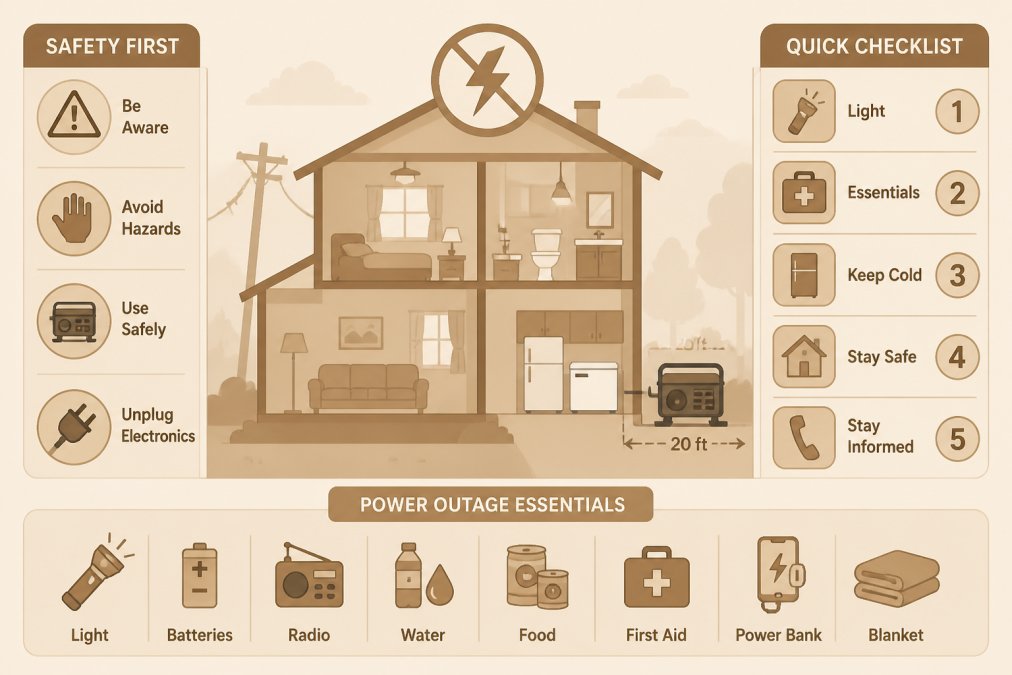
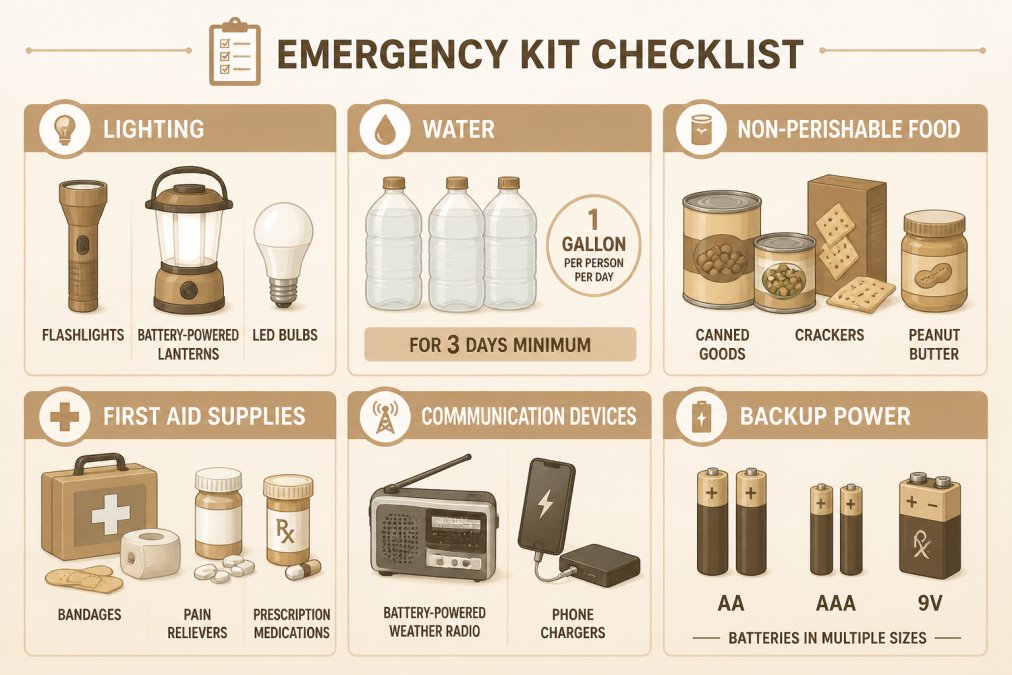
Assemble a power outage kit now while you have power. Include lighting, water, food, medical supplies, and communication tools in one easy-to-access location. Check it twice yearly and replace expired items.
Emergency lighting and communication
Flashlights are safer than candles. Keep at least three LED flashlights in different rooms with extra batteries. Battery-powered lanterns work well for kitchens and living areas. A headlamp frees your hands for repairs or checking on family.
A battery-powered or hand-crank weather radio receives emergency alerts and tells you when power is being restored. Some models charge your phone, which is critical for calling help.
Food safety and water supplies
Store at least one gallon of potable water per person per day for three days. Use food-grade containers and store gradually.
Stock non-perishable foods like canned soup, peanut butter, crackers, and dried fruit. Include a manual can opener and pet food if needed.
Food Safety and Refrigeration During an Outage
A full refrigerator stays cold longer than an empty one. A full freezer keeps food safe for four days if unopened; a half-full freezer lasts about two days.
Keeping food at safe temperatures
Bacteria multiply rapidly between 40°F and 140°F. Do not open the refrigerator or freezer unless absolutely necessary, every opening lets warm air in and cold air out. Keep doors closed and assume food is safe for the timeframes mentioned above.
If the outage lasts longer than a few hours, move perishable items to a cooler with ice. Meat, dairy, and prepared foods are highest risk. When in doubt, throw it out.
Identifying spoiled food after power returns
Once power returns, wait 30 minutes for the refrigerator to cool, then inspect food carefully.
Throw away any food that:
- Has an off smell or unusual color
- Feels slimy or mushy
- Was in the danger zone for more than two hours (or one hour if the room temperature was above 90°F)
- You're unsure about
Frozen food that thawed but still feels cold is generally safe if it was thawed for less than two hours. When in doubt, throw it out.
Generator Safety and Proper Ventilation
A generator is a lifesaver but produces deadly carbon monoxide. Never run it indoors, in a garage, basement, or near windows. Run it outside at least 20 feet from windows, doors, and vents, with exhaust pointed away from your home (the CDC).
Get your free electrical estimate →
Preventing carbon monoxide buildup
Carbon monoxide seeps into homes through walls, windows, and doors. Install battery-powered carbon monoxide detectors and test monthly. If an alarm sounds, leave immediately and call 911.
Managing electrical load safely
Know your generator's wattage and plan which appliances you'll run to avoid exceeding its power limit.
High-wattage appliances include:
- Air conditioning units (3,500-5,000 watts)
- Electric water heaters (4,000-5,500 watts)
- Electric ovens (2,000-5,000 watts)
- Refrigerators (600-800 watts running, 1,200-2,000 watts starting)
How to Prevent Power Surge Damage to Your Home
When power returns, electrical surges can destroy sensitive electronics. Power surges also result from lightning, utility switching, or faulty wiring. Prevention is cheap; replacement is expensive.
Using surge protectors effectively
Surge protectors include a metal oxide varistor (MOV) that absorbs excess voltage. Choose ones with 600+ joule ratings and a light indicator showing active protection. Replace when the light goes out.
Unplugging sensitive electronics
Unplug televisions, computers, and gaming consoles during an outage. Plug them back in after power has been restored for 30 minutes. Appliances like refrigerators can stay plugged in.
When to Call an Electrician After a Blackout
Some power outages cause electrical damage. If you notice warning signs after an outage, contact a licensed electrician right away.
Signs of electrical damage
Electrical damage isn't always obvious. You might not see anything wrong, but something is broken inside your walls. Watch for these red flags:
- Burning smell coming from outlets or appliances
- Outlets or switches that are warm or discolored
- Sparks when you plug something in
- Flickering lights that don't stop
- Breakers that trip repeatedly
- Appliances that don't work or work intermittently
- Scorch marks around outlets or on walls
Professional inspection for safety
A professional inspection finds hidden damage using testing equipment. After a major outage or lightning strike, an inspection is essential to verify safety systems and identify repairs needed.
Post-Outage Recovery and System Restoration
The power is back on. But you're not done yet. How you restore your home's electrical system in the first minutes after power returns can prevent damage and safety hazards.
Safely restoring power to your home
When power returns, your circuit breaker panel has likely shut off some breakers automatically. This is normal and protective. Leave them off for at least five minutes. This allows the electrical grid to stabilize.
Checking appliances before use
Before you use any appliance that was plugged in during the outage, inspect it. Look for:
- Burn marks or discoloration
- Melted plastic
- Cracks or damage to the cord
- Burning smell
If you see any damage, do not plug it in. The appliance is damaged and unsafe. Discard it or have it repaired by a professional.
Mental Health and Stress Management During Extended Outages
A power outage is a stressful event. Your routine is disrupted. Your home is uncomfortable. You're worried about food spoiling, medical devices, and whether power will return. The stress is real and valid.
Frequently Asked Questions
What should I do immediately when the power goes out?
First, check that the outage isn't just your home by looking at neighbors' lights. Avoid opening your refrigerator to preserve cold temperatures. Turn off or unplug major appliances to prevent power surge damage when electricity returns. Locate your circuit breaker and stay away from any downed power lines. If you smell gas or see sparks, leave your home and contact your utility company immediately.
What are the most important essential power outage kit items?
Keep battery-powered flashlights (avoid candles due to fire risk), a weather radio for emergency alerts, bottled potable water, non-perishable food, a first-aid kit, medications, phone chargers, and a thermometer to monitor refrigerator temperature. Include a manual can opener, blankets or sleeping bags, and a list of emergency contacts. Store these items in an accessible location before an outage occurs.
How do I prevent power surge damage when electricity is restored?
Before power returns, unplug sensitive electronics like computers, televisions, and smart home devices. Use surge protectors for devices you need to keep plugged in. Once power is restored, wait a few minutes before plugging items back in to avoid sudden electrical spikes. Check appliances for signs of damage like burning smells or unusual sounds. If you notice damage, avoid using the device and contact an electrician for inspection.
When should I call an electrician after a blackout?
Call an electrician if your circuit breaker repeatedly trips after power restoration, you see burn marks or smell burning near outlets, lights flicker or don't work properly, or appliances don't function correctly. Signs of electrical damage require professional inspection to ensure safety and prevent fire hazards. Professional assessment helps identify whether the issue is temporary or requires repair to your home's electrical system.