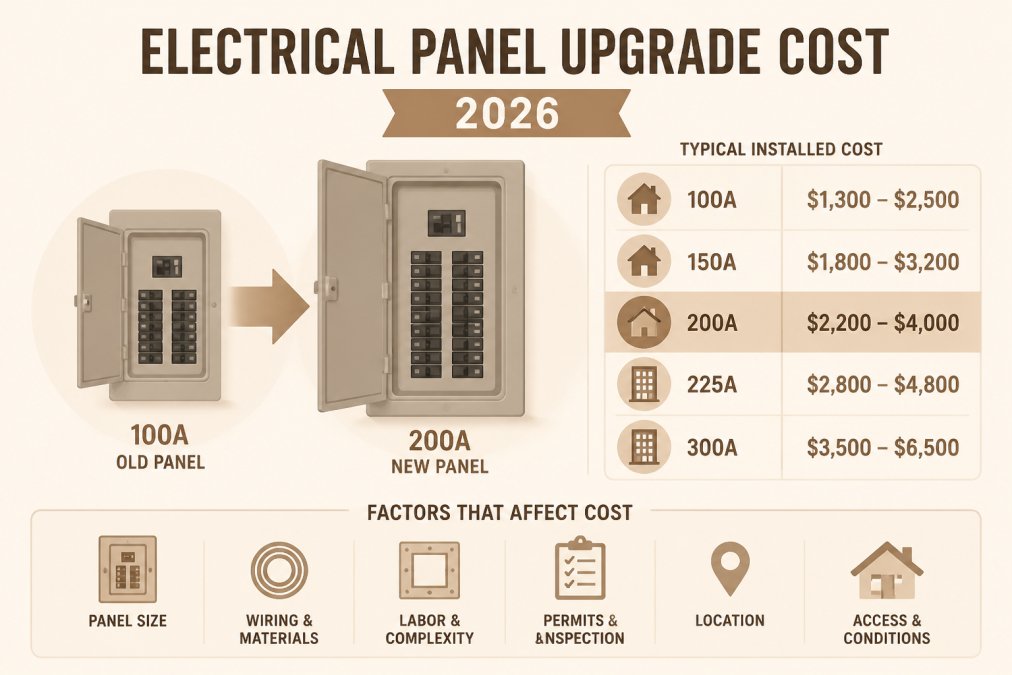
 ultimate-guide
Electrical Panel Upgrade Cost 2026: Pricing Guide
Table of Contents
- What Determines Electrical Panel Upgrade Cost
- How to Tell If Your Electrical Panel Needs Replacing
- 100-Amp vs 200-Amp Service: Cost and Capacity
- Electrical Panel Upgrade Permit Requirements
- How Long Does an Electrical Panel Upgrade Take
- Labor vs Material Costs in Panel Upgrades
- Smart Panels and EV Charger Compatibility
- Is a Panel Upgrade Worth the Investment
- Frequently Asked Questions
Last Updated: September 2, 2026
What Determines Electrical Panel Upgrade Cost
An electrical panel upgrade cost depends on several interconnected factors: your target amperage, service entrance complexity, and whether your grounding and bonding systems meet current electrical code standards. A 100-amp service handles basic household needs, while a 200-amp service supports modern appliances, heating systems, and future additions like electric vehicle charging. Moving from 100-amp to 200-amp service often requires upgrading the service entrance, meter socket, and utility line connection itself.
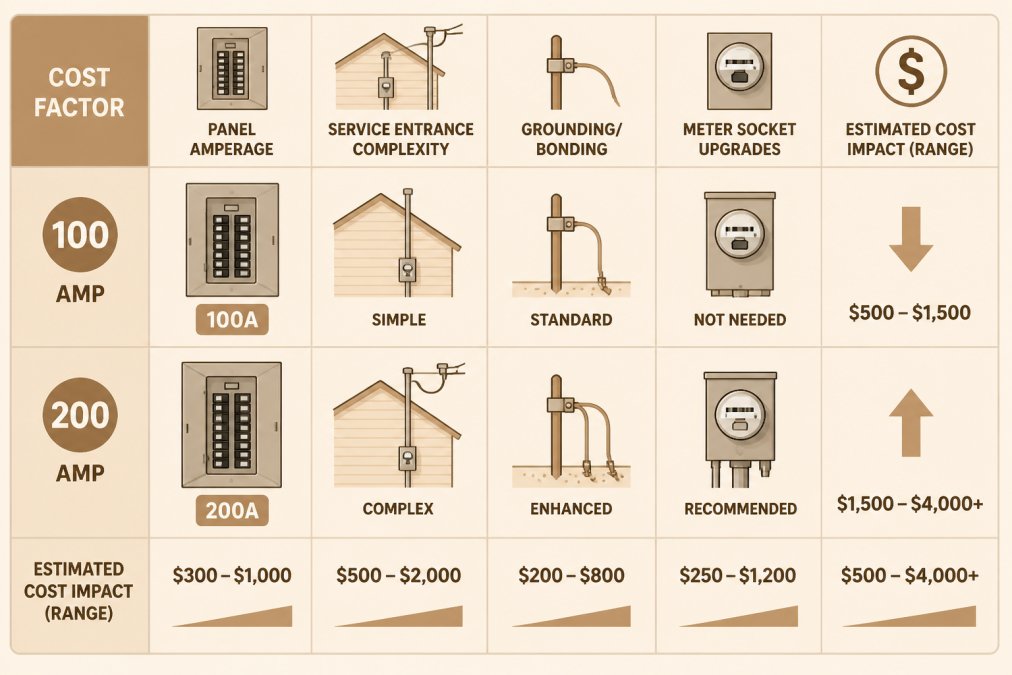
Panel amperage and capacity requirements
Your panel's amperage rating determines how much electrical load it can safely handle. Most homes built before 2000 have 100-amp service, which is inadequate for today's households with air conditioning, electric water heaters, and multiple large appliances. A licensed electrician performs a load calculation following National Electrical Code (NEC) standards to determine what amperage your home actually needs (nfpa.org). If your current panel is undersized, upgrading becomes necessary, an undersized panel causes frequent tripped breakers, creates electrical hazards, and prevents you from safely adding new circuits.
Service entrance and meter socket upgrades
The service entrance is where power enters your home from the utility line. When you upgrade your electrical panel, you often need to upgrade the service entrance components: the mast, meter socket, and main breaker. If your current service entrance can't handle increased amperage, the utility company may require upgrades before connecting higher service. Some homes need the utility line itself replaced from the street to the meter. The meter socket must be rated for your new service amperage, and if it's corroded or damaged, replacement is mandatory.
Wiring and grounding system updates
Your home's wiring must support the new service capacity. Older homes often have aluminum wiring or undersized copper wiring that can't safely carry the current your new panel will deliver. Grounding and bonding systems are equally critical, the grounding electrode provides a path for fault current to safely dissipate, and the bonding system connects all metal components so they're at the same electrical potential. Older homes often have inadequate grounding systems that don't meet current NEC standards.
How to Tell If Your Electrical Panel Needs Replacing
Your electrical panel is the nerve center of your home's electrical system. Clear warning signs indicate when it's failing.
Age and outdated panel types
If your home was built before 1980, your electrical panel is likely outdated. Federal Pacific Electric (FPE) panels and Zinsco panels, both common in homes built in the 1970s and 1980s, have documented failure rates and fire risk (cpsc.gov). If your home has one of these panels, replacing it is a necessity from a safety perspective. Most electricians recommend replacing panels that are 25 to 30 years old, regardless of whether they're showing obvious problems.
Frequent tripped breakers and flickering lights
If your breakers trip frequently when running normal household appliances, your panel is at or beyond capacity. Flickering lights indicate voltage fluctuations, often caused by an undersized panel struggling to deliver stable power. When multiple high-demand appliances run simultaneously, the voltage drops and lights dim. This stresses your appliances and creates electrical hazards.
Inadequate capacity for modern electrical demands
Modern homes demand far more electricity than homes built 30 years ago. If your panel was sized for 1995's electrical needs, it's almost certainly undersized for today's reality. You know your panel is inadequate when you can't add circuits without tripping breakers, when you need multiple extension cords and power strips, or when adding a new appliance requires removing another circuit.
100-Amp vs 200-Amp Service: Cost and Capacity
A 100-amp panel can safely deliver up to 100 amps of current to your home's circuits. A 200-amp panel can deliver twice that capacity. A 100-amp service works only if your home has minimal electrical demands, you can run heating, air conditioning, water heater, and typical appliances, but not all simultaneously without tripping breakers. Add an EV charger, a hot tub, or upgraded HVAC equipment, and a 100-amp panel becomes inadequate.
The cost difference between upgrading to 100-amp and 200-amp service is modest compared to the cost of the upgrade itself, so most electricians recommend going straight to 200-amp when replacing a panel. If your service entrance, meter socket, and utility line already support 200-amp service, the incremental cost is minimal. If you need to upgrade the service entrance and utility line connection, the cost difference grows significantly.
Electrical Panel Upgrade Permit Requirements
You cannot legally upgrade an electrical panel without permits and inspections. This ensures the work meets electrical code and protects your home's safety.
Florida electrical code compliance and NEC standards
Florida follows the National Electrical Code (NEC) as adopted in the Florida Building Code (floridabuilding.org). Any electrical panel upgrade must comply with these standards, covering everything from panel location and clearances to grounding specifications to the types of breakers and wiring permitted. Your local jurisdiction may have additional requirements beyond the NEC. A licensed electrician knows these requirements and designs the upgrade to pass inspection.
Inspection process and timeline
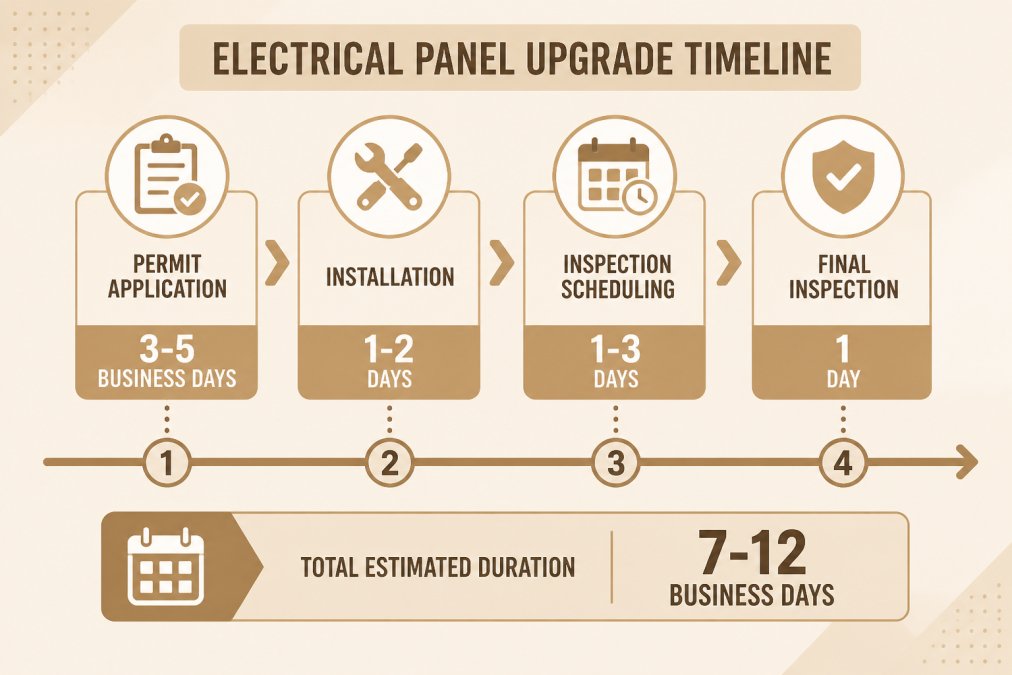
Before work begins, your electrician obtains an electrical permit from your local building department. Florida typically requires inspections at two stages: rough-in inspection (after the new panel is installed but before walls are closed) and final inspection (after all connections are complete and the system is energized). Permit approval typically takes 3 to 5 business days. Once work is complete, scheduling the final inspection can take another 1 to 3 days depending on your inspector's availability.
How Long Does an Electrical Panel Upgrade Take
The actual installation of your new electrical panel typically takes 1 to 2 days of active work. However, the total project duration is much longer because of preparation, permitting, and inspection steps.
Labor timeline and project phases
Your electrical panel upgrade follows a predictable sequence. First, your electrician schedules a site visit to assess your current panel, measure your load requirements, and determine what upgrades are needed. Once you approve the estimate, your electrician applies for permits, permit processing typically takes 3 to 5 business days. During this waiting period, your electrician orders materials and schedules the installation date.
Get your free electrical estimate →
The actual installation day involves disconnecting your old panel (which means your home loses power temporarily), removing the old panel, installing the new one, reconnecting all circuits, and testing the system. This takes 1 to 2 days depending on complexity. If your electrician discovers problems during installation, corroded wiring, inadequate grounding, or service entrance issues, the project extends beyond the initial estimate.
Permit and inspection delays
After installation is complete, your electrician requests the rough-in inspection. If the inspector approves, you can proceed to the final inspection. The final inspection happens after the utility company energizes your new service. Inspection scheduling is often the bottleneck, if your inspector is busy, you might wait 1 to 3 days between requesting inspection and the actual inspection date.
Labor vs Material Costs in Panel Upgrades
An electrical panel upgrade cost breaks down into materials and labor. Material costs include the new panel, breakers, wiring, conduit, grounding equipment, and any service entrance components that need replacement. Labor costs reflect the electrician's time and expertise. A licensed electrician brings knowledge of electrical code, safety practices, and troubleshooting skills that prevent costly mistakes. Labor typically represents 40 to 60 percent of the total electrical panel upgrade cost.
Hiring a qualified, experienced electrician is essential. Unlicensed work won't pass inspection, and you may face fines or be required to hire a licensed electrician to redo the work at additional cost. Licensed, bonded electricians ensure your upgrade is done right the first time, passes inspection, and keeps your home safe.
Smart Panels and EV Charger Compatibility
Modern electrical panels now integrate smart technology that monitors your home's power consumption in real time and can manage the charging schedule for an electric vehicle, distributing charging during off-peak hours when electricity rates are lower. An EV charger draws significant current, a Level 2 charger requires a dedicated 40 to 60-amp circuit. If your current panel is already at capacity, adding an EV charger requires the panel upgrade anyway.
When designing your electrical panel upgrade, ensure your new panel has the capacity and features to support EV charging and smart home devices. This forward-thinking approach saves you money and hassle down the road.
Is a Panel Upgrade Worth the Investment
An electrical panel upgrade is one of the most important investments you can make in your home's electrical system.
Safety and electrical hazard reduction
An outdated or undersized panel creates serious electrical hazards. Frequent breaker trips indicate the panel is struggling to deliver power safely. Flickering lights suggest voltage instability that stresses your appliances. An aging panel can develop internal faults that create fire risk. Replacing your panel eliminates these hazards and protects your home and family while bringing your home into compliance with modern safety standards.
Home value and insurance implications
A modern electrical system increases your home's market value and appeal to buyers. A recently upgraded panel with a certificate of completion from the building inspector is a major selling point. Insurance companies also care about your electrical system, some insurers charge higher premiums or decline coverage for homes with outdated panels. An electrical panel upgrade can lower your insurance costs and ensure you can maintain continuous coverage.
An electrical panel upgrade is a significant investment, but it's essential for safety, code compliance, and your home's future. If you're seeing signs that your panel needs replacing, frequent tripped breakers, flickering lights, or an aging panel in a home built before 1990, don't wait. Contact Light Life Electric for a free electrical estimate. Our Florida certified electricians will assess your panel, calculate your load requirements, and provide a clear, transparent estimate for the complete upgrade. We handle permits, inspections, and all aspects of the work, ensuring your upgrade is code-compliant, safe, and completed on schedule. Get your free estimate today and take the first step toward a safer, more capable electrical system.
Frequently Asked Questions
How much does it typically cost to upgrade from a 100-amp to a 200-amp electrical panel?
The cost of upgrading from 100-amp to 200-amp service depends on several factors including your location, existing wiring condition, service entrance modifications, and labor rates. Since pricing varies significantly based on your specific situation, we recommend getting a free electrical estimate from a licensed contractor who can assess your home's unique requirements and provide an accurate quote tailored to your needs.
Do I need a permit for an electrical panel upgrade?
Yes, a permit is required for electrical panel upgrades in most jurisdictions. Permits ensure your work complies with the National Electrical Code (NEC) and local electrical codes. The permit process includes inspections at key stages: rough-in inspection before panels are closed, and final inspection after completion. Permit fees vary by location, but skipping permits can create safety hazards, affect home insurance claims, and cause problems when selling your home.
What are the signs that my electrical panel needs replacing?
Key warning signs include frequent tripped breakers, flickering or dimming lights, burning smells near the panel, outdated panel types (like Federal Pacific or Zinsco), and a panel older than 25-30 years. If your home lacks capacity for modern demands like EV chargers or major appliances, your panel likely needs upgrading. Have a licensed electrician inspect your system if you notice any of these issues, safety hazards from outdated panels can be serious.
How long does an electrical panel upgrade typically take to complete?
The actual installation usually takes 1-2 days for a standard residential panel upgrade. However, the total project timeline is longer when you factor in permit application (3-5 days), scheduling inspections (1-3 days), and final inspection approval (1 day). Complex installations involving service entrance modifications or extensive rewiring can extend the timeline. A licensed electrician can provide a realistic schedule based on your specific project scope and local permit processing times.