 ultimate-guide
Code-Compliant Electrical Panel Upgrades: 2026 Guide
Table of Contents
- How to Tell If Your Electrical Panel Needs Replacing
- What Makes an Installation Code-Compliant
- The Electrical Panel Permit and Inspection Process
- NEC Electrical Panel Clearance Requirements
- EV Chargers, Heat Pumps, and Modern Load Demands
- Residential vs Commercial Electrical Panel Upgrades
- Why Code-Compliant Repairs Protect Your Insurance Coverage
- Conclusion
- Frequently Asked Questions
Last Updated: September 15, 2026
How to Tell If Your Electrical Panel Needs Replacing
Code-compliant electrical panel upgrades start with recognizing the warning signs before a failure forces your hand. At Light Life Electric, we've found that panels rarely fail without warning. They telegraph their decline through flickering lights, tripping breakers, and the faint smell of overheated insulation.
Three signs mean you should call an electrician now, not later:
- Breakers trip repeatedly even when you haven't added new appliances
- The panel feels warm or smells like burning plastic
- You still have a fuse box, not a modern circuit breaker panel
Most homeowners wait too long. The average lifespan of a residential panel is 25 to 40 years, and homes built before the 1990s often still run original equipment that was never designed for today's electrical load (energy.gov). According to U.S. Fire Administration electrical fire data, electrical failures remain a leading cause of home fires, and aging panels are a recurring factor.
Warning Signs Homeowners Should Not Ignore
Flickering lights when the HVAC kicks on. A breaker that trips every time you run the microwave and toaster together. Rust or corrosion inside the panel door. These aren't quirks, they're symptoms.
The most dangerous sign is the one you can't see: a panel that's been double-tapped, where two wires share a single breaker. It works fine until it doesn't. A licensed electrician can spot this in minutes during a visual inspection.
What Makes an Installation Code-Compliant
A code-compliant installation is one that satisfies the National Electrical Code (NEC) on amperage, grounding and bonding, clearance, and circuit protection, and that passes inspection by the authority having jurisdiction. Everything else is guesswork.
The NEC is updated on a three-year cycle, and local jurisdictions adopt it on their own timeline. That's why two identical panel replacements in neighboring counties can follow slightly different rules. A contractor who works daily in your area knows which edition applies and what your inspector expects to see.
Amperage, Load Calculations, and Panel Capacity
Amperage is the measure of how much current a panel can safely carry. A load calculation is the formal method used to determine whether a panel's capacity matches the actual demand of the home.
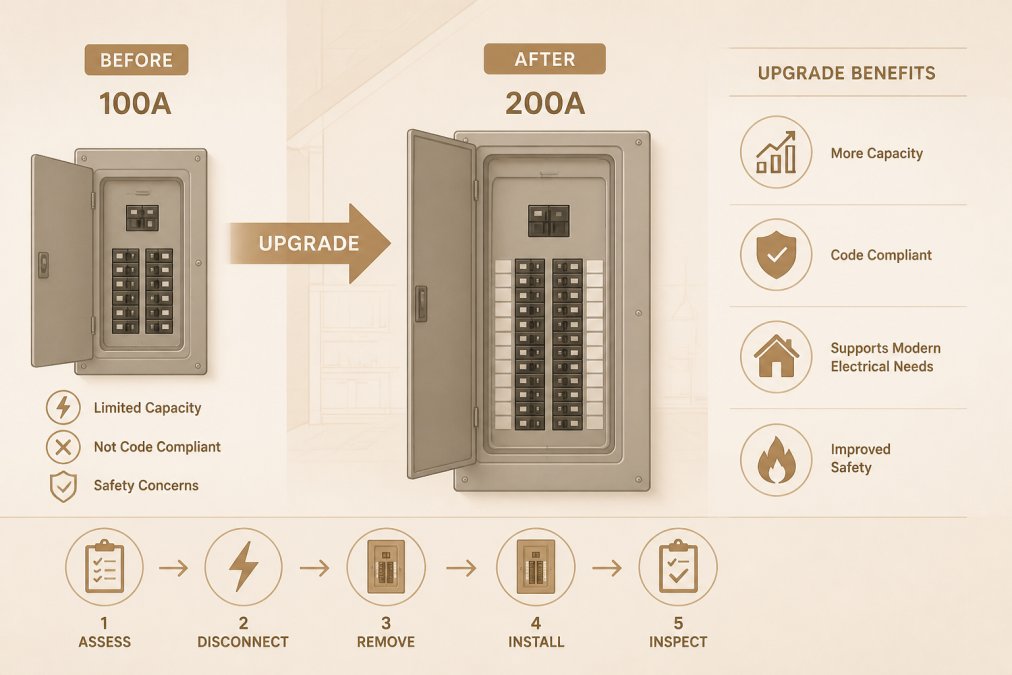
Modern homes demand more. An EV charger alone can pull 40 to 50 amps continuously (energy.gov). Add a heat pump, an induction range, and a tankless water heater, and a 100-amp panel runs out of headroom fast. That's why 200-amp service is now the default for new construction and most upgrade projects.
| Panel Size | Typical Best For | EV Charger + Heat Pump? |
|---|---|---|
| 100A | Small homes, gas appliances | No, insufficient capacity |
| 200A | Most modern single-family homes | Yes, with load management |
| 300A-400A | Large homes, all-electric setups | Yes, ample headroom |
The calculation matters more than the label. A 200-amp panel with a poorly balanced load still trips. A licensed electrician runs the numbers before recommending a size.
The Electrical Panel Permit and Inspection Process
The electrical panel permit and inspection process exists to verify that the work meets code before it's energized. Skipping it doesn't just risk a failed inspection later; it can void your insurance and complicate a home sale. The actual mechanics are where projects stall, so here is the sequence most jurisdictions follow, and the paperwork that drives it.
What the Permit Application Actually Requires
A residential panel permit application is not a single form. Depending on the jurisdiction, expect to submit:
- A completed electrical permit application listing the scope (service upgrade, panel replacement, or both), the proposed amperage, and the licensed contractor's name and license number
- A load calculation worksheet showing the existing and proposed demand in volt-amperes, broken down by general lighting, small-appliance circuits, laundry, and any large fixed appliances
- A site or riser diagram showing the meter base, service entrance conductors, main disconnect, grounding electrode conductor, and panel location
- Proof of contractor licensure and, in many jurisdictions, a certificate of insurance or bond on file
- Homeowner authorization if the property is held in a trust or LLC
A load calculation is the document that most often triggers a plan-review comment. If the worksheet shows a 200-amp service but the calculated demand lands close to the limit, the reviewer may ask for load management documentation before issuing the permit.
Get your free electrical estimate →
The Inspection Sequence, Step by Step
- Permit issued. The permit card or sticker must be posted at the job site before any material is installed. Inspectors will look for it.
- Service disconnect and utility coordination. For a service upgrade, the utility must disconnect the drop or lateral, and the electrician must coordinate a reconnect window. This is scheduled, not on-demand, and it is the single biggest source of delay.
- Rough-in inspection (if applicable). Required when new circuits, a new service entrance, or a panel relocation is involved. The inspector verifies conductor sizing, grounding electrode conductor routing, bonding of metal water and gas piping, and box fill before drywall or siding closes the wall.
- Final inspection. The inspector verifies breaker sizing against the load calculation, grounding and bonding at the panel and meter, conductor terminations, working clearance, and circuit labeling. Missing or illegible labeling is one of the most common correction notices.
- Utility reconnect and sign-off. The utility will not reconnect or energize an upgraded service without the inspection authority's release. The signed permit card is that release.
Where Homeowners Get Stuck
Most delays come from paperwork and scheduling, not workmanship. A few patterns repeat:
- Pulling the permit after work starts. Some jurisdictions treat this as a violation and require the panel to be opened for inspection, adding cost and time.
- Assuming the utility inspection and the municipal inspection are the same. They are not. The utility checks its own service connection; the authority having jurisdiction checks code compliance. Both must pass.
- Missing the rough-in window. If the wall is closed before the rough-in inspection, the inspector can require it to be opened.
- Unlabeled circuits. A final inspection can fail on labeling alone, even when the electrical work is correct.
At Light Life Electric, we handle the entire process from permits to final inspection, so homeowners aren't chasing signatures while their power is off.
NEC Electrical Panel Clearance Requirements
NEC electrical panel clearance requirements define the working space around a panel: 3 feet of clear depth in front, 30 inches of width, 6 feet 6 inches of headroom, and dedicated space above the panel free of piping or ductwork. These aren't suggestions. They're enforceable, and inspectors measure them.
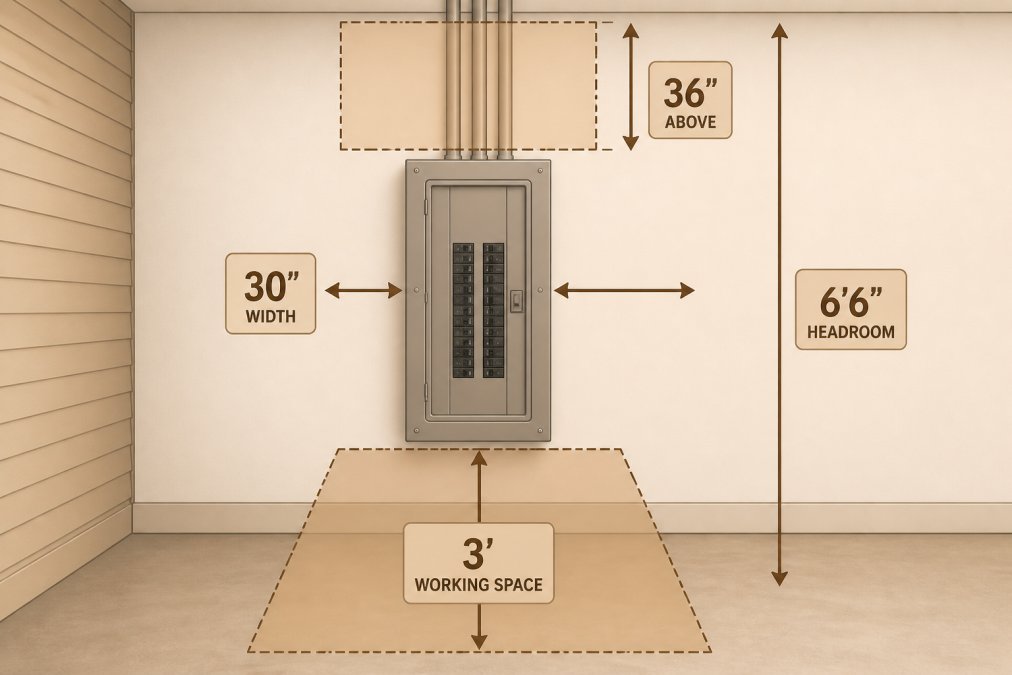
The most common violation we see is a panel boxed in by shelving, water heaters, or storage. Homeowners don't realize that clearance is a safety requirement, not a preference. An electrician needs room to work safely, and so does anyone responding to an emergency.
EV Chargers, Heat Pumps, and Modern Load Demands
EV chargers and heat pumps are the two biggest reasons panel upgrades have moved from optional to necessary. Both draw continuous, high-amperage loads that older panels were never sized to handle.
A Level 2 EV charger typically needs a dedicated 240-volt circuit. A heat pump adds another significant draw, especially in colder months. Run both on a 100-amp panel alongside normal household demand and you're asking for nuisance trips at best, an overload at worst.
The fix isn't always a bigger panel. Sometimes it's a load management device that staggers high-draw appliances so they don't run simultaneously. A qualified electrician can tell you which approach fits your home, and whether your service entrance and meter base can support the added load.
Residential vs Commercial Electrical Panel Upgrades
Commercial panel upgrades follow a different playbook. Three-phase power, sub-panels for tenant spaces, and higher fault-current ratings are standard.
Why Code-Compliant Repairs Protect Your Insurance Coverage
How Underwriters View an Older Panel
What Happens at Claim Time
The Resale and Disclosure Angle
Conclusion
Frequently Asked Questions
What is the average cost of an electrical panel upgrade?
Pricing depends on the amperage, panel type, permit fees, and whether wiring repairs are needed. A straightforward 200-amp replacement costs less than a service upgrade that involves a new meter base or sub-panel. Light Life Electric provides free estimates so you know the full scope before work begins, and we handle permits to avoid surprise charges.
What is the 80% rule for electrical panels?
The 80% rule means a circuit breaker should not carry more than 80% of its rated load continuously. On a 200-amp panel, that caps continuous draw at 160 amps. This matters for EV chargers, heat pumps, and kitchen equipment, which run for hours. A load calculation confirms whether your existing panel capacity can handle the demand or needs an upgrade.
Can I upgrade my electrical panel without rewiring my house?
Often, yes. If the existing wiring is copper and in good condition, a licensed electrician can replace the panel and breakers while keeping the branch circuits. Aluminum wiring, damaged insulation, or missing grounding and bonding may require partial rewiring. An inspection of wiring integrity and the service entrance determines what is safe and code-compliant.
How do I know if my electrical panel is up to current building codes?
Check for a fuse box, a panel with no main breaker, unlabeled circuits, or rust and scorch marks. Federal Pacific and Zinsco panels are known hazards. A Florida certified electrician can verify grounding and bonding, arc fault and ground fault protection, and NEC clearance requirements. Code-compliant installations and repairs pass inspection the first time.