 listicle
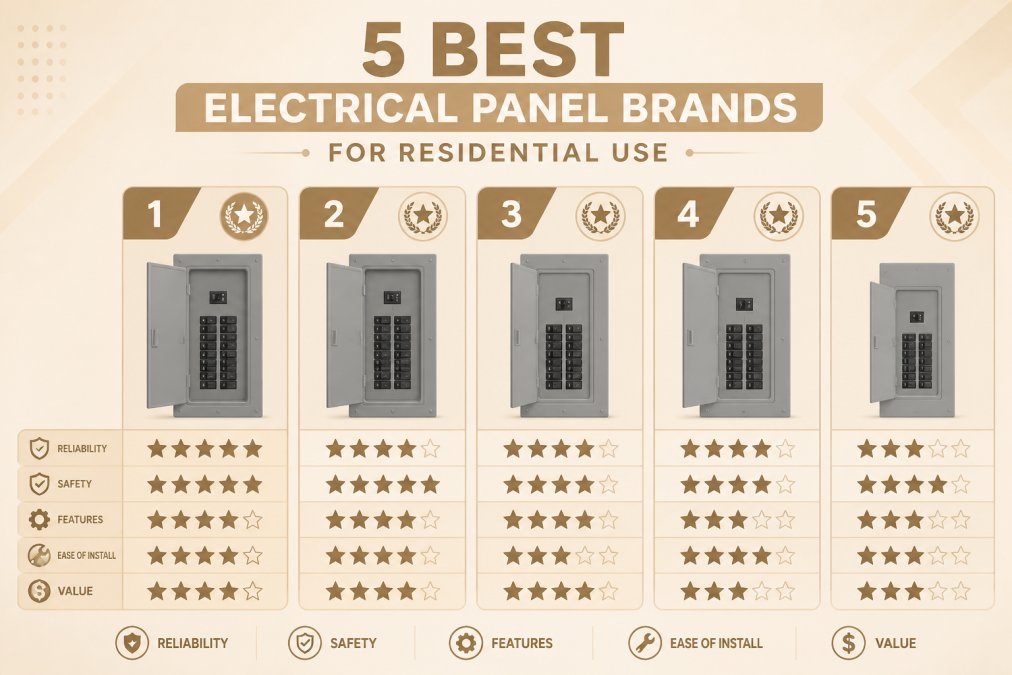
5 Best Electrical Panel Brands for Residential Use
Table of Contents
- What to Look for in Residential Electrical Panel Brands
- Comparison Table: Top Electrical Panel Brands at a Glance
- 1. Square D QO: Premium Reliability and Copper Bus Construction
- 2. Eaton CH: Lifetime Warranty and Durable Build Quality
- 3. Siemens SN Series: Versatility and Easy Installation
- 4. Leviton Load Center: Smart Home Integration and Energy Monitoring
- 5. Square D Homeline: Budget-Friendly Performance
- How to Tell If Your Electrical Panel Needs Replacing
- Frequently Asked Questions
Last Updated: September 18, 2026
What to Look for in Residential Electrical Panel Brands
Choosing the right electrical panel brand matters more than most homeowners realize. Your panel is the backbone of your home's electrical system, it distributes power safely to every circuit, protects against overloads, and determines whether your home can handle modern electrical demands. When evaluating electrical panel brands, you need to understand what separates a reliable, future-proof choice from one that will create headaches down the road.
The best electrical panel brands balance three core factors: build quality (especially bus bar construction), circuit breaker availability, and compliance with the National Electrical Code. Bus bars are the conductive strips inside the panel that distribute electricity. Copper bus bars conduct electricity more efficiently than aluminum and resist corrosion better over time. Beyond materials, you'll want a brand with many compatible circuit breakers, because when you need a replacement breaker years from now, availability matters. Finally, all panels must meet UL listing standards and NEC requirements, but some manufacturers go further with surge protection options and smart home integration capabilities.
Below, we'll walk you through the top residential electrical panel brands, what makes each one different, and how to know if your panel needs replacing.
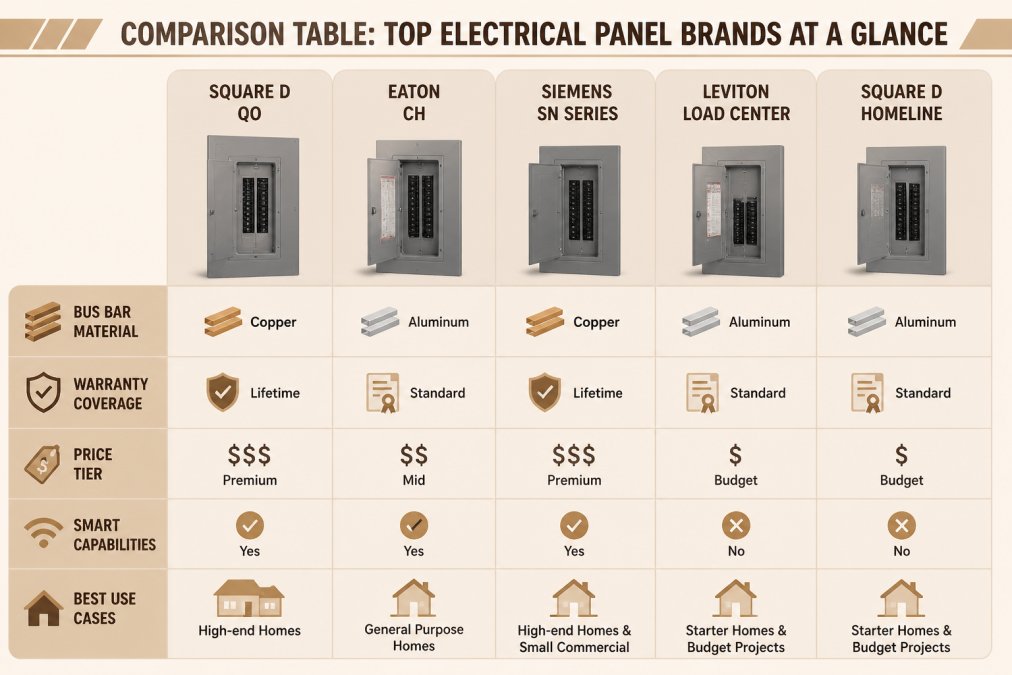
Comparison Table: Top Electrical Panel Brands at a Glance
| Brand | Bus Bar Material | Warranty | Best For | Smart-Ready |
|---|---|---|---|---|
| Square D QO | Copper | Limited | Premium reliability, copper construction | No |
| Eaton CH | Copper | Lifetime on breakers | Long-term durability, warranty coverage | No |
| Siemens SN Series | Mixed (copper/aluminum) | Standard | Versatile installations, ease of setup | No |
| Leviton Load Center | Copper | Standard | Energy monitoring, smart home integration | Yes |
| Square D Homeline | Aluminum | Standard | Budget-conscious, standard loads | No |
1. Square D QO: Premium Reliability and Copper Bus Construction
Square D QO panels represent the premium end of residential electrical panel brands. These panels use full copper bus bar construction throughout, which means superior electrical conductivity and long-term corrosion resistance. If you're building or upgrading in a coastal climate where salt air accelerates corrosion, this matters significantly.
The QO line offers plug-on neutral design, which simplifies installation and reduces labor time on the job. The wide availability of QO-compatible circuit breakers, from standard thermal-magnetic breakers to arc-fault and ground-fault protection, means you're not locked into a limited ecosystem. When you need a replacement breaker five or ten years from now, finding one won't be a problem.
What most homeowners don't realize is that panel compatibility isn't universal. Choose a panel brand with limited breaker options, and you might pay premium prices for replacements later. Square D QO avoids this trap through decades of market presence and broad breaker availability.
Pros:
- Copper bus bar throughout the panel
- Excellent breaker availability and compatibility
- Industry-standard reliability
- Suitable for high-amperage residential installations
Cons:
- Higher upfront cost compared to entry-level panels
- No smart home monitoring features
Best for: Homeowners prioritizing long-term durability and willing to invest in premium build quality.
2. Eaton CH: Lifetime Warranty and Durable Build Quality
Eaton CH panels stand out for their lifetime warranty on circuit breakers, a commitment few manufacturers make. This warranty reflects Eaton's confidence in their thermal-magnetic protection and breaker durability. The CH series uses copper bus bar construction and includes in-panel surge protection options, which adds an extra layer of defense against power surges that can damage electronics and appliances.
The CH line's wire management design reduces installation time and improves overall panel organization. For electricians and homeowners alike, a well-organized panel is easier to troubleshoot and modify when needed. The copper bus bars ensure consistent performance even in high-humidity environments like Southwest Florida.
One thing contractors appreciate about Eaton CH is the broad range of breaker types available, standard, AFCI, GFCI, and specialty breakers all integrate seamlessly. This flexibility means your panel can grow with your home's electrical needs without requiring a full replacement.
Pros:
- Lifetime warranty on circuit breakers
- Copper bus bar construction
- In-panel surge protection available
- Strong build quality and durability
Cons:
- Premium pricing
- No smart monitoring capabilities
Best for: Homeowners seeking maximum warranty protection and planning to stay in their home long-term.
3. Siemens SN Series: Versatility and Easy Installation
The Siemens SN Series represents a versatile middle ground in the residential electrical panel market. These panels feature the Insta-wire neutral and ground bar system, which speeds up installation significantly and reduces wiring errors. The durable powder-coated enclosure resists weathering and corrosion, and the panels are available in multiple amperage configurations to match different home sizes and electrical demands.
Get your free electrical estimate →
Siemens panels offer broad compatibility with third-party circuit breakers, which expands your options when upgrading or adding circuits.
Pros:
- User-friendly installation features
- High compatibility with various breaker types
- Good availability at electrical supply houses
- Balanced performance and pricing
Cons:
- Some models use aluminum bus bars instead of full copper
- Limited smart home integration options
4. Leviton Load Center: Smart Home Integration and Energy Monitoring
Leviton Load Centers represent the future of residential electrical panel technology. These panels are designed from the ground up for smart home integration, featuring a sleek white enclosure and compatibility with smart circuit breakers that provide real-time energy monitoring via a mobile app. If you're planning to add solar panels, an EV charger, or battery backup, a Leviton panel with smart breaker capability gives you visibility into your electrical consumption at the circuit level.
Pros:
- Real-time circuit-level energy monitoring
- Smart breaker compatibility
- Modern aesthetic with white enclosure
- GFCI/AFCI protection built into breakers
Cons:
- Higher cost for smart components
- Requires compatible smart breakers for full functionality
- Monitoring features depend on ongoing app access
5. Square D Homeline: Budget-Friendly Performance
Square D Homeline panels deliver solid, no-frills performance at an entry-level price point. These panels use plug-on neutral design and are widely available at home improvement retailers, which keeps costs down. The Homeline series handles standard residential electrical loads reliably and meets all code requirements.
Pros:
- Affordable pricing
- Easy to find at retail locations
- Plug-on neutral design
- Reliable for standard loads
Cons:
- Aluminum bus bar construction
- No advanced features or monitoring
- Not ideal for high-humidity coastal environments
How to Tell If Your Electrical Panel Needs Replacing
Signs of Panel Failure and Safety Concerns
Your electrical panel doesn't fail overnight, but warning signs appear before a complete failure. Frequent circuit breaker tripping, where breakers flip to the "off" position repeatedly, suggests the panel is struggling to handle your home's electrical load or a circuit has developed a fault. A single breaker tripping occasionally is normal; multiple breakers tripping regularly means investigation is necessary.
Capacity Issues and Modern Electrical Demands
Modern homes demand more electrical power than homes built 20 or 30 years ago. A 100-amp panel that was adequate in 1995 may be insufficient for today's air conditioning, electric water heaters, EV chargers, and smart home systems. When you add up the simultaneous demand from multiple high-power appliances, older panels often can't deliver enough amperage safely.
Frequently Asked Questions
Which electrical panel brand is best for a standard residential home?
Square D QO and Eaton CH are industry standards for residential use, offering proven reliability and strong availability of replacement breakers. Square D Homeline is a solid budget alternative. The best choice depends on your home's electrical demands, budget, and whether you want smart monitoring features. A certified electrician can assess your specific needs and recommend the right panel for your situation.
How do I know if my electrical panel needs replacing?
Your panel may need replacement if you experience frequent breaker trips, notice burning smells or scorch marks inside the panel, have an older aluminum bus bar system, lack adequate amperage for modern appliances (most homes need 150-200 amps), or if a home inspection flags safety concerns. Panels typically last 25-40 years. Signs of deterioration, corrosion, or inability to handle current electrical loads all warrant professional evaluation.
What is the typical cost of an electrical panel upgrade?
Panel upgrade costs vary based on amperage capacity, the brand selected, labor rates in your area, and whether rewiring is needed. Factors like permit fees, inspection costs, and any necessary code-compliance work also affect the total. For accurate pricing tailored to your home and location, contact a licensed electrical contractor for a free estimate. They can provide a detailed breakdown after assessing your current system.
How long does an electrical panel replacement take?
A standard residential panel replacement typically takes 4-8 hours for the actual installation. However, the full timeline includes scheduling, permit acquisition, inspection, and potential utility coordination, which can extend the project to several days or weeks. Complexity increases if your home requires rewiring, code upgrades, or if the utility company needs to disconnect service. A licensed electrician can give you a realistic schedule based on your specific project.
Are smart electrical panels worth the investment?
Smart panels like Leviton, Span, and Lumin add real-time energy monitoring, circuit-level control, and integration with solar or EV charging systems. They're valuable if you plan to install solar panels, an electric vehicle charger, battery backup, or want detailed energy insights. For standard homes without these upgrades, a traditional panel meets code requirements and performs reliably. Consider your long-term electrical plans and whether the monitoring features align with your needs.