 how-to
Red Electric: How to Hire the Right Contractor
Table of Contents
- What "Red Electric" Signals When Choosing an Electrical Contractor
- Residential and Commercial Electrical Services: Knowing What You Need
- Questions to Ask Electrical Contractors Before You Hire
- Electrical Contractor Vetting Checklist: Licenses, Insurance, and Track Record
- The Importance of Electrical Permits on Every Project
- Smart Home Integration and Energy Efficiency Audits
- Electrical Maintenance Programs and Ongoing Service Contracts
- How to Get an Accurate Electrical Cost Estimate
- Frequently Asked Questions
Last Updated: August 25, 2026
What "Red Electric" Signals When Choosing an Electrical Contractor
Red electric appears in searches when homeowners and property managers need professional electrical help. The challenge isn't finding a contractor, it's finding one qualified to deliver safe, code-compliant work without cost overruns or failed inspections.
At Light Life Electric, we've worked with residential and commercial clients throughout Southwest Florida long enough to recognize the pattern: most hiring mistakes happen during selection, when people skip vetting steps or accept verbal assurances that don't hold up.
This guide walks through finding, evaluating, and hiring an electrical contractor, from understanding what service you need, to asking the right questions, to recognizing a legitimate cost estimate.
An electrical contractor is a licensed professional authorized to install, maintain, and repair electrical systems in residential, commercial, or industrial settings. The license category matters: a contractor certified for residential panel upgrades may not be qualified for industrial power distribution.
Residential and Commercial Electrical Services: Knowing What You Need
Most hiring mistakes start here. People contact a contractor without clarity on their service category, leading to mismatched quotes and under- or over-qualified contractors.
Residential Electrical Services: Panel Upgrades, Wiring, and Safety
Residential electrical services cover circuit breaker panel upgrades, wiring installation and repair, lighting, outlets, switches, surge protection, grounding, and safety inspections. For older homes, the most common need is a service upgrade to handle modern electrical loads.
A common mistake is treating all residential work as equivalent. A ceiling fan swap differs from rewiring a 3,000-square-foot house. A certified technician will assess your electrical load calculation before recommending panel size, because undersizing creates safety hazards.
The National Fire Protection Association's electrical safety resources identifies faulty wiring and overloaded circuits as leading causes of residential electrical fires.
Commercial Electrical Contracting and Industrial Electrical Solutions
Commercial electrical contracting involves higher voltages, complex infrastructure, and additional code layers including ADA accessibility standards. Industrial electrical solutions add three-phase power systems, motor controls, power distribution panels, and specialized low voltage systems.
For commercial property owners, hire a contractor with commercial certification, higher liability coverage, and documented experience managing electrical projects at scale. A residential-focused contractor is not automatically qualified for multi-tenant commercial work.
Questions to Ask Electrical Contractors Before You Hire
The best contractors welcome hard questions. Those who deflect are telling you something important.
- Are you licensed for this specific type of work? Confirm the license type matches your project.
- Are you fully insured? Request a certificate showing general liability and workers' compensation.
- Who will actually do the work? Know whether the contractor or subcontractors will perform the work.
- Do you handle permits and inspections? A legitimate contractor manages the entire permitting process.
- What's your first-time inspection pass rate? Failed inspections cost money and time.
- How do you handle unexpected issues mid-project? Know whether you're notified before or after the bill arrives.
- Can you provide references from similar projects? Residential references don't validate commercial experience.

Electrical Contractor Vetting Checklist: Licenses, Insurance, and Track Record
Use this checklist before signing any contract.
| Vetting Step | What to Check | Why It Matters |
|---|---|---|
| License verification | Match license type to project scope | Prevents unqualified work |
| Insurance certificate | General liability + workers' comp | Protects you from liability |
| Permit history | Contractor pulls permits, not homeowner | Code compliance and resale value |
| References | Similar project type and scale | Validates relevant experience |
| Inspection pass rate | Ask directly; check with local building dept. | Signals workmanship quality |
| Written estimate | Itemized, not lump sum | Prevents surprise charges |
| Contract terms | Scope, timeline, payment schedule | Prevents scope creep |
Licensed and Insured: Why Certification Matters
A licensed and insured electrical contractor has passed state-required examinations, carries active liability insurance, and maintains workers' compensation coverage. These protections determine whether you're financially exposed if something goes wrong.
License verification is straightforward. Most state licensing boards maintain public databases. The Florida Department of Business and Professional Regulation license verification tool is the official source for Florida. Use it rather than taking a contractor's word.
Insurance matters because if an uninsured worker is injured on your property, your homeowner's policy may not cover it. If the contractor damages your electrical infrastructure, their liability policy should pay for remediation.
24/7 Emergency Electrical Repairs and Response Time
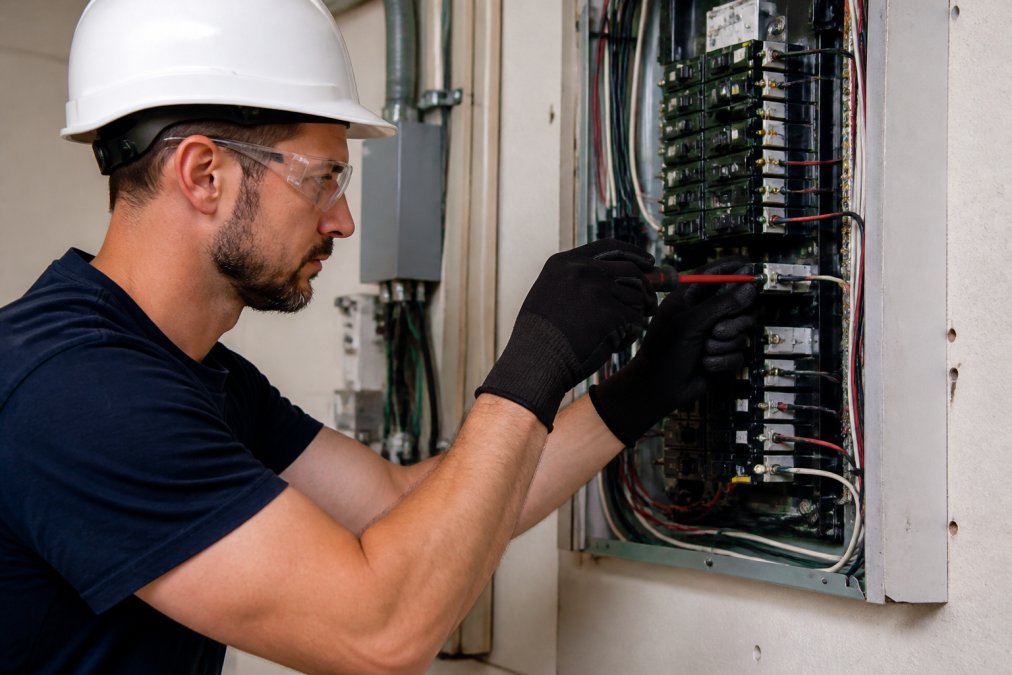
Emergency electrical repairs require fast response. A tripped main breaker at 2 AM, burning smells from outlets, or flickering lights demand immediate attention.
Genuine emergency response means a certified technician on-site within a defined window.
Ask two direct questions: What is your average response time for after-hours calls? Is a licensed electrician dispatched, or a general laborer? The answer reveals whether the 24/7 claim is real.
The Importance of Electrical Permits on Every Project
Electrical permits are not optional on most projects. Contractors suggesting you skip them are shifting risk onto you.
An electrical permit is official authorization from the local building authority for specific electrical work, followed by inspection to verify code compliance. Without a permit, there is no inspection. Without inspection, there is no verified record that work meets safety standards.
Get your free electrical estimate →
Unpermitted electrical work has serious consequences. Many homeowner's insurance policies exclude coverage for damage caused by unpermitted work. At sale, unpermitted work must be disclosed or corrected. According to the International Association of Certified Home Inspectors on electrical permits, unpermitted electrical work is one of the most common defects identified during pre-sale inspections.
A qualified contractor handles permit applications, schedules inspections, and ensures work passes. If a contractor asks you to pull your own permit, it's often because they won't take responsibility for the inspection outcome.
Smart Home Integration and Energy Efficiency Audits
Smart home integration requires different skills than standard residential wiring. Low voltage systems, smart lighting controls, automated shading, security systems, and EV charging infrastructure demand specialized expertise.
Smart home wiring decisions made during rough-in are difficult to change later. Conduit runs, panel capacity for EV charging, and structured wiring for data are permanent decisions. Getting them wrong means cutting into finished walls.
An energy efficiency audit reviews your electrical load, identifies inefficiencies, and recommends upgrades like LED retrofits, smart thermostats, and solar-ready panel configurations. For commercial properties, savings from a well-executed audit can be substantial.
The U.S. Department of Energy's home energy efficiency resources provides guidance on what a legitimate audit should cover. When hiring for smart home or efficiency work, ask about the contractor's experience with low voltage systems and whether they coordinate with technology integrators.
Electrical Maintenance Programs and Ongoing Service Contracts
One-off repairs are the most expensive way to manage electrical infrastructure. Preventative maintenance, scheduled inspections, thermal imaging, surge protection testing, circuit breaker review, catches problems before they become emergencies.
For commercial property owners and HOAs, ongoing service contracts make particular sense. Maintenance programs include scheduled inspections, priority emergency response, and documentation supporting insurance and liability requirements.
A contractor who knows your electrical infrastructure can spot developing problems that fresh eyes would miss. That institutional knowledge has real value.
For residential clients, annual electrical inspections are worth scheduling even when nothing seems wrong. Wiring degrades, connections loosen, and load demands change. A scheduled inspection is significantly cheaper than the emergency call it prevents.
How to Get an Accurate Electrical Cost Estimate
The biggest source of frustration is the gap between initial quote and final invoice. Most gaps exist because the estimate wasn't detailed enough.
An accurate electrical cost estimate is itemized, breaking down labor hours, materials, permit fees, and contingencies for work that can't be fully scoped until walls are opened. A lump-sum quote is not an estimate, it's a number that can be revised once work starts.
A legitimate estimate process includes:
- Site visit before quoting. Any contractor quoting over the phone is guessing.
- Written scope of work. Describe exactly what will be done, materials used, and what is excluded.
- Permit fees included. These should not appear as surprise line items after signing.
- Payment schedule tied to milestones. Never pay the full amount upfront.
- Change order process defined. Spell out how unexpected conditions are priced and approved.
Light Life Electric provides free electrical estimates with a site visit, so the number reflects your actual project, not a generic range that shifts once work begins. That transparency is the standard you should expect.
The challenge most property owners face is finding a contractor they can trust to do the work right, handle permits, and stand behind the result. Light Life Electric is a fully licensed, bonded, and insured family-owned electrical contractor serving residential and commercial clients throughout Southwest Florida, with 24/7 emergency response and a process covering everything from permits to final inspection. Get your free electrical estimate and find out what a straightforward, code-compliant electrical project looks like.
Frequently Asked Questions
How do I verify an electrical contractor's license and insurance?
Ask the contractor for their license number and verify it through your state's licensing board website. In Florida, you can check the Department of Business and Professional Regulation (DBPR) database. Request a certificate of insurance showing general liability and workers' compensation coverage. A reputable electrical contractor will provide both without hesitation. If a contractor hesitates or cannot produce current documentation, treat that as a disqualifying sign before any work begins.
What questions should I ask before hiring an electrical contractor?
Start with license status, insurance coverage, and how long they've been operating. Ask whether they pull permits for the work, who handles inspections, and whether their estimate is fixed or subject to change. Ask specifically about their experience with your type of project, residential panel upgrades differ significantly from commercial wiring installations. Finally, ask for references from completed jobs and confirm the work passed inspection on the first attempt.
How do I know if my electrical project requires a permit?
Most projects beyond basic fixture swaps require a permit: panel upgrades, new circuit installation, service upgrades, rewiring, and new construction wiring all typically fall under permit requirements per the National Electrical Code (NEC) as adopted by your local jurisdiction. A licensed electrical contractor should identify permit requirements upfront and pull the permit on your behalf. Skipping permits can void homeowner's insurance, complicate property sales, and create safety risks that go uninspected.
What makes a family-owned electrical contractor different from a large company?
Family-owned electrical contractors typically provide more direct accountability, the owner's name and reputation are on every job. Communication tends to be faster, technicians are often more consistent across visits, and pricing is generally more transparent. For ongoing electrical maintenance contracts or multi-phase projects, having a single point of contact who knows your property's electrical infrastructure saves time and reduces errors. Verify that the business is still fully licensed and insured regardless of its size.