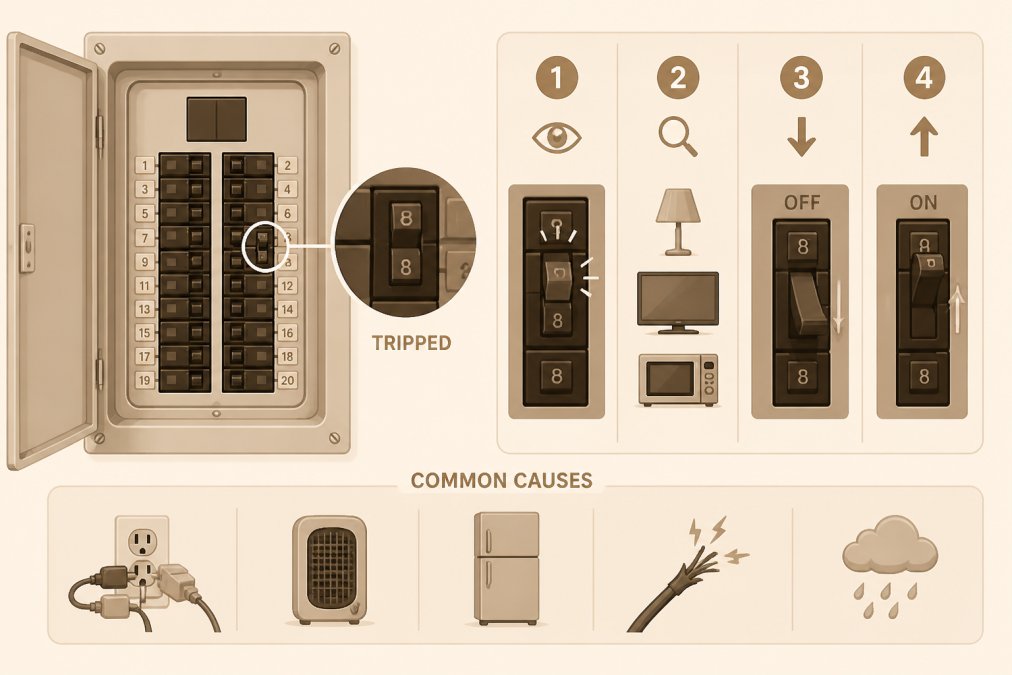
 how-to
How to Troubleshoot a Tripped Circuit Breaker
Table of Contents
- Understanding Your Circuit Breaker Panel
- Safety Precautions Before Touching the Panel
- Step-by-Step Reset Procedure for a Tripped Circuit Breaker
- Why Does My Circuit Breaker Keep Tripping
- Troubleshooting Specific Appliances and Circuits
- When to Call an Electrician for a Tripped Breaker
- What to Do If the Breaker Trips Again
- Frequently Asked Questions
Last Updated: September 3, 2026
Understanding Your Circuit Breaker Panel
Your circuit breaker panel is the nerve center of your home's electrical system, distributing incoming power from your utility company to individual circuits that power everything from kitchen appliances to bedroom lights. The panel contains dozens of individual switches, each controlling a separate circuit. A tripped circuit breaker occurs when one of these switches automatically flips to the "off" position to protect your home from electrical hazards.
Main Breaker vs. Branch Circuits
Your electrical panel contains two types of breakers: the main breaker and branch circuits. The main breaker controls all power entering your home and typically handles 100 to 200 amperage (nfpa.org). Branch circuits are individual breakers protecting specific areas or appliances, kitchen outlets, bathroom circuits, bedroom lights, and so on. When a tripped circuit breaker occurs, it's almost always a branch circuit that trips, not the main breaker. The main breaker trips only in rare situations involving serious electrical hazards affecting the entire home.
Identifying the Tripped Position
A breaker in the "on" position sits flush with the panel. A breaker in the "off" position points outward at an angle. A tripped circuit breaker occupies a middle position, not quite off, but not fully on either. This neutral position is the telltale sign that the breaker has automatically shut down due to a safety concern. Some breakers have a red indicator window that becomes visible when they trip, making identification easier.
Safety Precautions Before Touching the Panel
The panel contains live electrical current even when individual breakers are off. The main breaker and service lines remain energized at all times. Before opening the panel door, turn off lights so you can see clearly. Wear rubber-soled shoes and keep your hands dry, moisture increases electrical conductivity and risk. If you notice heat damage, burn marks, or a burning smell near the panel, do not touch it. These signs indicate a serious electrical problem requiring immediate professional attention from a licensed electrician.
Never attempt to reset a breaker if you're standing on wet flooring or if your hands are damp. Never use metal tools to reset a breaker. If you feel uncertain at any point, step away and call a professional. At Light Life Electric, our team is available 24/7 for emergency electrical issues.
Step-by-Step Reset Procedure for a Tripped Circuit Breaker
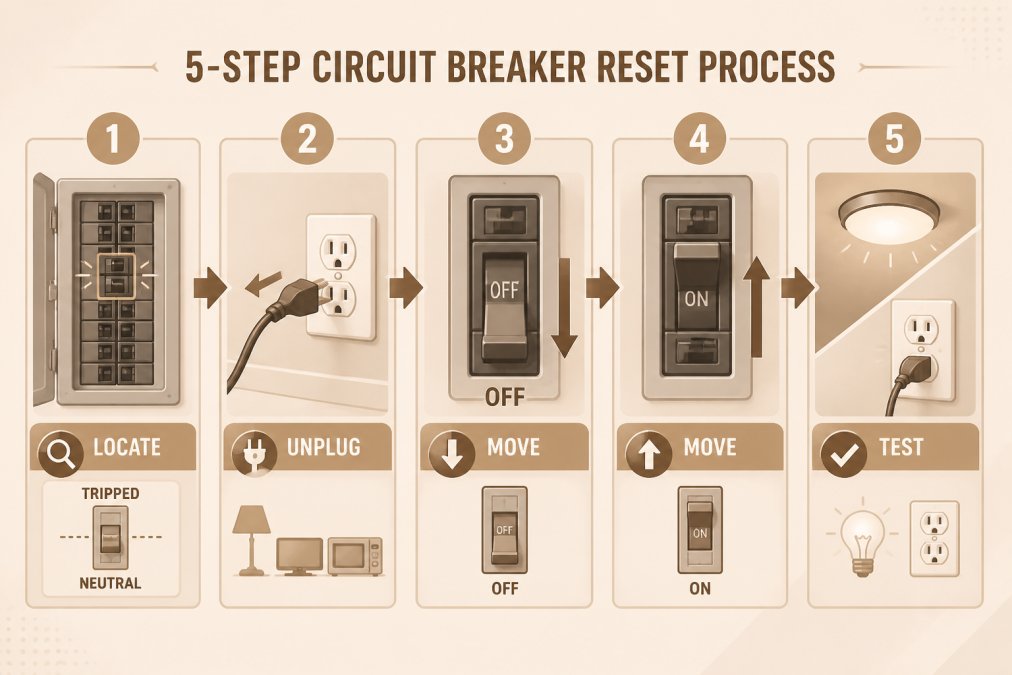
Resetting a tripped circuit breaker is straightforward once you've located the correct breaker and taken safety precautions.
Locate and Identify the Tripped Breaker
Open your electrical panel door and scan for the breaker in the neutral position, clearly between "on" and "off." Most panels have a directory printed on the inside of the door listing which breaker controls which area of your home. Understanding what's on that circuit helps you diagnose why it tripped.
Reset the Breaker to the On Position
Before flipping the breaker back on, unplug any appliances connected to that circuit. If something caused the breaker to trip, plugging it back in immediately will likely trip it again. With appliances unplugged, push the toggle switch firmly to the "off" position, you'll feel a click. Then push it firmly to the "on" position. The switch should now be flush with the others, indicating the breaker is active.
Test Power Restoration
Once you've reset the breaker, test whether power has been restored. Flip a light switch in the affected area or plug in a lamp. If the light comes on, the reset was successful. If the breaker immediately trips again, do not repeatedly reset it. Repeated tripping indicates an underlying electrical problem, either an overloaded circuit, short circuit, ground fault, or faulty breaker. Continuing to reset without addressing the root cause risks fire or electrical damage.
Why Does My Circuit Breaker Keep Tripping
A tripped circuit breaker that keeps happening is your electrical system's way of protecting your home. Understanding why it's tripping is essential to fixing the problem safely.
Overloaded Circuits and Excessive Electrical Load
The most common reason for a tripped circuit breaker is an overloaded circuit. Every circuit is designed to handle a specific amperage, typically 15 or 20 amps for standard household circuits (nfpa.org). When you draw more electrical current than the circuit is rated for, the breaker trips to prevent overheating and potential fire.
Overloads happen when you plug too many high-demand appliances into the same circuit simultaneously. Running a hair dryer, space heater, and microwave all at once will likely trip the breaker. The solution is to spread your electrical load across multiple circuits. If a particular circuit trips repeatedly when you use certain appliances, that circuit is probably undersized for its typical load, a situation where consulting a licensed electrician about adding additional circuits might be beneficial.
Short Circuits and Ground Faults
A short circuit occurs when a hot wire makes unintended contact with a neutral wire or ground, creating massive current flow that immediately trips the breaker. A ground fault is similar but involves contact between a hot wire and a ground source, often moisture. Ground faults are particularly common in bathrooms and kitchens where water is present.
If you suspect a short circuit or ground fault, do not ignore it. Signs include a burning smell near outlets or appliances, visible scorch marks, or a breaker that trips the moment you reset it. Call a licensed electrician immediately. At Light Life Electric, we respond to emergency electrical issues 24/7 and can diagnose the exact location and cause of short circuits.
Faulty Breakers and Aging Electrical Panels
Sometimes the breaker itself is faulty. A breaker that trips repeatedly even after you've eliminated overloads and verified the circuit is working normally may be defective. Aging electrical panels are another consideration. Panels installed 30 or 40 years ago were designed for the electrical loads of that era. Modern homes demand significantly more power, causing breakers to trip under normal usage.
If your home has an older electrical panel and experiences frequent tripping, a panel upgrade might be necessary. This requires a licensed electrician and often permits and inspections.
Get your free electrical estimate →
Troubleshooting Specific Appliances and Circuits
Different areas of your home have different electrical demands.
Kitchen and High-Demand Appliances
Kitchen circuits handle some of the highest electrical loads in a home. Microwave ovens, dishwashers, garbage disposals, and refrigerators all draw significant current. Modern electrical code typically requires two 20-amp circuits dedicated solely to kitchen countertop outlets (nfpa.org).
If a kitchen breaker trips, identify which appliance was in use. If a specific appliance consistently causes the breaker to trip, that appliance may be drawing excessive current due to a motor problem or internal short. Unplug it and have it serviced or replaced. If the breaker trips when multiple appliances run simultaneously, you're dealing with an overload, use appliances sequentially rather than at the same time.
Bathroom Outlets and GFCI Protection
Bathroom circuits present unique challenges because of moisture. Water conducts electricity, making ground faults more likely. Modern code requires GFCI outlets in bathrooms, which detect ground faults and cut power in milliseconds.
A GFCI outlet has "test" and "reset" buttons on its face. If a bathroom outlet isn't working, check whether the GFCI has tripped by pressing the reset button. If resetting doesn't restore power or if it trips repeatedly, you have a ground fault requiring professional diagnosis.
When to Call an Electrician for a Tripped Breaker
Call a licensed electrician if a breaker trips repeatedly even after you've unplugged appliances and eliminated obvious overloads. Call if you notice a burning smell, scorch marks, or heat damage around the panel or outlets. Call if the breaker trips the moment you reset it without anything plugged in, indicating an internal short circuit or faulty breaker.
At Light Life Electric, we can diagnose the cause of repeated breaker trips quickly. Our Florida certified electricians can determine whether you need a simple circuit adjustment, appliance replacement, or a more involved repair like panel upgrades or new circuit installation.
What to Do If the Breaker Trips Again
If you've reset the breaker and it trips again immediately, stop resetting it. Repeated resetting without addressing the underlying cause risks electrical fire or damage.
Leave the breaker in the off position and unplug everything connected to that circuit. Reset the breaker one more time. If it stays on with everything unplugged, the problem is one of the appliances or devices on that circuit, test them one by one to identify which one causes the trip.
If the breaker trips again even with nothing plugged in, you have a short circuit or ground fault in the wiring itself. This requires professional diagnosis. Do not attempt to find the problem yourself. Damaged insulation, water intrusion, or rodent damage to wiring can cause shorts that are dangerous to investigate without proper tools and training.
Document when the breaker trips, which circuit it is, and what you were using when it happened. This information helps an electrician diagnose the problem faster.
A tripped circuit breaker is your home's electrical safety system working as designed. Most trips result from simple overloads that you can resolve by redistributing your electrical load. However, repeated trips or trips accompanied by burning smells or scorch marks indicate a problem requiring professional attention. Light Life Electric's team of Florida certified electricians is available 24/7 to diagnose and repair electrical issues safely. Whether you need a simple circuit adjustment, appliance troubleshooting, or a complete panel upgrade, we handle every detail from diagnosis through final inspection. Get your free electrical estimate today and ensure your home's electrical system is safe and reliable.
Frequently Asked Questions
How do I troubleshoot a circuit breaker that has tripped?
Start by locating your panel box and identifying which breaker has tripped (it will be in a neutral position between on and off). Unplug appliances and devices on that circuit to reduce electrical load. Then flip the breaker fully to the off position, wait a few seconds, and flip it back to on. If power is restored, the issue was likely temporary overload. If it trips again immediately, stop and call an electrician, this indicates a short circuit or faulty breaker requiring professional diagnosis.
Why does my circuit breaker keep tripping?
Repeated tripping typically signals an overloaded circuit, short circuit, or ground fault. Overloaded circuits occur when you run too many high-amperage appliances simultaneously on one branch circuit. Short circuits and ground faults are electrical hazards caused by damaged wiring insulation or faulty appliances. A faulty breaker itself can also trip repeatedly even without overload. If your breaker trips more than once, unplug devices, reduce electrical load on that circuit, and contact a licensed electrician for diagnosis. Do not ignore repeated tripping.
When should I call an electrician for a tripped breaker?
Call an electrician immediately if the breaker trips repeatedly after reset, if you see scorch marks or smell burning inside the panel, if the breaker won't stay in the on position, if multiple breakers trip at once, or if you're uncertain which circuit is affected. Also call if the trip occurs without obvious cause (no appliances running, no power surge). A professional can inspect the panel for heat damage, test for ground faults or arc faults, and determine whether you need circuit upgrades, panel service, or appliance replacement.
Is it dangerous to reset a tripped circuit breaker?
Resetting a tripped breaker is safe if done properly. Always keep your hands dry and avoid touching the panel during wet weather or storms. Do not force a breaker that won't move, this indicates an electrical fault requiring professional attention. Wear rubber-soled shoes and do not touch the main breaker unless instructed by an electrician. The breaker's job is to protect you by interrupting dangerous electrical current, so respect that it tripped for a reason. If you feel unsafe or uncomfortable accessing the panel, contact a licensed electrician.