 how-to
Why Outlets Stop Working in Southwest Florida Homes
Table of Contents
- Common Causes of Dead Outlets in Southwest Florida
- How to Fix a Tripping Circuit Breaker
- Why Do GFCI Outlets Keep Tripping?
- Signs of Faulty Electrical Wiring
- How Humidity and Pests Affect Southwest Florida Outlets
- When to Call a Licensed Electrician
- Frequently Asked Questions
Last Updated: September 29, 2026
Common Causes of Dead Outlets in Southwest Florida
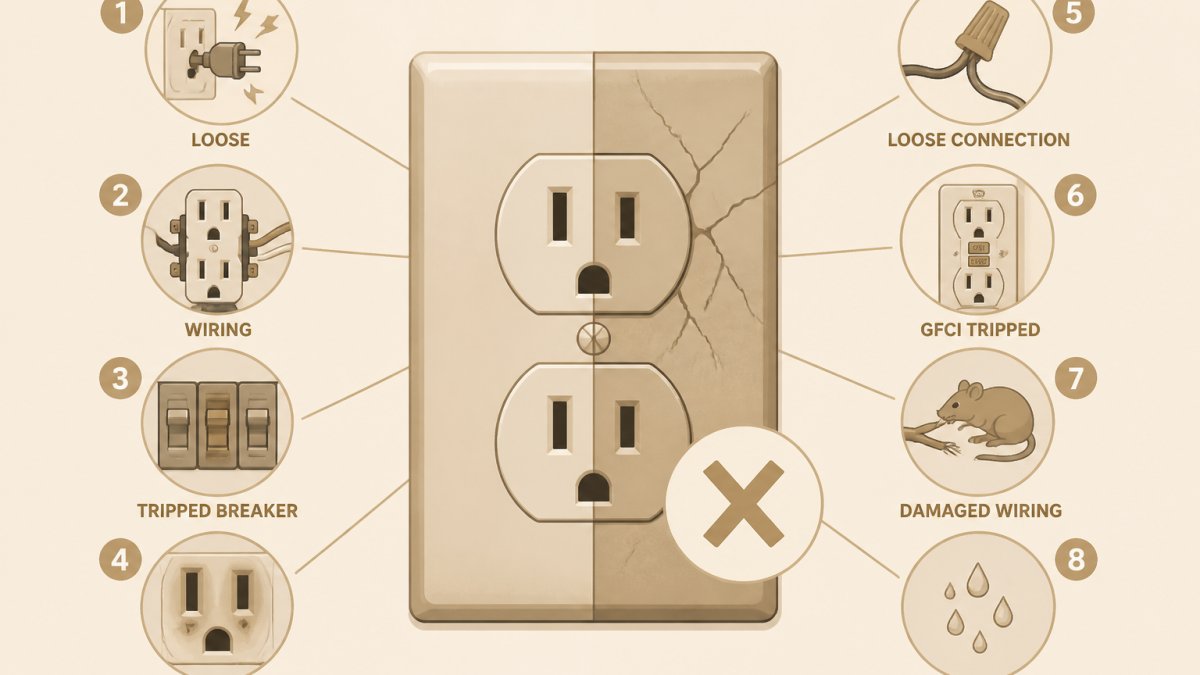
When outlets stop working, it's usually caused by a tripped breaker, a tripped GFCI, a loose wiring connection, or years of heat and humidity wearing out the receptacle itself. This guide from Light Life Electric walks through what causes outlets to stop working in Southwest Florida homes, and how to tell a five-minute fix from a job that needs a licensed electrician.
Here's the good news: most dead outlets trace back to a short list of causes. Here's the catch: in this climate, some of those causes show up far more often than they do up north.
Tripped Circuit Breakers
A tripped breaker is the most common reason an outlet goes dead. The breaker cuts power when a circuit pulls more amps than it can safely carry.
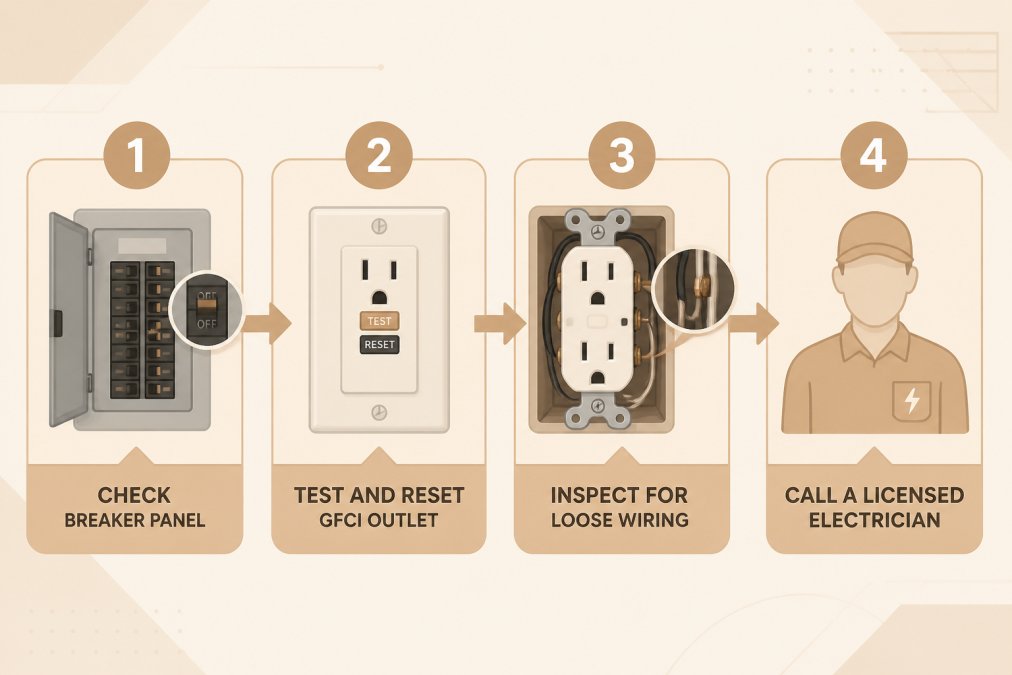
Go to your electrical panel and look for a switch that sits between ON and OFF, or one that feels loose. Flip it fully to OFF, then back to ON. That single move restores power in many homes.
If the same breaker trips again within a day or two, stop resetting it. Something on that branch circuit is pulling too much load, and repeated trips are a warning, not a nuisance.
GFCI Outlet Reset Procedures
A ground fault circuit interrupter (GFCI) is a safety outlet that cuts power when it senses current leaking to ground. Kitchens, baths, garages, and outdoor outlets in Southwest Florida almost always have one.
Press the RESET button firmly until it clicks. If power returns, you're done. If the button won't stay in, the GFCI has likely reached the end of its life.
One detail most homeowners miss: a single GFCI often protects several outlets downstream. So a dead outlet across the room may just be a tripped GFCI on the wall behind you.
Loose or Disconnected Wiring
Loose wiring connections cause outlets stop working in a way breakers and GFCIs can't fix. A wire can work itself free from a terminal screw after years of heat cycling.
Signs include an outlet that works only when you wiggle a plug, or one that dies while others on the same circuit stay live. This is the cause you should not ignore. Loose connections create heat, and heat starts fires.
If you suspect a loose connection, cut power at the breaker and call a licensed electrician. This is not a DIY repair.
How to Fix a Tripping Circuit Breaker
The fix for a tripping circuit breaker starts with finding out what's on that circuit. Unplug everything on it, reset the breaker, then plug devices back in one at a time until it trips again.
Follow these steps:
- Turn off and unplug every device on the circuit
- Reset the breaker to ON
- Plug in and run one device at a time
- Note which device trips the breaker
- Move that device to another circuit or replace it
- If the breaker trips with nothing plugged in, call an electrician
That last point matters. A breaker that trips on an empty circuit points to a short circuit or damaged wiring inside the walls.
But in Southwest Florida, a tripping breaker often has a regional cause that generic guides skip. Two local factors change the troubleshooting math:
Storm-related power surges. After a lightning storm or a utility grid flicker, a breaker can trip even if nothing in your home is faulty. Surges ride in on the utility lines and stress the breaker's internal mechanism. If your breaker trips right after a storm and holds after a reset, the surge, not your wiring, was likely the trigger. Repeated surge trips, however, can weaken the breaker over time, so have it evaluated if it becomes a pattern.
Salt air corrosion on the breaker panel. Homes within a few miles of the coast often have breaker panels and bus bars exposed to humid, salt-laden air. That environment corrodes the metal contacts inside the panel, raising resistance and causing nuisance trips. If you see white or green powdery residue on the breakers or bus bar, corrosion is present. A licensed electrician can clean or replace affected components.
What not to do: Never swap in a larger breaker to stop nuisance trips. Breakers are sized to the wire, not the appliance. Oversizing one lets the wire overheat before the breaker ever trips, which is how house fires start. This is especially dangerous in older Southwest Florida homes where the wiring may already be degraded by heat and humidity.
Get your free electrical estimate →
Insurance and warranty note: A breaker that trips due to a storm surge or lightning strike may be covered by your homeowners insurance, depending on your policy's deductible and perils. A breaker that trips due to normal wear or a faulty appliance is typically considered maintenance and is not covered. Document the date, weather conditions, and which breaker tripped, this record can support an insurance claim if storm damage is the cause.
Why Do GFCI Outlets Keep Tripping?
GFCI outlets keep tripping for three main reasons: moisture inside the outlet, a fault in a connected appliance, or a worn-out GFCI that no longer holds its set point.
Start by unplugging everything on the circuit. If the GFCI holds after a reset, one of those devices is the culprit. Test them one at a time.
If it still trips with nothing plugged in, moisture is the likely cause. Humid air, a dripping AC line, or rain blown into an outdoor box can all trip a GFCI.
GFCIs also age out. After years of service, the internal sensing circuit drifts and the outlet trips for no real reason. Replacement is the fix.
Signs of Faulty Electrical Wiring
Faulty electrical wiring shows warning signs before it fails completely. Catching them early is what separates a small repair from a major one.
Watch for these:
- A burning smell near an outlet or switch
- Outlets or switch plates that feel warm to the touch
- Scorch marks, discoloration, or melted plastic
- Buzzing, crackling, or popping sounds
- Lights that dim when an appliance kicks on
- Breakers that trip again and again
- A mild shock when you touch a switch or appliance
Any one of these means you should stop using that circuit and call a licensed electrician. Warmth and burning smells are not quirks. They are the wiring telling you something is wrong.
How Humidity and Pests Affect Southwest Florida Outlets
Humidity and pests are two of the most underrated causes of outlet failure in this region. The same climate that makes Southwest Florida comfortable most of the year also works against your wiring.
High humidity drives moisture into outdoor receptacles, garage outlets, and any box with a loose cover. That moisture causes corrosion on terminal screws and contacts. Corroded connections raise resistance, and higher resistance means more heat.
Pests make it worse. Insects, lizards, and rodents nest inside electrical boxes and chew through insulation on the hot wire, neutral wire, and ground. Once insulation is gone, a short circuit is only a matter of time.
Older homes add another layer.
When to Call a Licensed Electrician
Reach out right away if you notice:
- A burning smell or visible scorch marks
- An outlet that is warm or discolored
- Repeated breaker trips with nothing plugged in
- Sparking, buzzing, or a shock when you touch a fixture
- Aluminum wiring anywhere in the home
- Water damage near an electrical box
1. It's storm season (June through November). During hurricane season, power surges, lightning strikes, and utility grid instability are common. If an outlet dies after a storm, the cause may be surge damage to a GFCI, a breaker, or wiring insulation. Even if a reset restores power, surge damage can leave hidden degradation that fails later. A licensed electrician can test the circuit and confirm it's safe. Don't wait for a second failure.
Frequently Asked Questions
Why did the outlets in my room randomly stop working?
Outlets can stop working randomly due to a tripped circuit breaker, a GFCI outlet that needs resetting, or a loose wiring connection. In Southwest Florida, humidity and pests can also cause intermittent failures. Start by checking your electrical panel for tripped breakers, then test any GFCI outlets in the room. If the issue persists, call a licensed electrician to diagnose the problem safely.
Why are some outlets in my house working and others aren't?
Partial power loss often points to a GFCI outlet that has tripped and is protecting downstream outlets on the same circuit. It can also mean a loose wire at a terminal screw or a bad receptacle. Check for a GFCI reset button in the room or nearby, and press reset. If that doesn't restore power, a multimeter can help identify where voltage stops, but it's best to have a professional inspect the wiring.
Can humidity cause electrical outlets to fail?
Yes, high humidity in Southwest Florida can lead to corrosion on terminal screws and wiring connections inside outlets. Corrosion increases resistance, which can cause overheating and intermittent power. Over time, this can damage the receptacle and create a fire risk. If you notice discoloration, a burning smell, or frequent tripping, have a licensed electrician replace the affected outlets and check for moisture intrusion.
When should I call a licensed electrician for outlet repairs?
Call a licensed electrician if you've reset breakers and GFCIs but outlets still don't work, if you see sparks, smoke, or smell burning, or if you find signs of faulty electrical wiring like flickering lights or warm cover plates. Also, if your home has aluminum wiring or you suspect pest damage, professional help is essential. Light Life Electric offers 24/7 emergency response for urgent issues in Southwest Florida.